






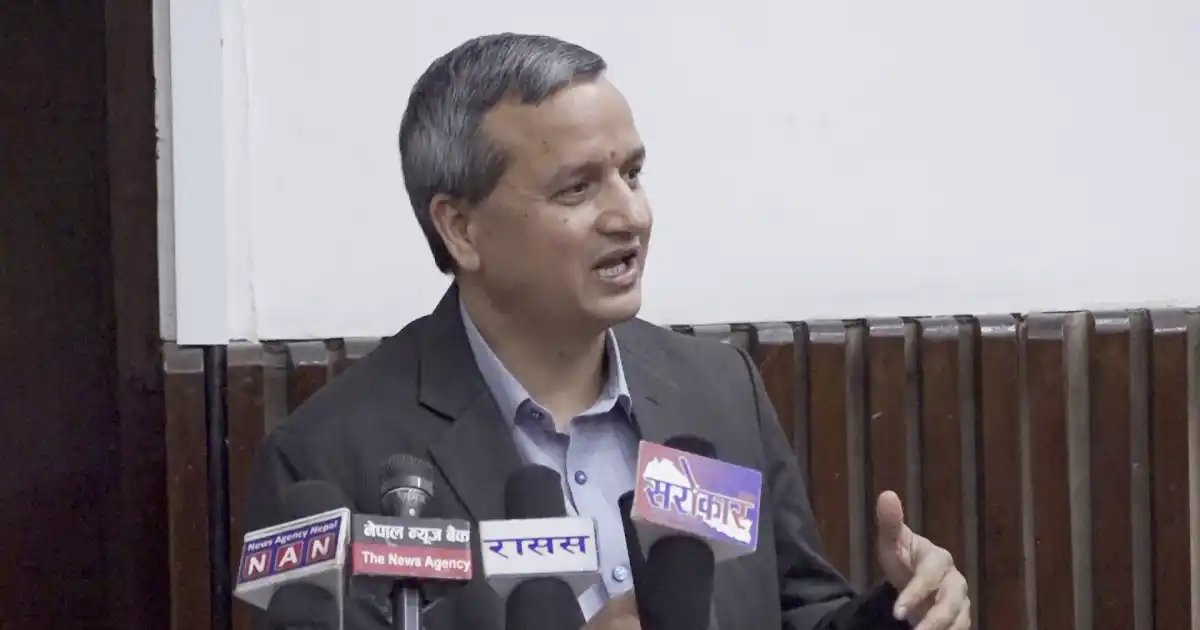
Nepal’s long-term economic growth has averaged around 4%, but the country has touched 7% in select years — and unlocking that higher trajectory on a sustained basis will require policy reform and investment expansion to move forward together, according to Dr. Gunakar Bhatt, Vice-Chairman of National Planning Commission (NPC).
Speaking at a program in Lalitpur on Sunday, Dr. Bhatt laid out a clear diagnosis of what has historically driven Nepal’s stronger growth phases and what is now needed to replicate that performance consistently, rather than in short, isolated bursts.
Policy Reform and Investment Must Move Together
Dr. Bhatt explained that Nepal’s periods of high growth in the past were not accidents — they consistently coincided with major policy interventions paired with expanded investment. He pointed to liberalization drive beginning in the mid-1980s (2041–42 BS) as an early example that broadened the base of the economy, followed by further reforms in the late 1990s (2048–49 BS) that lifted growth for a period.
According to Dr. Bhatt, the same combination is required today: continued policy reform alongside a meaningful expansion of investment, rather than relying on either lever alone.
Lessons From the Post-Earthquake Growth Surge
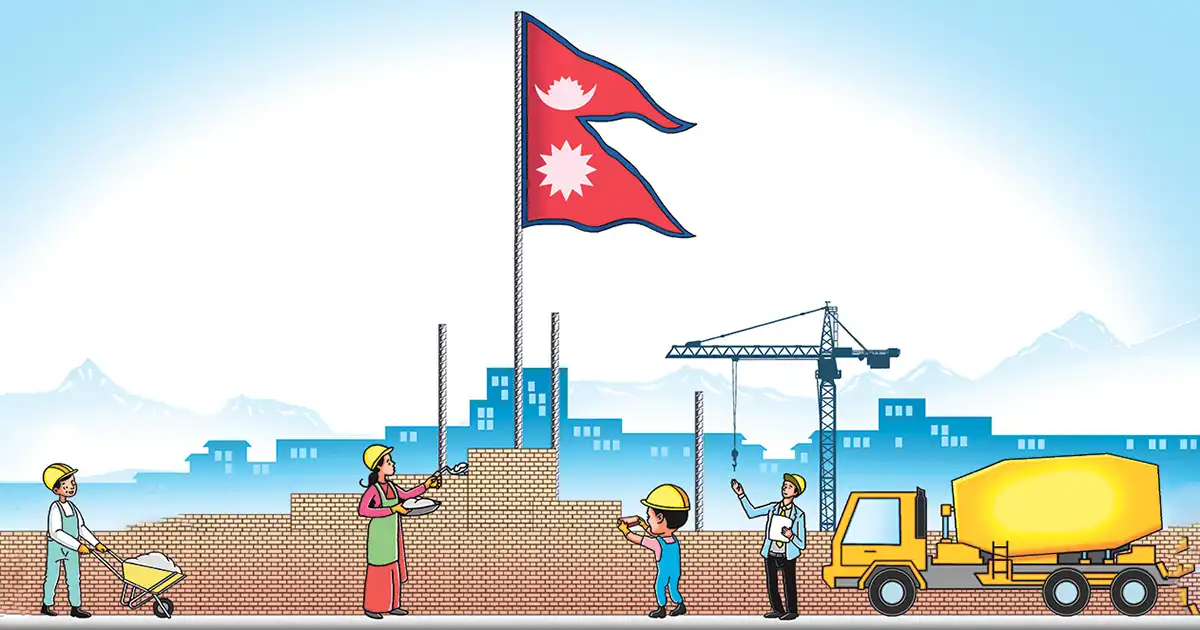
One of the clearest examples Dr. Bhatt cited was post-2015 earthquake reconstruction period, when the country achieved close to 7% annual economic growth for three consecutive years. During that stretch, gross fixed capital formation — a key measure of investment in infrastructure, buildings, and productive assets — climbed to nearly 30% of GDP, a sharp jump driven largely by reconstruction spending.
By comparison, Nepal’s fixed capital formation had been stuck at roughly 24% of GDP for three straight years before more recently rising to around 26% of GDP, according to Dr. Bhatt. That gap, he suggested, helps explain why growth has cooled back toward its long-run average since the reconstruction-driven boom faded.
Weak Productivity Remains Nepal ‘s Core Challenge
Beyond capital and investment, Dr. Bhatt flagged a deeper structural problem: Nepal’s total factor productivity — a measure of how efficiently capital and labor are converted into economic output — stands at just around 0.2%. In practical terms, this means Nepal’s current growth is being driven almost entirely by adding more capital and more workers, rather than by using existing resources more efficiently.
He noted that productivity is not simply a function of technology or capital investment alone; it is closely tied to how people work, institutional culture, education systems, and the broader quality of governance structures. Strong institutions and effective policymaking, he argued, play a decisive role in raising both national productivity and per-capita income over time.
Human Capital Under Pressure From Migration
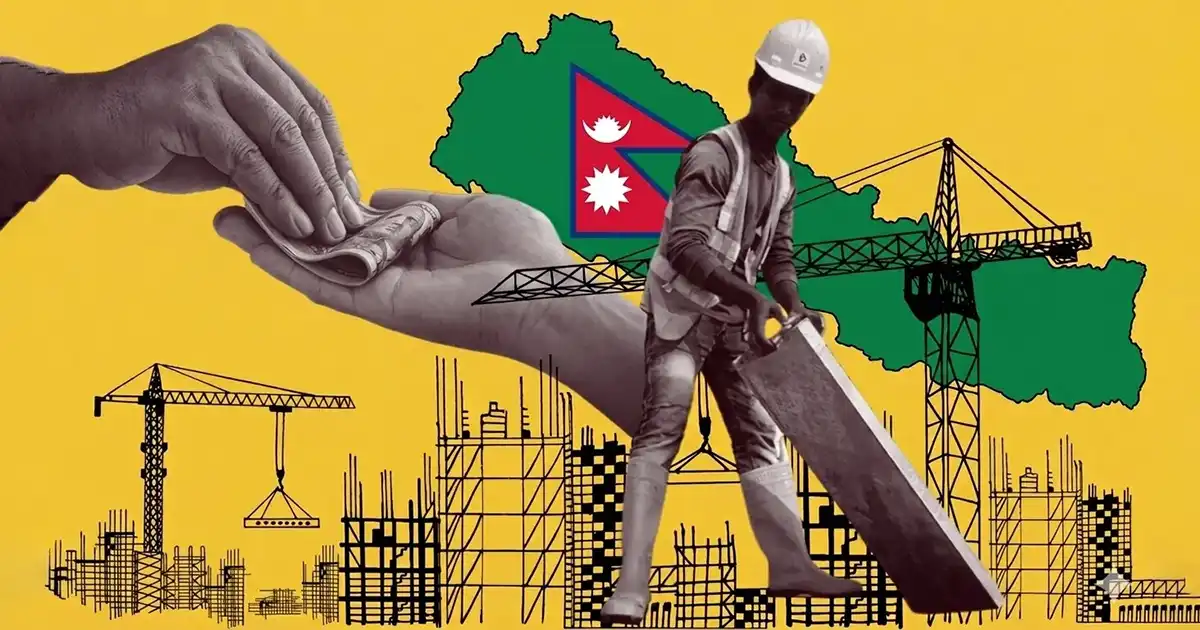
Dr. Bhatt also pointed to challenges on the human capital side of Nepal’s growth equation. Rising outward labor migration combined with a slowing population growth rate is straining the country’s supply of skilled workers, he said. To address this, he called for greater investment in education, healthcare, and skills training, alongside stronger efforts to retain skilled professionals within Nepal rather than losing them to opportunities abroad.
This concern echoes broader findings from international development bodies. The World Bank has repeatedly flagged Nepal’s heavy reliance on remittances and labor migration as both a short-term economic cushion and a longer-term risk to domestic human capital and productivity growth — a dynamic that mirrors Dr. Bhatt’s own remarks. Readers can explore the World Bank’s latest assessment of Nepal’s economic outlook at the World Bank Nepal country overview.
Capitalizing on Digital and AI Opportunities
Looking ahead, Dr. Bhatt urged Nepal to make full use of opportunities emerging from digitalization and artificial intelligence to boost efficiency across sectors. Building capital, developing a skilled workforce, and investing in technology, he said, together form the foundation needed to expand Nepal’s economic growth base going forward.
Good Governance as a Growth Multiplier
Dr. Bhatt closed his remarks by tying governance directly to prosperity, describing the two as mutually reinforcing. He reiterated that capital formation, human capital development, and sound policy reform must advance together — anchored by strong institutions — if Nepal is to move beyond its historical 4% average and sustain 7%-plus growth over the long run, rather than achieving it only in short, reform- or reconstruction-driven windows.
His remarks come at a time when Nepal’s National Planning Commission, which Dr. Bhatt now helps lead following his appointment earlier this year after serving as Executive Director at Nepal Rastra Bank, is working to chart the country’s development roadmap amid a broader slowdown in investment and credit growth across the economy.
Sources: National Planning Commission of Nepal, World Bank.

Economic Affair
- Budhigandaki Flood: 47 Rescued as Bridges Washed Away
- Nepal Supreme Court Handcuff Order: Police Barred From Routine Use
- 250+ Officials Deploy to Assess Rasuwa-Bhotekoshi Flood Damage
- Electricity VAT: Energy and Finance Ministers Strike Landmark Deal After Just 2 Months
- Nepal Inflation Shockingly Triples to 5.96% — Food and Transport Hit Hardest




Comments