
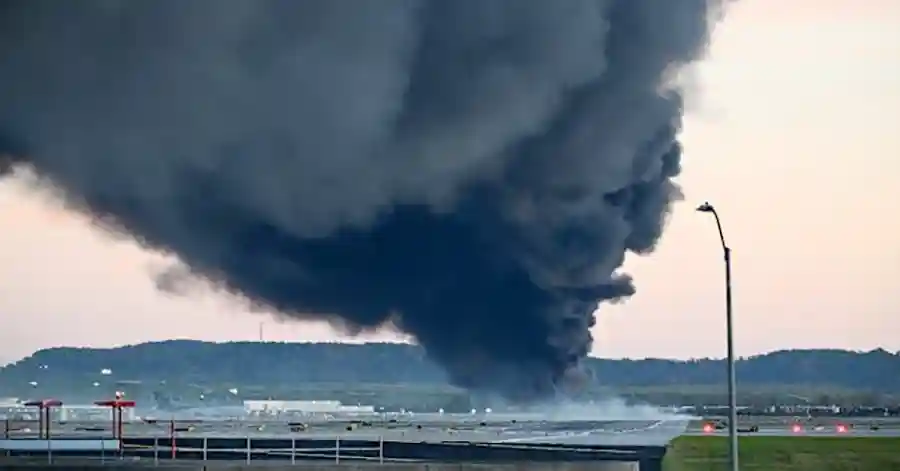





In a devastating road accident that underscores Pakistan’s escalating winter fog crisis, at least 14 people—including six children and five women—lost their lives when a mini-truck plunged into a dry canal in Punjab’s Sargodha district early Saturday morning. The horrific crash occurred near Ghalapur Bangla in Kot Momin tehsil, where near-zero visibility caused by thick fog led to one of the deadliest single-vehicle accidents in recent Pakistani history.
The truck was carrying 23 people traveling from Islamabad to Faisalabad to attend a funeral when tragedy struck in the pre-dawn hours. Seven people died at the scene, while the injured were rushed to nearby hospitals, where another seven people later died during treatment, raising the death toll to 14.
This heartbreaking incident has reignited urgent calls for improved road safety measures and stricter enforcement during Pakistan’s notoriously dangerous winter fog season, which has already claimed dozens of lives across Punjab province in January 2026 alone.
The Fatal Sequence: How the Sargodha Accident Unfolded
Motorway Closure Forces Detour to Deadly Local Route
According to rescue officials, the accident occurred because the motorway was closed due to fog, forcing the driver to take a local route through the Kot Momin tehsil area. This detour decision—while seemingly prudent given motorway closures—would prove fatal.
The accident occurred near Ghalapur Bangla where heavy fog had severely reduced visibility, causing the truck to veer off the road and fall into a canal while navigating the local route. The vehicle skidded off the Galapur Bangla bridge and plummeted into the canal below.
Rescue 1122 Emergency Response
Rescue 1122 received the distress call at 1:48 AM on January 17, 2026, and immediately launched relief operations. Emergency workers faced challenging conditions as they worked to extract victims from the wreckage.
According to Dawn News, the canal was dry at the time of the accident, but seven passengers were crushed underneath the vehicle and died on the spot. The truck’s weight pinned victims beneath it, complicating rescue efforts in the darkness and fog.
Rescue teams extracted all passengers and transported them to the Tehsil Headquarters (THQ) Hospital in Kot Momin. Another seven victims later succumbed to their injuries during treatment, with the deceased including 6 children, 5 women, and 3 men.
The Human Toll: Families Devastated on Way to Funeral
Journey of Grief Ends in Tragedy
The cruel irony of this accident cannot be overstated. All passengers were on their way to attend a funeral when their own lives were cut short. This extended family’s journey to pay respects to a deceased relative instead resulted in 14 more funerals—a compound tragedy that has devastated multiple families across Islamabad and Faisalabad.
According to The Express Tribune, the victims represent three generations of family members traveling together, highlighting how a single accident can destroy entire family structures in Pakistan’s close-knit communities.
Critical Injuries Among Survivors
Nine passengers survived the crash but sustained serious injuries requiring intensive medical care. Hospital sources indicate several remain in critical condition, raising fears the death toll could climb further. The survivors face not only physical recovery but also the psychological trauma of losing so many family members in a single horrific event.
Pakistan’s Winter Fog Crisis: A Deadly Pattern Emerges
181 Accidents in Lahore Alone Within 24 Hours
The Sargodha tragedy represents just one incident in a much broader road safety catastrophe unfolding across Punjab. 181 traffic accidents were reported over a 24-hour period in Lahore alone, leaving 211 people injured, with 74 critically injured and transferred to local hospitals while 134 received first aid at the scene.
These staggering numbers reveal the scale of Pakistan’s fog-related accident epidemic, with hundreds of crashes occurring daily during peak winter fog conditions.
Multiple Fatal Accidents Across Punjab on Same Day
Saturday’s death toll extended far beyond Sargodha. According to Dawn News, at least 24 people were killed and over 20 injured in two separate accidents, as a truck fell into a dry canal in Sargodha and a coach overturned near Balochistan’s Ormara tehsil.
In the Balochistan accident, 10 people died when a speeding passenger coach overturned on the Makran Coastal Highway at Hudd Goth near Gwadar’s Ormara tehsil. Officials attributed that crash to excessive speeding rather than fog, though both accidents highlight systemic road safety failures.
Recent Fog-Related Casualties Paint Grim Picture
On Tuesday, 10 people died and 21 were injured in multiple fog-related accidents across Punjab, with four losing their lives in a collision between a bus, a car and a motorcycle in Toba Tek Singh, three killed when a car and truck collided near Bhaban on the Indus Highway, three dying in two separate accidents in Okara, and seven critically injured in a multi-vehicle accident in Gujrat.
In early December, reduced visibility due to fog resulted in the collision of six trailer trucks on the Multan-Sukkur Motorway (M5), leaving seven people injured. The pattern is clear and deadly: Pakistan’s winter fog season has become an annual public health emergency.
Understanding Punjab’s Dense Fog Problem
Meteorological Conditions Creating Deadly Hazard
Dense fog has paralyzed Punjab province throughout January 2026, creating visibility conditions as low as 30-50 meters in many areas. According to Arab News, Pakistan Meteorological Department data showed visibility dropping to 30 meters in Narowal and Sheikhupura, 40 meters in Gujranwala, and 50 meters in Faisalabad, Sialkot Airport and Toba Tek Singh.
Dense fog continues to disrupt road travel and expose gaps in road safety and traffic management across Punjab during the winter season. The fog typically forms overnight and persists through early morning hours, making late-night and early-morning travel particularly hazardous.
Why Punjab’s Winter Fog Is So Dangerous
Several factors combine to make Punjab’s winter fog exceptionally deadly:
Moisture and Temperature Inversion: Punjab’s plains experience temperature inversions during winter months, trapping moisture near the ground and creating thick, persistent fog that doesn’t burn off until late morning.
Agricultural Burning: Crop residue burning in agricultural regions adds particulate matter to the atmosphere, worsening fog density and persistence.
High Traffic Volume: Punjab hosts Pakistan’s most heavily traveled roadways, meaning more vehicles navigate dangerous conditions simultaneously.
Mixed Traffic: Unlike controlled-access motorways, local routes feature mixed traffic including slow-moving tractors, carts, motorcycles, and fast-moving trucks—a deadly combination in zero-visibility conditions.
Motorway Closures and Traffic Management Responses
Extensive Highway Shutdowns Across Punjab
In response to dangerous fog conditions, the National Highways and Motorway Police (NH&MP) implemented extensive closures on Saturday. According to Pakistan Today, different sections of motorways including the M-1, M-2, M-3, M-4 and M-11 were closed due to dense fog.
PakWheels reports that NH&MP typically closes affected motorway sections during peak fog hours—usually from late night through mid-morning—and reopens them once visibility improves to safe levels, typically after 10:00 AM.
The Paradox: Motorway Closures Push Traffic to Deadlier Routes
While motorway closures aim to prevent accidents, they create an unintended consequence: diverting traffic onto local roads that are often more dangerous during fog conditions. The Sargodha accident exemplifies this paradox—the family was on a local route precisely because the motorway was closed for safety.
According to PakWheels analysis, GT Road (Grand Trunk Road) becomes significantly deadlier during dense fog compared to motorways due to mixed traffic flow, frequent roadside intersections, inadequate lighting, and the absence of controlled access. Motorways are often closed proactively during low-visibility conditions, while GT Road remains operational, exposing commuters to higher risk.
Current Motorway Status Updates
According to SUCH TV, the following motorway sections face regular closures during fog season:
- M-2 Motorway: Lahore to Kot Momin section
- M-11 Motorway: Lahore to Sialkot section
- M-3 Motorway: Faizpur to Jaranwala section
- M-4 Motorway: Pindi Bhattian to Gojra section
Travelers are advised to check NH&MP’s official social media channels and helpline (130) before embarking on journeys during winter months.
Political Responses and Condolences
Prime Minister and President Express Grief
President Asif Ali Zardari and Prime Minister Shehbaz Sharif expressed their deep sorrow over the loss of lives in the Sargodha and Ormara accidents, with President Zardari offering condolences to the families of the deceased and praying for the speedy recovery of the injured.
President Zardari emphasized that changing weather conditions were an undeniable reality and exercising caution while traveling was essential. He instructed provincial governments to enhance public awareness on safe driving practices.
Punjab Chief Minister Orders Investigation
Punjab CM Maryam Nawaz Sharif also expressed her deep grief over the loss of precious human lives in the Sargodha truck accident, emphasizing the need for timely rescue and relief operations to support the victims’ families.
CM Maryam directed the commissioner to submit a detailed report on the circumstances leading to the accident and the measures taken for assistance, while urging authorities to ensure strict safety protocols on roads and near water channels to prevent such tragic incidents in the future.
Road Safety Crisis: Systemic Problems Require Urgent Solutions
Pakistan’s Alarming Road Accident Statistics
Road accidents occur frequently in Pakistan, with the main reasons including overspeeding, hazardous overtaking and disregard for traffic rules. Pakistan records among the highest per-capita road fatality rates globally, with thousands killed annually in preventable crashes.
According to World Health Organization estimates, Pakistan experiences approximately 30,000 road deaths annually—though actual numbers may be significantly higher due to underreporting, particularly in rural areas.
Recent Major Accidents Highlight Pattern
The Sargodha tragedy joins a grim list of recent major accidents:
- January 7, 2026: Five passengers killed, 24 injured when a bus plunged into a ravine in Punjab’s Talagang district after the driver opted for an alternative route
- December 31, 2025: 14 passengers killed, 16 injured in head-on collision between a bus carrying university players and a van on Jhang-Faisalabad road
- December 17, 2025: Eight killed in multiple fog-related accidents across Punjab and Sindh
- December 2025: Six trailer trucks collided on M5 Motorway due to fog, injuring seven
Contributing Factors to Pakistan’s Road Safety Crisis
Vehicle Overloading: The Sargodha truck carried 23 passengers—far exceeding safe capacity for a mini-truck. Overloading is endemic in Pakistan due to economic pressures and weak enforcement.
Poor Vehicle Maintenance: Many commercial vehicles operate with faulty brakes, worn tires, and inadequate lighting—all critical during fog conditions.
Driver Training Deficiencies: Pakistan lacks comprehensive driver training and testing systems, meaning many commercial drivers lack skills for navigating dangerous conditions.
Inadequate Road Infrastructure: Many roads lack proper lighting, reflective markers, fog lights, and emergency shoulders necessary for safe travel.
Weak Traffic Law Enforcement: Rescue officials stated that accidents occurred due to violations of traffic laws, yet enforcement remains inconsistent and often corrupt.
Cultural Factors: Aggressive driving, reluctance to delay travel despite dangerous conditions, and fatalistic attitudes toward accidents all contribute to high casualty rates.
Expert Recommendations for Fog Safety
Critical Precautions for Drivers in Dense Fog
According to PakWheels safety experts, drivers must follow these essential precautions during fog:
Avoid Travel During Peak Fog Hours: If possible, skip trips during peak fog times (late night to early morning). Plan journeys between 10:00 AM and 5:00 PM when visibility usually improves.
Use Proper Lighting: Switch on fog lights and low-beam headlights only. High beams reflect back and worsen visibility. Use hazard lights ONLY when stopped, never while driving.
Reduce Speed Dramatically: Drop speed to around 40-60 km/h (or lower) in dense fog. You should be able to stop completely within the distance you can see clearly. Don’t rely on speed limits—they’re designed for normal conditions.
Increase Following Distance: Double or triple your normal following distance. Aim for a 4-5 second gap to avoid chain-reaction crashes if vehicles ahead brake suddenly.
Never Stop on Roadways: If visibility drops to near-zero, do not stop on the road, especially on bridges or highways. Cautiously exit to a service area or pull completely off the roadway onto a shoulder.
Eliminate Distractions: No phones, music, or conversations. Keep full focus on the road. Run windscreen wipers and defoggers to maintain clear glass.
Emergency Preparedness: Conduct pre-trip checks of tires, brakes, and battery. Pack warm clothes, water, snacks, a first-aid kit, a torch, and reflective warning triangles.
When NOT to Travel
If visibility is below 50 meters, seriously reconsider whether your journey is essential. No appointment or deadline is worth risking your life and the lives of passengers. Wait for conditions to improve or postpone travel entirely.
For funeral attendance or other time-sensitive events, consider leaving a day early and staying overnight near your destination rather than traveling during peak fog hours.
The Broader Context: Pakistan’s Transportation Challenges
Overcrowded Vehicles as Economic Necessity
The fact that 23 people were traveling in a single mini-truck reflects Pakistan’s transportation crisis. Many families cannot afford individual vehicles or multiple trips, leading to dangerous overcrowding. Economic pressures force people to accept risks that wealthier populations would never tolerate.
Infrastructure Investment Gaps
While Pakistan has made progress on motorway development, vast stretches of national and provincial highways remain poorly maintained, inadequately lit, and lacking basic safety features. Rural roads—where most Pakistanis live—receive minimal investment despite carrying substantial traffic.
Regulatory and Enforcement Weaknesses
Pakistan’s traffic police face resource constraints, inadequate training, and systemic corruption that undermines enforcement effectiveness. Vehicle inspection systems are inconsistent, allowing dangerous vehicles to operate commercially.
Learning from Global Best Practices
How Other Countries Manage Fog Hazards
Intelligent Transport Systems: Advanced nations use variable message signs, automated fog detection, and dynamic speed limits that adjust in real-time based on visibility conditions.
Fog Warning Systems: Some countries deploy roadside fog sensors that activate warning lights and reduce speed limits automatically when visibility drops below safe thresholds.
Public Awareness Campaigns: Regular media campaigns educate drivers about fog hazards and proper precautions, shifting cultural attitudes toward safety.
Strict Vehicle Standards: Mandatory fog lights, reflective markings, and regular safety inspections ensure vehicles can operate safely in low-visibility conditions.
Professional Driver Training: Comprehensive commercial driver licensing includes specific training for fog, night driving, and emergency situations.
What Needs to Change in Pakistan
Immediate Actions Required
Enhanced Weather-Based Traffic Management: Implement automated systems that close roads immediately when visibility drops below safe thresholds, with no delays or human decision-making required.
Mandatory Vehicle Safety Standards: Enforce strict standards for commercial vehicles including working fog lights, reflective markings, tire condition, and brake performance.
Public Awareness Blitz: Launch sustained media campaigns across TV, radio, and social media educating drivers about fog hazards and proper precautions.
Improved Emergency Response: Increase Rescue 1122 resources and position emergency vehicles strategically along high-risk routes during fog season.
Alternative Transportation During Fog Season: Provide subsidized bus services on safer routes during peak fog hours, reducing reliance on overcrowded private vehicles.
Long-Term Structural Reforms
Comprehensive Road Infrastructure Upgrade: Install proper lighting, reflective road markers, emergency shoulders, and safety barriers on all major highways.
Professional Driver Licensing Reform: Implement rigorous commercial driver testing including fog navigation, emergency response, and passenger safety protocols.
Vehicle Inspection and Certification: Establish mandatory annual safety inspections for all commercial vehicles with penalties for operating unsafe vehicles.
Traffic Law Enforcement Modernization: Deploy automated speed cameras, electronic ticketing, and digital payment systems to reduce corruption and increase compliance.
Data-Driven Policy: Establish comprehensive accident reporting and analysis systems to identify high-risk locations and implement targeted interventions.
The Human Cost: Remembering the Victims
Beyond statistics and policy discussions lie 14 individual human tragedies—each victim had dreams, families, and futures cut short by preventable circumstances. The six children killed will never attend school, graduate, marry, or contribute to society. The five women and three men leave behind devastated spouses, children, parents, and communities.
The nine survivors carry both physical injuries and psychological trauma that will affect them for years or decades. Their recovery requires not just medical care but comprehensive mental health support rarely available in Pakistan’s healthcare system.
A Call to Action: No More Preventable Deaths
The Sargodha fog accident should serve as a wake-up call for Pakistani society, government authorities, and individual citizens. Every fog-related death is preventable through proper infrastructure, adequate regulation, consistent enforcement, and individual responsibility.
Citizens must demand better from their government—adequate road infrastructure, functioning traffic law enforcement, and comprehensive public transportation alternatives. Government officials must prioritize road safety over other expenditures, recognizing that human life has value beyond economic calculation.
Most importantly, individual drivers must exercise personal responsibility by delaying travel during dangerous conditions, maintaining safe speeds, avoiding overloading, and prioritizing passenger safety over schedule convenience.
Conclusion: Tragedy That Demands Response
The deaths of 14 people in the Sargodha fog accident represent both a human tragedy and a policy failure. Pakistan’s winter fog season need not be a death sentence for travelers, but transforming this deadly pattern requires sustained commitment from government, civil society, and individual citizens.
As Pakistan mourns these latest victims, the question remains: how many more families must be destroyed before comprehensive action is taken? The fog will return next winter and the winter after that. The only question is whether Pakistan will finally prioritize road safety sufficiently to prevent these predictable, preventable tragedies.
For the 14 victims of the Sargodha accident and the hundreds more killed in Pakistan’s roads each month, change cannot come soon enough. Their deaths demand more than condolences and investigations—they demand systemic transformation that values human life above convenience, profits, or political considerations.
The fog may obscure visibility temporarily, but it must not obscure our vision for a safer Pakistan where families can travel without fear and funerals don’t become compound tragedies. Only sustained action—informed by expertise, driven by compassion, and executed with urgency—can honor these victims and prevent future deaths.

Economic Affair
- Budhigandaki Flood: 47 Rescued as Bridges Washed Away
- Nepal Supreme Court Handcuff Order: Police Barred From Routine Use
- 250+ Officials Deploy to Assess Rasuwa-Bhotekoshi Flood Damage
- Electricity VAT: Energy and Finance Ministers Strike Landmark Deal After Just 2 Months
- Nepal Inflation Shockingly Triples to 5.96% — Food and Transport Hit Hardest


Comments