












The USS Abraham Lincoln, one of the US Navy’s most powerful aircraft carriers, is finally heading home. After a grueling, record-setting deployment of more than 260 days in the Middle East, the warship is being pulled out and replaced by another carrier, the USS George Washington. The decision comes after weeks of alarming reports about a deteriorating mental health crisis, chronic supply shortages, and unsafe living conditions among the roughly 5,000 sailors and Marines serving aboard the ship.
President Donald Trump confirmed the swap on Friday, telling reporters that the Lincoln “is moving right now, or very shortly,” and that it would be replaced by “another very similar ship.” The announcement follows mounting pressure from military families, lawmakers, and independent reporting that painted a troubling picture of life aboard the carrier during its historic deployment against Iran-linked threats in the region.
This story has quickly become one of the most closely watched military personnel controversies of 2026, raising urgent questions about how long the Pentagon can keep sailors deployed before their physical and psychological wellbeing breaks down.
Quick Summary: What Happened to the USS Abraham Lincoln
- The USS Abraham Lincoln has been deployed since late November 2025, first in the Pacific and later shifting to the Middle East as tensions with Iran escalated.
- The carrier has now spent more than 260 consecutive days at sea, smashing previous deployment records for a US aircraft carrier strike group.
- Multiple reports describe worsening mental health among the crew, including alleged attempts by sailors to jump overboard.
- Sailors and their families have reported shortages of food, contaminated drinking water, broken plumbing, mold, mail delays, and deck safety hazards.
- The Navy is now sending the USS George Washington, currently in the South China Sea, to relieve the Lincoln.
- Acting Navy Secretary Hung Cao confirmed that a “small number” of mental health cases were treated, insisting there was no loss of life.
- Democratic lawmakers, including Senator Ruben Gallego and Congresswoman Sarah Jacobs, are demanding congressional access to inspect the ship.
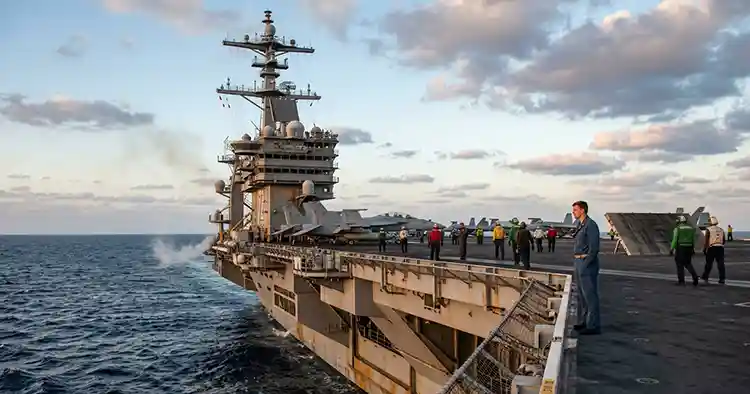
A Record-Breaking Deployment That Pushed Sailors to the Limit
Aircraft carrier deployments typically last between five and seven months. The Lincoln’s mission blew past that timeline by a wide margin. According to defense reporting, the carrier’s original return date was scheduled for May 2026, but the assignment was repeatedly extended as the United States remained engaged in operations connected to the Iran conflict.
By mid-August, the ship had logged roughly 260 days at sea — a run so long that it set a new benchmark among modern US carrier deployments. Central Command noted that during this stretch, the strike group carried out more than 10,000 aircraft flights and expended around 1.5 million pounds of ordnance, underscoring just how intense the operational tempo aboard the Lincoln had become.
For the thousands of young sailors and Marines living in the ship’s cramped berths, that intensity came at a steep human cost.
Reports of a Mental Health Crisis Aboard the Ship
Families of Lincoln crew members have spent weeks sounding the alarm about deteriorating psychological conditions on board. Letters shared with military news outlets described sailors pleading for relief, with one crew member writing to relatives last month that both their mental and physical health were “in danger.”
Reporting from outlets including Stars and Stripes and Navy Times indicated that several crew members had attempted to jump overboard during the deployment — a claim that has become the most disturbing element of the unfolding story. One military spouse, Annabelle Loma, told Navy Times that her husband was among those who had attempted to go overboard, and that the episode had jeopardized his naval career.
A Navy official later confirmed to CNN that at least one sailor went overboard in early August and was subsequently rescued, an incident the service classified internally as a mental health-related event.
Acting Navy Secretary Hung Cao publicly acknowledged the strain, stating on social media that a small number of mental health cases had been treated aboard the ship, while stressing that no lives had been lost. The Navy also told reporters it was reinforcing the Lincoln’s onboard support system by deploying additional resiliency counselors and social workers to supplement existing resources.
Officials pointed out that the ship already carries a sizable mental health team, including five chaplains, a psychologist, a social worker, three behavioral health technicians, and even a service dog assigned to support crew morale.
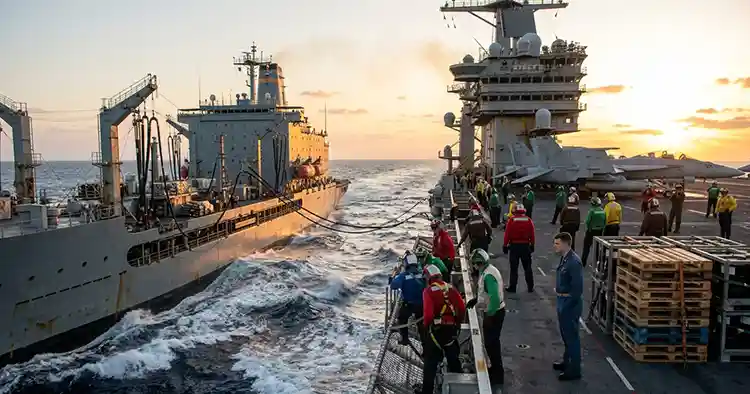
Why Extended Deployments Take a Psychological Toll
Military mental health experts have long warned that prolonged separation from family, disrupted sleep cycles, confined living quarters, and unpredictable combat operations create a uniquely difficult environment for service members. When those stressors are compounded by basic-needs shortages — as reportedly happened aboard the Lincoln — the risk of anxiety, depression, and crisis-level distress rises sharply. The situation aboard the Lincoln has reignited a broader debate in defense circles about whether the Pentagon’s current deployment cycles are sustainable for sailors’ long-term wellbeing.
Supply Shortages, Contaminated Water, and Failing Infrastructure
Mental health was not the only concern raised by families and crew. According to multiple reports, life aboard the Lincoln had become increasingly difficult due to a string of logistical and infrastructure failures, including:
- Food shortages, with the Navy acknowledging it had to prioritize which supplies reached the ship first.
- Contaminated or unreliable drinking water, raising basic health concerns for thousands of crew members.
- Plumbing failures, including broken toilets and reports of mold in living areas.
- Deck safety risks, which are especially serious on a warship where flight operations depend on strict safety protocols.
- Mail delivery disruptions, cutting off one of the few emotional lifelines sailors have to family back home.
In a statement to the Associated Press, the Navy explained that the war connected to Iran had created what it described as a highly contested environment, disrupting traditional supply routes throughout the Middle East. As a result, Navy leadership said it was forced to prioritize which categories of supplies reached the ship first — starting with food, followed by hygiene products, and only later, mail.
While the Navy’s explanation offers important operational context, families and lawmakers argue it does not fully account for how prolonged the shortages became or why the deployment was extended so far beyond its original timeline.
Trump Confirms the Carrier Swap — and Downplays the Concerns
President Trump addressed the controversy directly on Friday, confirming that the Lincoln would be swapped out for another carrier. When a reporter asked whether the nine-month deployment had lasted too long, Trump replied that it was “not nearly long enough,” a comment that quickly drew criticism from military family advocates online.
When the same reporter noted that families of crew members were worried about onboard conditions, Trump pushed back sharply, replying simply, “No, they’re not.” His comments stood in contrast to the growing public record of family testimonials, journalist reporting, and congressional statements describing serious concerns about the ship’s condition.
Despite the president’s dismissive tone, the decision to replace the Lincoln with another carrier suggests the Pentagon recognized the need to bring the deployment to a close, even as officials publicly downplayed the severity of the crisis.
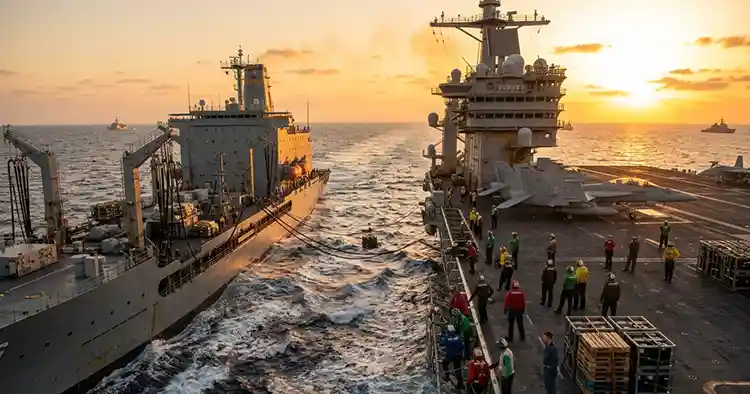
Meet the Replacement: USS George Washington
The Navy has selected the USS George Washington, currently operating in the South China Sea, to take over the Lincoln’s mission in the Middle East. The Wall Street Journal first reported on August 13 that the George Washington had been ordered to sail toward the region to relieve its sister carrier.
The George Washington is a Nimitz-class supercarrier, similar in size, capability, and crew complement to the Abraham Lincoln. Its deployment will allow the Lincoln to finally return to its home port of San Diego, California, ending a deployment that began in late November 2025.
The George Washington itself has a complicated recent history. The carrier previously underwent a multi-year, delayed maintenance overhaul and was the subject of past scrutiny after a string of crew suicides during its extended shipyard period — a fact that has added another layer of concern for advocacy groups now watching its fresh deployment closely.
Political Fallout: Lawmakers Demand Answers
The reports from aboard the Lincoln have triggered a political response in Washington. Congresswoman Sarah Jacobs, who represents San Diego — the Lincoln’s home port — said sailors and Marines aboard the ship were, in her words, going through an extremely difficult ordeal after months at sea, citing mental health strain, exhaustion, and safety concerns.
Senator Ruben Gallego has publicly called for members of Congress to be allowed to visit the carrier directly to assess conditions firsthand. Family members reportedly took part in a virtual briefing with Acting Navy Secretary Hung Cao last week, during which they raised detailed concerns about crew exhaustion, safety, and psychological wellbeing.
The Pentagon and US Central Command have pushed back against what they characterize as inaccurate reporting. Central Command noted on social media that the Abraham Lincoln has maintained one of the highest re-enlistment rates of any carrier in the Navy, citing an 84.4 percent figure, and stated firmly that no service members aboard the ship have died during the deployment. Officials described some of the public reporting as a disservice to the men and women serving aboard the vessel and their families.
This tension between official Navy statements and family/media accounts has become a central storyline in the controversy, with both sides pointing to different sets of facts to support their narrative.
Timeline: The USS Abraham Lincoln’s Historic Deployment
- Late November 2025 — USS Abraham Lincoln departs its home port in San Diego, initially sailing in the Pacific.
- Early 2026 — The carrier’s mission shifts toward the Middle East as tensions connected to Iran escalate.
- May 2026 — The originally scheduled return date for the Lincoln passes; the deployment is extended instead of ending.
- July 2026 — The ship reportedly hits 207 consecutive days at sea, breaking previous deployment records.
- Early August 2026 — A sailor reportedly goes overboard and is rescued; the Navy later classifies it as a mental-health-related incident.
- August 13, 2026 — The Wall Street Journal reports the USS George Washington has been ordered toward the Middle East to relieve the Lincoln.
- August 14–15, 2026 — Family members hold a virtual meeting with the Acting Navy Secretary; lawmakers demand transparency and access to the ship.
- August 15, 2026 (Friday) — President Trump confirms the ship swap publicly, while dismissing concerns about onboard conditions.

one-way attack drone air sea undersea Falcon Strike task force
Why This Story Matters Beyond One Ship
The controversy surrounding the USS Abraham Lincoln is not just about a single warship — it touches on much bigger questions facing the US military:
- Deployment length and readiness: How long can a Navy carrier strike group realistically stay at sea before crew wellbeing and mission readiness begin to suffer?
- Mental health infrastructure at sea: Are current onboard mental health resources — chaplains, psychologists, social workers — sufficient for deployments that stretch far beyond historical norms?
- Military transparency: The gap between official Pentagon statements and accounts from sailors’ families has fueled calls for greater congressional oversight of deployed units.
- Recruitment and retention: Stories like this one can shape how the next generation of recruits views a career in the Navy, at a time when the military already faces recruitment challenges.
- Supply chain resilience during active conflict: The disruptions reported aboard the Lincoln highlight how modern regional conflicts can strain even the world’s most advanced military logistics systems.
What Happens Next for the Crew and the Ship
With the George Washington now underway toward the region, the Abraham Lincoln is expected to begin its journey home to San Diego in the coming weeks. Sailors and Marines aboard the ship will likely undergo standard post-deployment medical and psychological screening once they return to port — a process the Navy typically uses to identify service members who may need continued mental health support after a difficult deployment.
Meanwhile, scrutiny of the Lincoln’s deployment is unlikely to fade quickly. Lawmakers have signaled they intend to keep pressing for access to the ship and for a fuller public accounting of what went wrong with supply chains, infrastructure, and crew support during the nearly nine-month mission. Whether that pressure translates into policy changes — such as firmer limits on how long a carrier strike group can remain deployed — remains to be seen.
For now, the swap of the Abraham Lincoln for the USS George Washington marks the end of one of the most difficult chapters in recent US Navy deployment history, even as the debate over what caused it, and who is accountable, continues to play out in Washington.
Frequently Asked Questions
Why is the USS Abraham Lincoln being replaced? The carrier is being replaced after a record-breaking deployment of more than 260 days in the Middle East, during which reports emerged of a serious mental health crisis among crew members, along with shortages of food, water, and basic supplies.
What ship is replacing the USS Abraham Lincoln? The USS George Washington, a Nimitz-class carrier currently in the South China Sea, has been ordered to the Middle East to take over the Lincoln’s mission.
Did any sailors die aboard the USS Abraham Lincoln? US Central Command and Navy officials have stated that no service members aboard the carrier have died during the deployment, though at least one sailor reportedly went overboard in early August and was rescued.
How long was the USS Abraham Lincoln deployed? The carrier departed San Diego in late November 2025 and remained deployed for more than 260 consecutive days, making it one of the longest carrier deployments in recent US Navy history.
What has the Navy done in response to the crisis? The Navy says it is sending additional resiliency counselors and social workers to the ship and has confirmed the deployment will soon end with the arrival of the USS George Washington.
Sources and Further Reading
- Time: What to Know About the Growing Concerns Over Conditions on the Long-Deployed USS Abraham Lincoln
- Task & Purpose: Navy sending more mental health help to the USS Abraham Lincoln crew
- The National: Conditions on USS Lincoln raise questions as new aircraft carrier heads towards Middle East
- The Hill: New aircraft carrier going to Middle East amid questions over conditions on USS Abraham Lincoln
- Xinhua: USS Abraham Lincoln to be replaced amid supply, crew mental health concerns
This article is based on publicly available reporting as of August 16, 2026. Details of an ongoing, developing story may change as the Navy, Pentagon, and Congress release further information.

Economic Affair
- Budhigandaki Flood: 47 Rescued as Bridges Washed Away
- Nepal Supreme Court Handcuff Order: Police Barred From Routine Use
- 250+ Officials Deploy to Assess Rasuwa-Bhotekoshi Flood Damage
- Electricity VAT: Energy and Finance Ministers Strike Landmark Deal After Just 2 Months
- Nepal Inflation Shockingly Triples to 5.96% — Food and Transport Hit Hardest





Comments