





A quiet settlement in Bara district is reeling this week after Nepal Police arrested two people in connection with the murder of a three-year-old girl, in a case that has triggered street protests, disrupted highway traffic, and raised urgent questions about child safety in Nepal’s rapidly growing municipal settlements. In a twist that has shocked residents and investigators alike, one of the men taken into custody had reportedly joined the very search party that went looking for the missing child after she disappeared.
This report lays out the confirmed sequence of events, what police have said about the investigation, the community’s response, and the broader legal and child-protection context in Nepal — while deliberately avoiding graphic detail out of respect for the victim and her family.
What Police Say Happened in Jitpursimara
The victim, identified by police as Garima Chaudhary, lived with her family in the Sukumbasi settlement of Dashdhure, Ward 1 of Jitpursimara Sub-Metropolitan City in Bara district. According to Nepal Police, the toddler went missing on Sunday morning, prompting an immediate search by family, neighbours, and law enforcement.
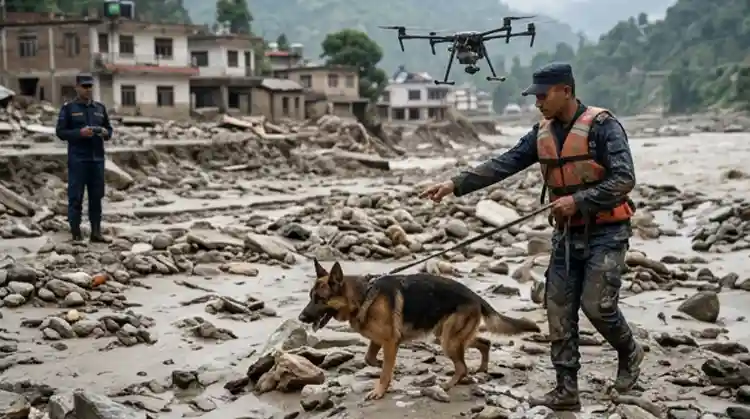
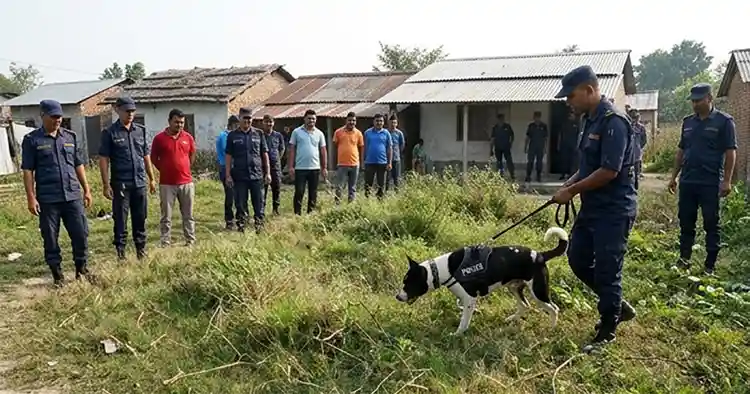
Despite the search, investigators were initially unable to determine that the child had already been killed. It was only after residents in the settlement reported a foul smell coming from an abandoned house roughly 200 metres from the family’s home that police, aided by a trained tracking dog, located her body on Tuesday evening. The child’s remains had been wrapped in cloth and left inside the vacant structure.
The Arrest at the Scene
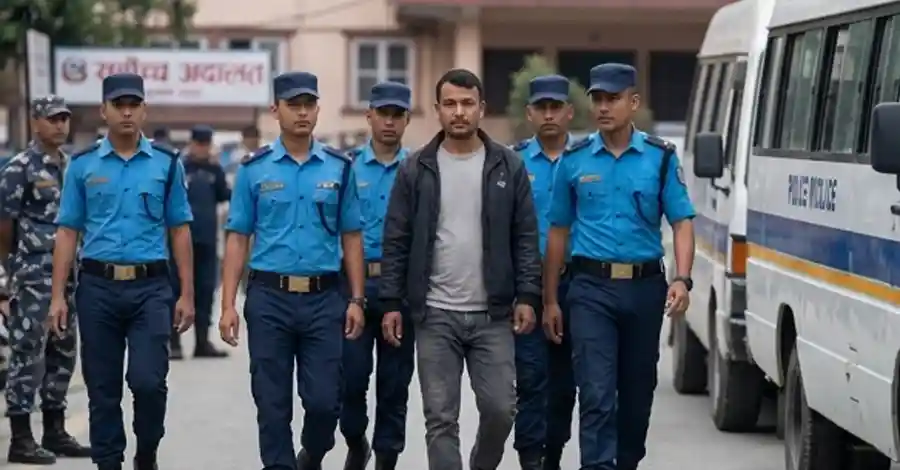
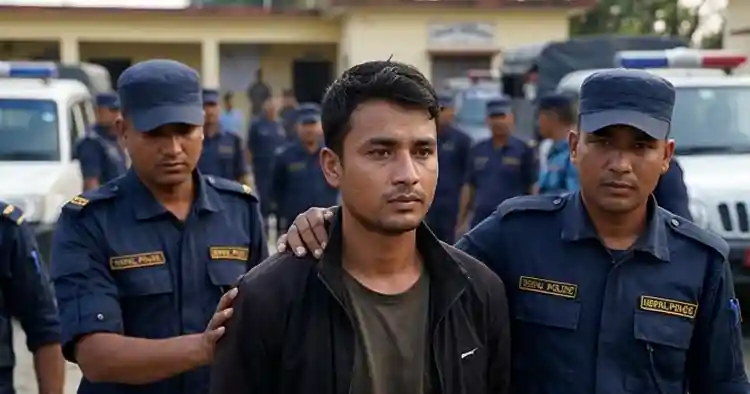
Area Police Office, Simara, confirmed that a K9 unit was brought in from the Bara Police Office on Tuesday evening to assist with the search. Police Inspector Prakash Thapa said that once the tracking dog signalled toward the location, officers made an arrest directly at the scene. The man taken into custody, identified as Suman Thapa of Ward 2 of the same municipality, is reported by police to have confessed to raping and killing the child.
What has drawn particular public attention is that Suman Thapa was reportedly present around the crime scene during the search operation in the hours after the girl went missing — appearing, according to local accounts, to actively participate in efforts to locate her.
A Second Arrest for Investigation
Police also detained Progress Chaudhary, the driver of a “Magic” passenger van bearing registration number Na 1 Ja 7758 that runs the Birgunj–Pathalaiya route, on which Suman Thapa reportedly worked as a conductor. Chaudhary was taken into custody as part of the ongoing investigation. However, Thapa has told police that he alone was involved in the crime, according to investigators. The victim’s family lived near the home of the van driver, and the toddler was known to visit that household regularly, which police say created the opportunity for the alleged abduction.
How the Timeline Unfolded
Piecing together statements gathered by investigators, police say the sequence of events looks like this:
- Sunday morning: The child went missing from her family’s home in Dashdhure at around 8:30 a.m. Her family alerted police and a search began immediately.
- Sunday, later: According to his statement to police, Suman Thapa allegedly took the child from the driver’s house to the location where she was later found and returned afterward.
- Sunday afternoon: Police say Thapa returned to the scene and wrapped the child’s body in cloth.
- Monday–Tuesday: Despite an active search, investigators were unable to locate the child or determine what had happened.
- Tuesday evening: A K9 search team was deployed after residents reported a smell coming from a vacant house. The body was recovered, and Thapa was arrested at the scene.
Police say the child had only recently been enrolled in the play group at Saraswati Basic School in Ward 2 of Jitpursimara, beginning her early education just weeks before her death.
A Family in Shock
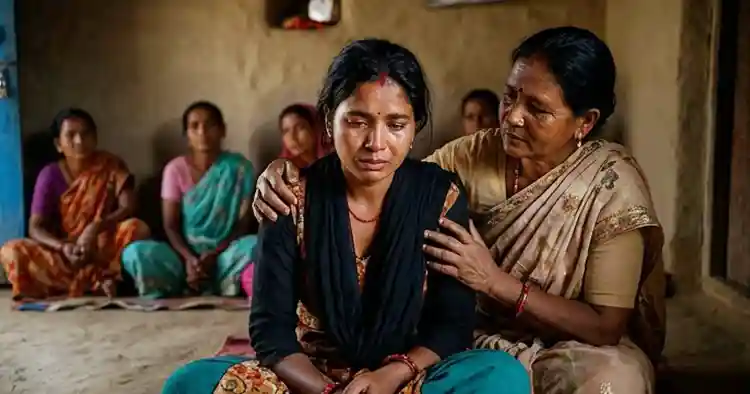
The child’s mother, Manmati Chaudhary, has reportedly remained in a state of semi-consciousness since Tuesday, unable to speak with relatives or the media. Family members and neighbours gathered at the family’s home on Wednesday morning, as word of the arrest spread through the community. Local reporting describes a household and settlement left devastated by the loss of a child barely old enough to have started school.
Out of respect for the family’s privacy and ongoing grief, this report does not detail further personal information about the victim’s relatives beyond what has already been made public through police statements.
Community Anger Boils Over Into Street Protests
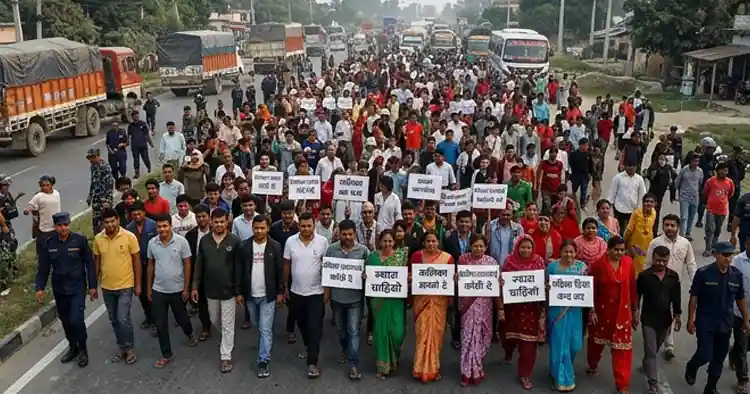
News of the arrest ignited immediate public anger in Simara. Local residents gathered outside the Area Police Office demanding the harshest possible punishment for those found responsible for the child’s rape and murder. Beginning Wednesday afternoon, demonstrators blocked the Birgunj–Pathalaiya road section for roughly two hours, disrupting traffic along one of the region’s key transit corridors.
Public protests following child murder cases are not unusual in Nepal, where communities frequently mobilize to demand accountability in the wake of crimes against children, particularly in cases involving sexual violence. The scale and intensity of the Simara demonstration reflects both the shock of the crime itself and the unsettling detail that one of the accused had reportedly taken part in the search for the missing girl.
What Nepali Law Says About Crimes Against Children
Nepal’s legal framework treats sexual violence against children as one of the most serious categories of crime under its penal code, with sentencing that escalates sharply based on the victim’s age.
Rape and Sexual Violence Penalties
Under Section 219 of Nepal’s National Penal Code (Muluki Aparadh Sanhita) 2074 (2017), the age of consent is set at 18, meaning any sexual contact with a child is classified as rape regardless of purported consent. According to a detailed legal guide published by Law Alpine, the penalties are age-graded and severe: rape of a victim under 10 years old carries a sentence of 16 to 20 years, rape of a victim under 14 carries 14 to 16 years, and further graded penalties apply up to age 18.
A separate summary of the same statute notes that penalties range up to life imprisonment when the victim is under 10 years old, with fines added on top of the custodial sentence. Because the victim in the Simara case was only three years old, any conviction under this provision would fall at the most severe end of Nepal’s sentencing framework.
Homicide and Aggravating Factors
Nepal’s homicide law separately treats the killing of a child as an aggravating factor that pushes sentencing toward the maximum available penalty. A legal explainer on Nepal’s homicide statutes notes that aggravating factors used to justify maximum sentencing include premeditation, murder committed during a rape, and the killing of a child or elderly person. In cases where rape and murder occur together, as police allege happened in Simara, courts in Nepal typically treat the offences cumulatively, compounding the potential sentence.
The Children Act 2075
Beyond the penal code, Nepal’s Act Relating to Children 2075 (2018) establishes a broader child-protection framework covering abuse, exploitation, and neglect. A legal resource on Nepal’s child protection framework notes that the Children Act 2075 protects children from abuse, exploitation, neglect, and harmful treatment, complementing the criminal penalties available under the penal code with civil child-welfare protections, victim support services, and reporting mechanisms.
Why Cases Like This Are Especially Hard to Prevent
Child safety advocates in Nepal have long pointed to specific structural risk factors that make young children in informal or low-income settlements especially vulnerable to opportunistic predators — often people already known to the family or living nearby, rather than strangers.
Familiarity as a Risk Factor
In this case, police say the child regularly visited the home of the van driver near her own family’s house, a pattern of movement common in tightly packed, informal settlements where children move freely between neighbouring households. That same familiarity, investigators say, appears to have given the accused access and opportunity. Child protection researchers globally, and in Nepal specifically, consistently find that the majority of child sexual abuse cases involve someone already known to the child or family, rather than a stranger — which is precisely why community vigilance, not just stranger-danger awareness, is considered central to prevention.
Gaps in Informal Settlements
Sukumbasi (informal or landless squatter) settlements like Dashdhure often lack the infrastructure — consistent lighting, formal housing registration, community oversight bodies — that can make it easier to notice when a child goes missing or when an adult’s behaviour raises concern. Advocacy groups working on child rights in Nepal have repeatedly flagged that children in such settlements face compounded vulnerability due to poverty, informal housing status, and limited access to consistent schooling and supervision.
How to Report Child Abuse or a Missing Child in Nepal
Nepal maintains a dedicated national child protection mechanism designed specifically for situations like this one. According to CWIN-Nepal, the organization that pioneered the service, the toll-free Child Helpline number 1098 was launched in 2007 and offers rescue, emergency support, emergency shelter, legal support, and psychosocial counselling for children affected by violence, abuse, and exploitation. A separate legal resource confirms that anyone who notices child abuse of any kind can contact Child Helpline Nepal at 1098 or dial 100 to report the incident immediately.
Beyond the helpline, child rights violations can also be reported through formal institutional channels. A legal explainer on Nepal’s child rights framework notes that child rights violations can be reported to the National Child Rights Council or District Child Welfare Boards, in addition to helplines such as
Why the Search-Party Detail Has Shaken Public Trust
Perhaps no single element of this case has unsettled residents more than the detail that Suman Thapa was reportedly seen moving around the crime scene alongside police and neighbours during the initial search for the missing girl — appearing, by local accounts, to be one of the many concerned community members asking “who could have done this, and how do we find them?” That an accused person may have inserted himself into the search for his own alleged victim is a pattern that, while rare, has been documented in criminal investigations elsewhere in the world, and it complicates the emotional process of community healing in ways that a straightforward stranger-danger case does not.
For investigators, such behaviour is not unprecedented either. Criminologists studying offender behaviour patterns note that some perpetrators, particularly those known to the victim’s family or community, may attempt to appear helpful or concerned in the aftermath of a crime — whether to deflect suspicion, to monitor the progress of an investigation, or due to genuine confusion about their own culpability. Whatever the underlying psychology, the practical effect in Simara has been to deepen the sense of betrayal felt by neighbours who briefly stood alongside a man police now allege was responsible for the crime itself.
The Broader Pattern: Child Safety in Nepal’s Growing Municipalities
The Simara case has reignited a conversation that child rights advocates in Nepal have pushed for years: as informal settlements expand around municipalities like Jitpursimara, child-safety infrastructure has often failed to keep pace with population growth. Dashdhure, like many sukumbasi and squatter communities across the Tarai region, sits at the intersection of rapid, unplanned urbanisation and limited access to consistent municipal services.
Community-Level Prevention Measures
Child protection organizations operating in Nepal typically recommend a combination of community-level and household-level measures to reduce the risk of exactly this kind of crime:
- Supervised movement for young children. Toddlers and preschool-age children moving freely between neighbouring households, while common in close-knit communities, increases exposure to unsupervised contact with adults outside the immediate family.
- Community watch networks. Ward-level child protection committees, which exist on paper in many municipalities under Nepal’s Act Relating to Children 2075, can play a stronger role when actively staffed and funded rather than existing only as a formality.
- School-based awareness. Because the victim in this case had only just been enrolled in a play group, early childhood education settings are increasingly seen by child-safety advocates as a natural point to introduce age-appropriate personal safety concepts for very young children.
- Faster missing-child protocols. The gap between the child’s disappearance on Sunday morning and the discovery of her body on Tuesday evening has already drawn local criticism, with residents questioning whether faster coordination between family, community members, and police in the earliest hours after a child goes missing could alter outcomes in future cases.
The Role of Local Media and Public Pressure
Nepal’s district- and national-level media have historically played an outsized role in ensuring that child murder and abuse cases receive sustained attention rather than fading from public view after the initial arrest. Sustained coverage, alongside public demonstrations like the one seen this week in Simara, has in past cases helped push prosecutions forward and, in some instances, prompted local governments to strengthen ward-level child protection committees. Whether that pattern repeats in Bara district will likely depend on how the case unfolds through the courts in the weeks ahead.
What Happens Next in the Investigation
With both suspects now in police custody, the case moves into its formal investigative and prosecutorial phase. Nepal Police typically compiles forensic evidence, witness statements, and a formal charge sheet before a case is forwarded to the district court for prosecution. Given the confession police say Suman Thapa has already provided, along with physical evidence recovered from the scene, investigators are expected to build a case centred on both the rape and homicide provisions of the penal code described above.
For Progress Chaudhary, the van driver taken into custody alongside Thapa, his role remains under investigation. Police have not publicly stated that he is accused of direct involvement in the assault itself, and Thapa has told investigators that he acted alone. Nepali criminal procedure allows for individuals to be held for questioning while investigators determine the extent, if any, of their involvement or knowledge of a crime — a distinction that will likely become clearer as the case proceeds toward formal charges.
A Community Demanding Accountability
The scenes outside the Simara police office this week — residents blocking a national highway corridor, demanding the harshest available punishment — reflect a pattern seen repeatedly across Nepal when children are the victims of sexual violence and murder. Public pressure in such cases often plays a role in ensuring that investigations move quickly and that prosecutions are pursued vigorously, even as legal experts caution that due process must still be followed to ensure that any conviction is secure and appeal-proof.
For the family of Garima Chaudhary, no legal outcome will undo the loss of a three-year-old who had just begun her first weeks of school. But as the case moves through Nepal’s justice system, it will test whether the country’s child-protection laws — among the strictest in the region on paper — can deliver the accountability that a grieving community is now demanding in the streets of Simara.
Further Reading and External Sources
- CWIN-Nepal: Child Helpline Nepal 1098
- Law Alpine: Child Sexual Abuse Law in Nepal — Penalty Guide (2026)
- Law Alpine: Pedophile Law in Nepal — Child Sexual Abuse in Nepal (2026)
- Common Law Nepal: Child Law in Nepal — Rights, Protections & Legal Framework
- Nepal Lawyer: Nepal Child Rights — Legal Framework & Implementation
- Nepal Divorce Services: Homicide Law Nepal — Murder, Manslaughter & Penalties
If you or someone you know needs to report child abuse or a missing child in Nepal, contact Child Helpline Nepal at 1098 (toll-free) or dial 100 for police assistance.

Economic Affair
- Budhigandaki Flood: 47 Rescued as Bridges Washed Away
- Nepal Supreme Court Handcuff Order: Police Barred From Routine Use
- 250+ Officials Deploy to Assess Rasuwa-Bhotekoshi Flood Damage
- Electricity VAT: Energy and Finance Ministers Strike Landmark Deal After Just 2 Months
- Nepal Inflation Shockingly Triples to 5.96% — Food and Transport Hit Hardest


Comments