




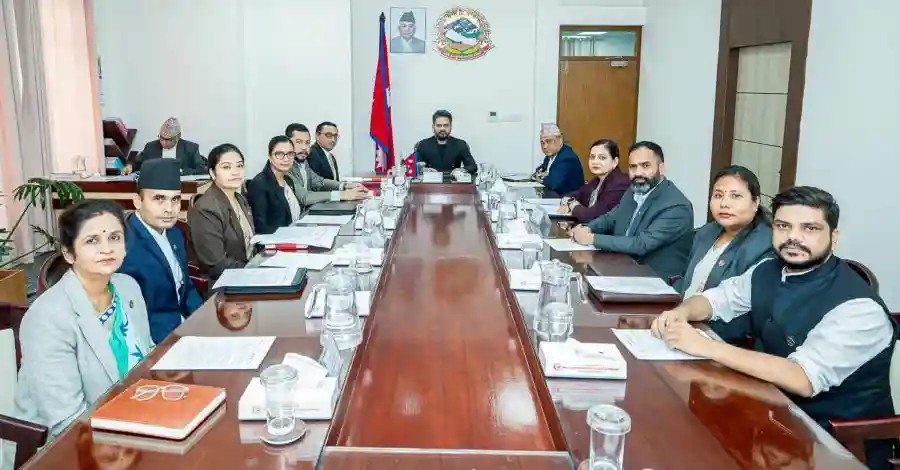
Kathmandu witnessed a whirlwind of high-level governance activity this week as the Nepal Council of Ministers signed off on ten far-reaching decisions in a single sitting. From a landmark bureaucratic promotion to a multi-billion-rupee foreign grant for Kathmandu’s international airport, Wednesday’s cabinet meeting has set the tone for Nepal’s administrative and diplomatic priorities heading into the final months of 2026. At the center of the announcement is the elevation of senior civil servant Kamal Prasad Bhattarai, whose promotion to the rank of Secretary marks a significant step in Nepal’s provincial administration.
This detailed report breaks down every decision made by the Council of Ministers, explains why each matters, and places Nepal’s latest policy moves in the context of the country’s broader development, diplomatic, and public-service goals.
Quick Summary — What Happened in Nepal’s Cabinet Meeting?
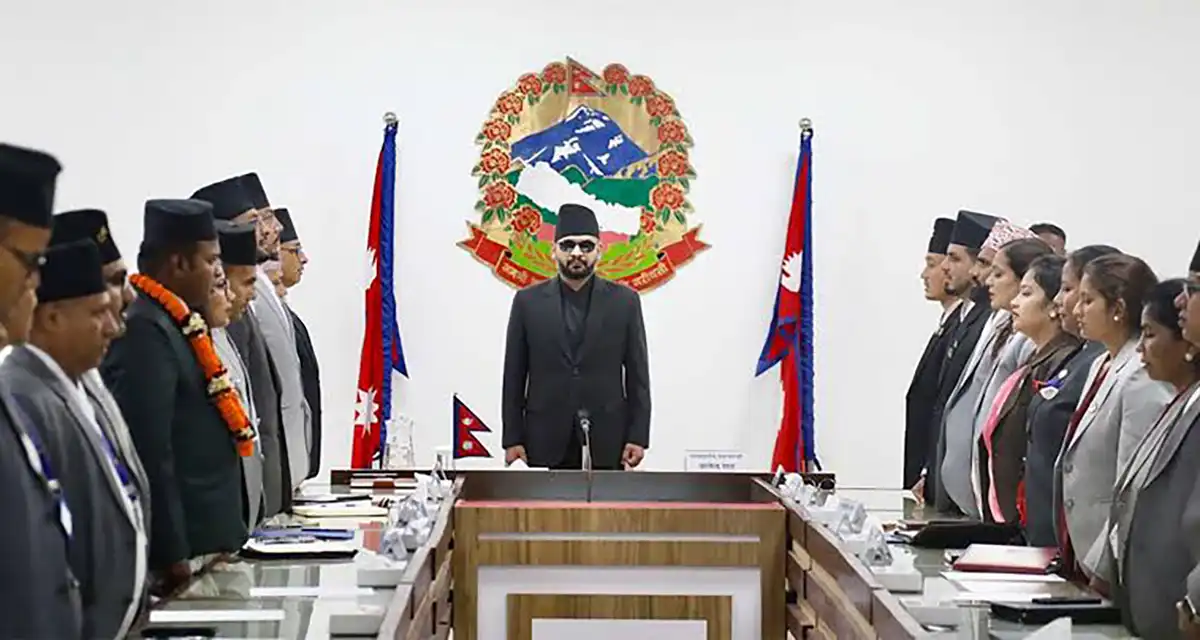
The Council of Ministers of the Government of Nepal convened this Wednesday and cleared a packed agenda covering public administration, civil aviation infrastructure, disaster preparedness, foreign diplomacy, education sector wages, international air transport, and pending legislation. The Cabinet meeting produced ten formal decisions, the most prominent being the promotion of Joint Secretary Kamal Prasad Bhattarai to the special class (Rajapatrankit Vishisht Shreni) and his appointment as Chief Secretary of Bagmati Province.
Below, we walk through each decision in detail, in the same order the government listed them, along with background context and analysis.
1. Kamal Prasad Bhattarai Promoted to Chief Secretary of Bagmati Province
The single most talked-about decision from Wednesday’s Cabinet meeting is the promotion of Joint Secretary Kamal Prasad Bhattarai. The Council of Ministers elevated Bhattarai to the special class of Nepal’s civil service — the country’s most senior bureaucratic tier — and simultaneously appointed him Chief Secretary of the Office of the Chief Minister and Council of Ministers, Bagmati Province.
Who Is Kamal Prasad Bhattarai?
Before this promotion, Bhattarai had been serving in an acting capacity within Bagmati Province’s provincial administration, where he was already managing the complex task of consolidating the province’s ministries. Provincial media reported that Bagmati Province had recently reduced its number of ministries from fourteen to eight in an effort to cut administrative costs and improve efficiency, and that Bhattarai, as acting chief secretary, had been at the forefront of resolving the resulting administrative overlaps, including offices where a single merged ministry still had two or three secretaries assigned to it.
His formal promotion to Secretary rank now gives him full authority to complete that restructuring and to lead the province’s civil service under Chief Minister Indra Bahadur Baniya and Governor Yadav Chandra Sharma.
Why This Promotion Matters for Bagmati Province
Bagmati Province, which encircles the Kathmandu Valley and is Nepal’s most populous and administratively significant province, has faced repeated turnover and structural confusion at the top of its bureaucracy since the province’s creation under Nepal’s 2015 federal constitution. A permanent, senior-level Chief Secretary is expected to bring administrative stability, accelerate service delivery to citizens, and give the merged ministries a single point of authority for implementation. Analysts who track Nepal’s federalism transition have long argued that provincial administrations need experienced special-class officers to make Nepal’s three-tier federal system function smoothly — a gap this appointment is intended to help close.
2. Software Development and Operation Committee (Formation) Order, 2083 Approved
The cabinet approved the “Software Development and Operation Committee (Formation) Order, 2083,” a regulatory instrument aimed at formalizing how government software systems are built, maintained, and governed. As Nepal accelerates its digital governance push — including e-governance portals, digital ID systems, and integrated public service platforms — this order is expected to create clearer institutional accountability for the software that increasingly underpins day-to-day government operations.
Digital governance has become a priority across South Asia, and Nepal’s move mirrors similar administrative digitization efforts seen in neighboring countries. For readers interested in how digital government platforms are evolving globally, the United Nations E-Government Development Index offers a useful international benchmark against which Nepal’s digital reforms can be measured.
3. Japan Grants Nearly NPR 2.73 Billion for Tribhuvan International Airport Air Traffic Control Upgrade
In one of the Cabinet meeting’s biggest financial decisions, the Council of Ministers agreed to accept a grant of approximately NPR 2 arba 73 crore (roughly NPR 2.73 billion) from the Government of Japan. The funds are earmarked for a project to improve air traffic control (ATC) systems at Tribhuvan International Airport (TIA), Nepal’s sole international gateway, located in Kathmandu.
Why Air Traffic Control Modernization Matters
Tribhuvan International Airport has faced sustained criticism over congestion, delays, and safety concerns tied to aging infrastructure, even as passenger and flight volumes continue to climb year after year. Nepal’s mountainous terrain and unpredictable weather already make air navigation uniquely challenging, and outdated ATC equipment compounds those risks. Japan has been one of Nepal’s most consistent development partners in aviation infrastructure for decades, and this grant continues that long-standing cooperation.
Improved air traffic control systems are expected to increase the airport’s safe handling capacity, reduce flight delays, and bring Nepal’s aviation safety standards closer in line with International Civil Aviation Organization (ICAO) recommendations. Readers wanting more background on global aviation safety standards can consult the International Civil Aviation Organization (ICAO), the UN agency that sets international norms for air traffic management.
4. Delegation to Attend Bilateral Meeting in India on August 20–21
The cabinet approved sending a Nepali delegation, led by a Joint Secretary from the Ministry of Home Affairs, to participate in a bilateral meeting scheduled to take place in India. Nepal and India share an open border and maintain close security, trade, and cultural cooperation, and home affairs-level delegations regularly meet to coordinate on border management, security cooperation, and cross-border crime prevention.
5. Approval to Establish Asian Disaster Preparedness Center Sub-Centre in Nepal
The government also approved the establishment of a sub-center of the Asian Disaster Preparedness Center (ADPC) within Nepal. The ADPC is a regional intergovernmental organization that works across Asia and the Pacific on disaster risk reduction, climate resilience, and emergency preparedness capacity-building.
Why Nepal Needs Stronger Disaster Preparedness Infrastructure
Nepal sits in one of the world’s most seismically active zones and remains highly vulnerable to earthquakes, landslides, floods, and glacial lake outburst floods. The devastating 2015 Gorkha earthquake, which killed nearly 9,000 people and caused billions of dollars in damage, remains a stark reminder of the country’s exposure to natural disasters. Establishing a dedicated ADPC sub-center in Nepal is expected to strengthen early-warning systems, improve inter-agency coordination during emergencies, and give Nepal direct access to regional expertise and training resources. For more information on the organization’s regional mandate, see the Asian Disaster Preparedness Center’s official site.
6. Nepali Delegation to Attend UN General Assembly’s 81st Session in New York
The Council of Ministers approved sending a Nepali delegation, led by the Minister for Foreign Affairs, to the 81st session of the United Nations General Assembly (UNGA) in New York, United States. According to the United Nations’ own published calendar, the 81st session of the UN General Assembly opens on September 8, 2026, with the high-level General Debate — the annual gathering where heads of state and government deliver policy addresses — beginning on September 22, 2026.
What Nepal Typically Raises at the UN General Assembly
Nepal has traditionally used its UNGA platform to advocate for the interests of least-developed and landlocked developing countries, climate justice for vulnerable mountain nations, UN peacekeeping reform (Nepal is one of the largest troop-contributing countries to UN peacekeeping missions), and stronger international cooperation on disaster resilience. Full details of the session’s schedule and themes are available through the official United Nations General Assembly website.
Monthly Salary Grant Increased by NPR 5,000 for ECD Facilitators, School Staff and School Helpers
In a decision with direct impact on tens of thousands of education-sector workers, the cabinet approved a monthly increase of NPR 5,000 in the remuneration grant that the federal government provides to Early Childhood Development (ECD) facilitators, school staff, and school helpers.
Why This Wage Increase Matters for Nepal’s Education System
Early childhood educators and support staff in Nepal’s public schools have long been among the lowest-paid workers in the education sector, despite playing a foundational role in child development and school operations. Teachers’ unions and civil society groups have repeatedly petitioned the government for better pay and working conditions for this category of staff. This increase is expected to improve retention, morale, and the quality of early-childhood education services across Nepal’s public school system, which serves the vast majority of the country’s school-age children.

8. Teacher Salaries Fixed at Starting Pay of Relevant Civil Service Grades
Alongside the ECD wage increase, the cabinet decided that teachers working under the “teaching support grant quota” at the secondary level (grades 9–10) and basic level (grades 6–8) will now receive salaries equal to the starting pay of the Secondary Third Class and Lower Secondary Third Class grades, respectively. This decision effectively standardizes pay for grant-quota teachers with their permanently appointed counterparts at the entry level, addressing a long-standing pay-parity grievance within Nepal’s teaching workforce.
9. Nepal and Saudi Arabia to Sign Bilateral Air Service Agreement
The Council of Ministers approved a decision to negotiate and sign a bilateral Air Service Agreement (ASA) between Nepal and Saudi Arabia. Bilateral air service agreements establish the legal framework that allows airlines from both countries to operate scheduled commercial flights between them, covering matters such as designated carriers, route rights, and flight frequencies.
Why an Air Service Agreement with Saudi Arabia Is Significant
Saudi Arabia is one of the largest destinations for Nepali migrant workers, with hundreds of thousands of Nepali citizens employed there across construction, hospitality, and service industries. A formal bilateral air agreement is expected to pave the way for expanded direct flight routes and greater commercial aviation capacity between the two countries, potentially easing travel for migrant workers, pilgrims traveling for Umrah and Hajj, and the broader Nepali diaspora in the Gulf region. Standards for such international agreements generally follow frameworks set by the International Air Transport Association (IATA).
10. Bills to Amend Two Key Financial Laws Approved for Parliament
Finally, the cabinet approved forwarding two important pieces of financial legislation to Nepal’s Federal Parliament:
- Payment and Settlement Act, 2075 (Amendment Bill): This law governs Nepal’s payment and settlement systems, including digital and electronic transactions, and an amendment is expected to modernize regulatory oversight as Nepal’s fintech and digital payment sector rapidly expands.
- Citizen Investment Trust Act, 2047 (Amendment Bill): This law governs the Citizen Investment Trust, a major state-run provident and retirement savings institution serving government employees, teachers, and other contributors across Nepal.
Both bills will now proceed through Nepal’s standard legislative process, requiring debate and approval in both houses of the Federal Parliament before they can become law.

Full List — Nepal Cabinet’s 10 Key Decisions at a Glance
- Approved the Software Development and Operation Committee (Formation) Order, 2083.
- Accepted a roughly NPR 2.73 billion grant from Japan for the Tribhuvan International Airport air traffic control improvement project.
- Approved sending a Home Ministry-led delegation to a bilateral meeting in India.
- Approved establishing an Asian Disaster Preparedness Center sub-center in Nepal.
- Approved sending a Foreign Ministry-led delegation to the UN General Assembly’s 81st session in New York.
- Increased the monthly remuneration grant for ECD facilitators, school staff, and school helpers by NPR 5,000, and fixed teaching-support-quota teacher salaries at relevant starting civil service pay grades.
- Approved a bilateral Air Service Agreement between Nepal and Saudi Arabia.
- Approved forwarding the Payment and Settlement Act, 2075 (Amendment) Bill to Parliament.
- Approved forwarding the Citizen Investment Trust Act, 2047 (Amendment) Bill to Parliament.
- Promoted Joint Secretary Kamal Prasad Bhattarai to Secretary rank and appointed him Chief Secretary of Bagmati Province.
What These Decisions Mean for Nepal Going Forward
Taken together, Wednesday’s cabinet decisions touch nearly every major pillar of governance: civil service leadership, aviation safety, disaster resilience, international diplomacy, education-sector welfare, labor migration infrastructure, and financial-sector regulation. The promotion of Kamal Prasad Bhattarai signals the government’s intent to stabilize provincial leadership in Bagmati Province at a time when the province is mid-way through a major administrative restructuring. Meanwhile, the Japan-funded airport upgrade and the proposed Saudi Arabia air agreement point toward continued investment in Nepal’s aviation connectivity — a sector critical to tourism, remittance-driven labor migration, and trade.
The education-sector wage decisions, while smaller in scale, are likely to be felt immediately by thousands of grant-quota teachers and early-childhood staff across the country, many of whom have advocated for years for pay parity with permanently appointed civil servants.
Understanding Nepal’s Federal Civil Service Structure
To fully appreciate the significance of Wednesday’s cabinet decisions, it helps to understand how Nepal’s civil service is organized under its 2015 federal constitution. Nepal today operates a three-tier government system — federal, provincial, and local — each with its own bureaucratic apparatus. At the top of this structure sits the special class (Rajapatrankit Vishisht Shreni), the most senior rank a career civil servant can attain, typically held by Chief Secretaries, provincial Chief Secretaries, and secretaries who head federal ministries.
The Role of a Provincial Chief Secretary
A provincial Chief Secretary, such as the position Kamal Prasad Bhattarai now holds in Bagmati Province, functions as the administrative head of a provincial government, coordinating between the Chief Minister’s political leadership and the civil servants who implement policy on the ground. This role becomes especially important during periods of structural reform, such as Bagmati Province’s recent consolidation of its ministries from fourteen down to eight. A stable, senior Chief Secretary is often the difference between a smooth administrative transition and prolonged bureaucratic confusion, since this office is responsible for issuing internal directives, resolving jurisdictional overlaps between merged departments, and ensuring that civil servants transferred between offices continue to deliver uninterrupted public services.
Why Bureaucratic Stability Matters for Ordinary Citizens
While cabinet-level appointments can seem like an internal administrative matter, they have direct consequences for everyday citizens. A well-staffed and stable provincial secretariat determines how quickly land registration, business licensing, healthcare coordination, and local infrastructure projects move forward. Provinces with frequent leadership turnover at the secretary level have historically struggled to spend their allocated development budgets on time — a chronic challenge across Nepal’s provincial governments since federalism was introduced. Wednesday’s decision to formally promote and post a permanent Chief Secretary in Bagmati Province is therefore being viewed by governance observers as a step toward greater administrative continuity in Nepal’s most populous province.
Nepal’s Broader Development and Diplomatic Calendar
Wednesday’s cabinet Cabinet meeting did not happen in isolation — it reflects a broader pattern in how Nepal’s government has been managing its development partnerships and diplomatic commitments throughout the year. Grant assistance from partners such as Japan for infrastructure like Tribhuvan International Airport continues a decades-long relationship in which Japan has funded numerous transportation, health, and education projects across Nepal through its official development assistance programs. Similarly, Nepal’s continued participation in United Nations forums, including the General Assembly’s high-level week in New York, remains a cornerstone of the country’s foreign policy, which has traditionally emphasized multilateralism, non-alignment, and active engagement with international institutions given Nepal’s position as a landlocked, least-developed country between two much larger neighbors.
The push toward a new air service agreement with Saudi Arabia also fits into Nepal’s wider effort to formalize aviation ties with countries that host large populations of Nepali migrant workers, a group whose remittances make up a substantial share of Nepal’s national economy. Similar bilateral aviation talks have taken place in recent years with other Gulf and East Asian labor-destination countries, reflecting Kathmandu’s recognition that safe, affordable, and well-regulated air connectivity is inseparable from the welfare of its overseas workforce.
Frequently Asked Questions
Who is Nepal’s new Chief Secretary of Bagmati Province?
Kamal Prasad Bhattarai, previously a Joint Secretary and acting chief secretary of the province, has been promoted to the special class of Nepal’s civil service and formally appointed Chief Secretary of the Office of the Chief Minister and Council of Ministers, Bagmati Province.
How much is Japan’s grant for Tribhuvan International Airport?
The Government of Japan’s grant for the air traffic control improvement project at Tribhuvan International Airport is worth approximately NPR 2.73 billion (2 arba 73 crore rupees).
When does the 81st session of the UN General Assembly begin?
According to the United Nations, the 81st session of the UN General Assembly opens on September 8, 2026, with the high-level General Debate beginning on September 22, 2026, in New York.
What is the new salary grant increase for ECD facilitators in Nepal?
The federal government’s remuneration grant for Early Childhood Development facilitators, school staff, and school helpers has been increased by NPR 5,000 per month.
This report is based on official decisions announced following Nepal’s Council of Ministers Cabinet meeting. Figures and dates related to international events, such as the United Nations General Assembly, are sourced from official UN publications. Readers seeking the original government notice can refer to Nepal’s official government portals for further verification.

Economic Affair
- Budhigandaki Flood: 47 Rescued as Bridges Washed Away
- Nepal Supreme Court Handcuff Order: Police Barred From Routine Use
- 250+ Officials Deploy to Assess Rasuwa-Bhotekoshi Flood Damage
- Electricity VAT: Energy and Finance Ministers Strike Landmark Deal After Just 2 Months
- Nepal Inflation Shockingly Triples to 5.96% — Food and Transport Hit Hardest



Comments