








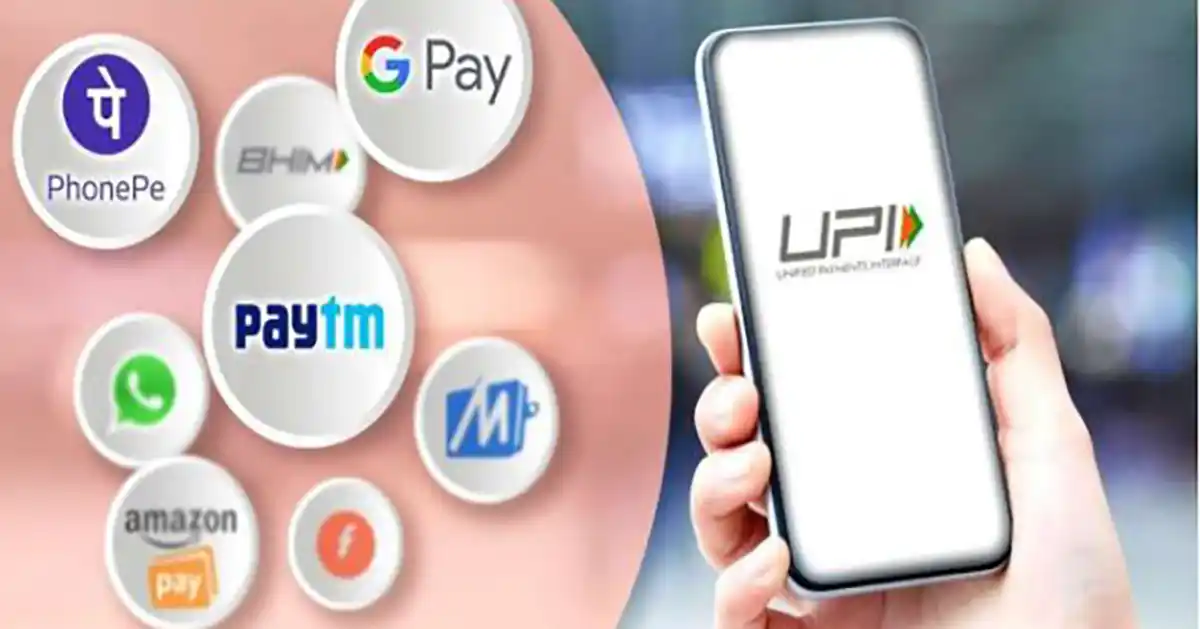
Millions of Indians who scan a QR code every day to pay for chai, groceries, or cab rides can breathe easy — for now. The Indian government has reaffirmed that UPI (Unified Payments Interface) transactions remain completely free for ordinary users, even as a newly passed bill opens a legal pathway for the government to introduce a Merchant Discount Rate (MDR) on select high-value merchant transactions in the future.
The clarification comes amid a heated debate involving lawmakers, economists, the payments industry, and — notably — pressure from the United States, which has long objected to India’s zero-MDR policy on UPI and RuPay.
What Changed: The Taxation and Other Laws (Amendment) Bill, 2026
On August 6, 2026, the Lok Sabha passed the Taxation and Other Laws (Amendment) Bill, 2026, which proposes an amendment to Section 10A of the Payment and Settlement Systems Act, 2007. Once the bill clears both houses of Parliament and becomes law, banks and payment service providers will have the legal backing to charge MDR on UPI and other digital payment modes — but only if the government later decides to activate that provision.
Importantly, the bill itself does not impose any fee immediately. It simply removes an existing legal bar, handing the government future flexibility. The actual decision on whether, when, and how much MDR to charge will rest with the UPI and Services Steering Committee, chaired by the National Payments Corporation of India (NPCI).
Will Everyday UPI Users Have to Pay?
According to the finance ministry, the answer is no. Person-to-person UPI transfers will stay entirely free, and officials say the vast majority of merchant transactions — reportedly over 95% — are also expected to remain outside any MDR structure.
Finance Minister Nirmala Sitharaman has stressed that any future MDR would apply only to large merchants, not consumers, and that the revenue generated would help banks and fintech companies invest further in digital infrastructure, fraud prevention, and cybersecurity. Industry voices echo this, pointing out that UPI’s explosive transaction volume has made continued zero-cost operation increasingly expensive for banks and payment processors to sustain.
For comparison, credit card transactions in India currently attract an MDR of roughly 1.5%, while debit cards attract around 0.9%. Any future UPI-linked MDR is expected to be set well below these rates.
Opposition and Economists Warn of Hidden Costs
Not everyone is convinced the burden will stay off consumers’ shoulders. Congress leader Jairam Ramesh has argued that the amendment quietly opens the door to future charges on UPI payments. Economist Jayati Ghosh has cautioned that if MDR is eventually imposed on merchants — many of whom are small and micro businesses — the added cost could indirectly get passed on to customers through higher prices for goods and services.
US Pressure Over India’s Zero-MDR Policy
The domestic debate is unfolding alongside friction in India-US trade talks. The Global Trade Research Initiative (GTRI), a New Delhi-based think tank, has publicly urged India not to bow to American pressure on its zero-MDR framework for UPI and RuPay.
GTRI director Ajay Srivastava has said the Office of the United States Trade Representative (USTR) has repeatedly flagged concerns about India’s zero-MDR policy, incentives given to the domestic RuPay card network, data localization rules, and market-share caps on UPI apps. American officials argue that the zero-MDR structure puts foreign payment giants such as Visa and Mastercard at a competitive disadvantage compared to India’s homegrown payment rails.
India, for its part, has continued to position UPI and RuPay as strategic domestic digital infrastructure rather than a subject open to renegotiation under trade pressure.
The ruling BJP has pushed back on the idea that the MDR debate is connected to foreign lobbying. Party IT cell chief Amit Malviya has called it a purely domestic policy matter, noting that foreign payment companies have objected to UPI’s zero-fee model in the past without India altering its stance.
Zero MDR on UPI: A Quick Recap
India first scrapped MDR on UPI and RuPay debit card transactions back in January 2020 to accelerate the shift toward digital payments. Since then, the government has periodically compensated banks and payment providers through incentive schemes rather than allowing them to charge merchants directly — a model that has fueled UPI’s rise into one of the world’s largest real-time payment networks, according to reporting.
More recent government data reported by Deccan Herald shows the Union Cabinet has continued approving annual incentive outlays — including ₹1,500 crore for low-value UPI transactions — to keep the zero-MDR structure financially sustainable for banks.
What Happens Next
For now, nothing changes at the checkout counter. The Taxation and Other Laws (Amendment) Bill, 2026 still needs to clear the Rajya Sabha and receive presidential assent before becoming law. Even after that, any actual MDR rate, threshold, or implementation timeline will require a separate decision by regulators and the UPI Steering Committee.
The bigger question shaping India’s digital payments future isn’t simply “will UPI stay free,” but who ultimately bears the rising cost of running one of the world’s largest real-time payment systems — the government through subsidies, banks through absorbed costs, or, eventually, large merchants through a modest fee.

Economic Affair
- Budhigandaki Flood: 47 Rescued as Bridges Washed Away
- Nepal Supreme Court Handcuff Order: Police Barred From Routine Use
- 250+ Officials Deploy to Assess Rasuwa-Bhotekoshi Flood Damage
- Electricity VAT: Energy and Finance Ministers Strike Landmark Deal After Just 2 Months
- Nepal Inflation Shockingly Triples to 5.96% — Food and Transport Hit Hardest


Comments