


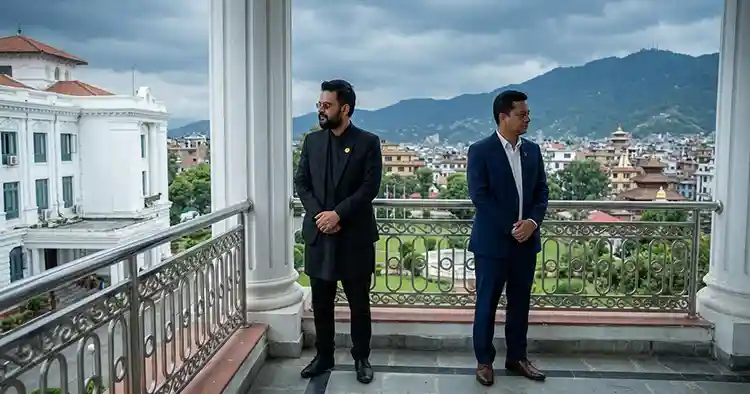
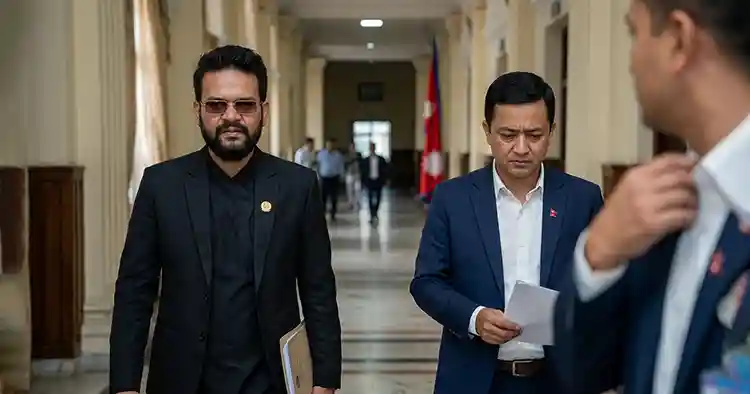
Kathmandu — A widening rift between Prime Minister Balendra Shah and Finance Minister Swarnim Wagle has moved from whispered speculation to open institutional gridlock, with stalled appointments, a leaked tax notice, and a politically sensitive corporate tax case now threatening to paralyze key organs of Nepal’s government. The Balendra Shah Swarnim Wagle rift has already delayed leadership appointments at some of the country’s most important regulatory bodies, and insiders say the disagreement runs far deeper than a single disputed nomination.
What began as friction over who should chair the Insurance Authority has snowballed into a broader confrontation touching governance standards, budget-making, tax policy, and the influence of Rastriya Swatantra Party (RSP) chairman Rabi Lamichhane. With neither the Prime Minister’s Office nor the Finance Minister’s secretariat willing to comment publicly, the standoff is being pieced together largely through official sources close to both offices.
Why the Balendra Shah–Swarnim Wagle Rift Matters
Nepal’s coalition government, formed in March 2026 under Prime Minister Shah with Dr. Swarnim Wagle serving as both Finance Minister and Deputy Prime Minister, was widely viewed as a technocratic, reform-driven alliance between an independent mayor-turned-premier and an internationally trained economist. Wagle assumed the finance portfolio on 27 March 2026 after the formation of the government under Prime Minister Balendra Shah.
That early promise is now being tested. The friction matters because the Finance Ministry oversees appointments to some of Nepal’s most consequential regulatory bodies — the Insurance Authority, the Securities Board of Nepal (SEBON), and the Investment Board — all of which shape investor confidence, capital markets, and foreign investment flows into the country.
Flashpoint 1: The Stalled Insurance Authority Chairman Appointment
At the center of the immediate dispute is the vacant chairmanship of Nepal’s Insurance Authority, the regulator overseeing the country’s insurance industry.
Cabinet Scraps the Earlier Process
On 11 Baisakh (per the Bikram Sambat calendar), the Council of Ministers voted to cancel the appointment process that had been initiated under former Finance Minister Bishnu Prasad Paudel. That decision effectively reset the selection process for the Insurance Authority’s top job and handed responsibility for a fresh search to a newly formed committee.
A Three-Member Committee, and Four Months of Silence
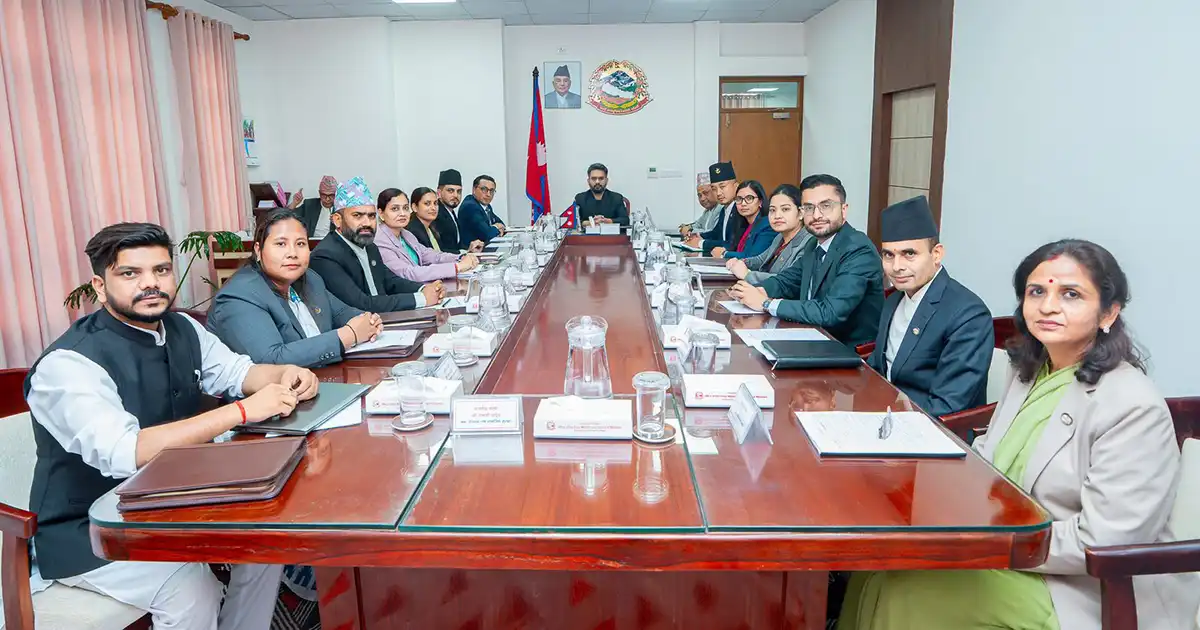
The reset selection process was placed under a three-member panel led by National Planning Commission Vice-Chairman Gunakar Bhatta, alongside Finance Secretary Ghanshyam Upadhyaya and expert member Fatte Bahadur KC. The panel has reportedly compiled a shortlist of applicants for the chairman’s post but has yet to make it public.
Nearly four months after the committee was formed, the appointment remains unresolved — a delay that has drawn criticism of the Finance Ministry’s working style and raised questions about why a routine regulatory appointment has taken so long to finalize.
According to sources inside the Finance Ministry, the real obstacle is not the committee’s work but a disagreement at the very top: Prime Minister Shah has reportedly declined to endorse the candidate favored by Finance Minister Wagle for the position, leaving the process effectively frozen.
Flashpoint 2: A Pattern of Disputed Regulatory Appointments
The Insurance Authority standoff is not an isolated case. It fits into a broader pattern that has fueled distrust between the Prime Minister’s Office and the Finance Ministry over how top regulatory jobs are filled.
Securities Board Chairman Controversy
When Nepal’s Securities Board (SEBON) needed a new chairperson, 47 candidates applied for the post. The shortlisting of just four names triggered controversy after critics alleged that some shortlisted individuals had links to market intermediaries — allegations that reportedly left the Prime Minister’s Office uneasy about the transparency of the process. Gopal Prasad Bhatta was ultimately appointed to lead SEBON, but the appointment continues to draw scrutiny. Reporting by Khabarhub notes that sources have suggested the Prime Minister is unhappy with Bhatta’s appointment as Securities Board chairman, with allegations that Wagle created a conflict of interest by elevating a close associate.
Investment Board CEO Selection Also Questioned
A separate controversy has emerged around the appointment process for the Chief Executive Officer of Nepal’s Investment Board, the agency tasked with attracting large-scale foreign and domestic investment into infrastructure projects. As with the SEBON and Insurance Authority processes, questions have been raised internally about how candidates were evaluated and shortlisted.
Together, these three cases — insurance, securities, and investment — have convinced officials close to the Prime Minister that the Finance Ministry’s appointment processes lack sufficient transparency, according to ministry sources.
Flashpoint 3: Divergent Views on Governance and Institutional Reform
Beyond specific appointments, sources describe a more fundamental disagreement over governance priorities. Prime Minister Shah, who built his political brand in Kathmandu’s mayoral office on anti-corruption messaging and institutional cleanup, has reportedly pushed for governance reform to be a central pillar of his administration’s economic agenda.
Finance Minister Wagle, by contrast, is said to have pursued a different working style — one that Prime Minister’s Office insiders characterize as insufficiently aligned with the governance-first approach the Prime Minister wants to project. This gap in approach has reportedly deepened mistrust between the two offices even on matters unrelated to specific appointments.
This tension is consistent with wider reporting on the administration’s economic approach. A recent Kathmandu Post analysis observed that Wagle has publicly framed the government’s broader push as an effort to dismantle institutional capture and collusion between business and politics, even as questions mount over whether the government’s methods are undermining investor confidence.
The same analysis pointed to the Supreme Court’s finding that the detention of prominent businessman Shekhar Golchha was illegal, and his swift rearrest hours later on a separate insurance-fraud allegation that investigators described as unrelated to the original case — an example, the outlet argued, of the due-process concerns shadowing the government’s anti-corruption campaign. (Read more at Kathmandu Post)
Flashpoint 4: Budget Disputes and the EV Tax Leak
Disagreements between the two leaders reportedly extend into core fiscal policymaking, including budget formulation and tax policy.
A Tax Notice That Leaked Before the Budget
One especially damaging episode, according to ministry sources, involved information about changes to the tax rate on electric vehicles (EVs) that reportedly reached select stakeholders before the budget was formally announced. The early leak of tax-sensitive information — which some businesses appear to have received in advance — has become a point of serious contention between the Prime Minister’s Office and the Finance Ministry, with each side reportedly holding the other responsible for the lapse.
The Simex Inc. and BYD Tax Case
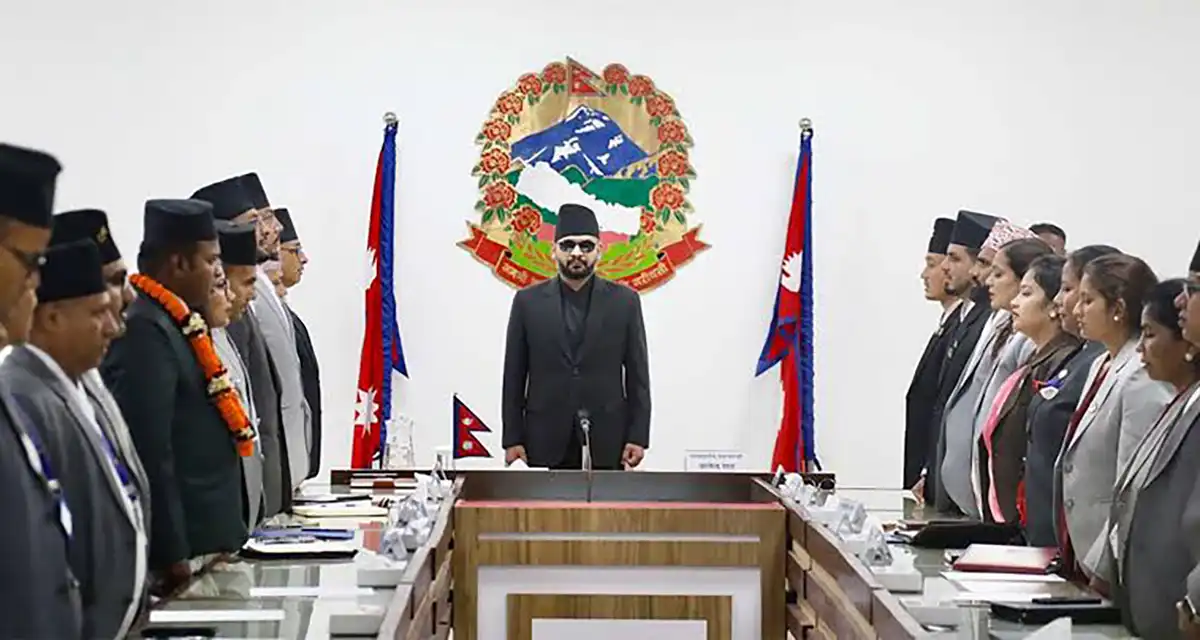
The controversy deepened further with a tax dispute involving Simex Incorporation Pvt. Ltd., the official Nepali importer of Chinese electric vehicle maker BYD. Prime Minister Shah has reportedly taken a personal interest in the case, which involves an ongoing government investigation into the company’s tax affairs.
Sources allege that Finance Minister Wagle has been reluctant to support strict action against the company even as the investigation proceeds — a stance that has reportedly frustrated the Prime Minister’s Office.
The Rabi Lamichhane Factor
The dispute took on an added political dimension after RSP chairman Rabi Lamichhane’s name was reportedly linked to the Simex Inc. case, according to Finance Ministry sources. Officials aligned with the Prime Minister allege that Wagle used his position to advance Lamichhane’s interests in connection with the private company — an accusation that, if accurate, would tie a routine tax enforcement matter directly into the RSP’s internal power dynamics.
This is not the first time Lamichhane’s shadow has fallen over Wagle’s tenure. Reporting from earlier this month described an escalating power struggle within the RSP itself, in which leaders aligned with Lamichhane accused state security agencies of monitoring senior party figures, including Finance Minister Wagle and Foreign Minister Shishir Khanal, with the alleged surveillance said to have intensified following Lamichhane’s visit to India. (Read more at The Print)
Flashpoint 5: A Parallel Economic Track Run From the PM’s Office
The rift has also manifested in how economic policy consultations are being run. Multiple Nepali outlets have reported that Prime Minister Shah has been convening stakeholders from the capital market, securities sector, and insurance industry directly through his own office — without the direct involvement of the Finance Ministry.
According to Khabarhub, the Prime Minister’s Office has held a series of discussions with economic-sector stakeholders without direct Finance Ministry involvement, prompting critics to question whether coordination between the two offices has broken down. One such meeting reportedly brought together officials from Finance Ministry-affiliated bodies, including the Securities Board of Nepal, directly at the Prime Minister’s Office rather than through the ministry’s own channels. (Read more at Singhadarbar )
Separately, Ratopati reported that Wagle was conspicuously absent from a series of hours-long meetings the Prime Minister held with more than a dozen private-sector organizations, industrialists, and investors — an absence that has stoked speculation about whether the working relationship between the two leaders has broken down. (Read more at Ratopati)
As Nepal’s benchmark stock index, NEPSE, came under pressure in recent weeks, the Kathmandu Post noted that Prime Minister Shah personally convened capital-market stakeholders in an attempt to stabilize investor sentiment — a move that itself underscored how directly the Prime Minister has begun stepping into economic management traditionally handled by the Finance Ministry. (Read more at Kathmandu Post)
Speculation of a Cabinet Reshuffle
The accumulating friction has fueled persistent speculation in Kathmandu’s political circles that Prime Minister Shah may be preparing a broader cabinet reshuffle — one that could put Wagle’s position at risk.
According to a report from Bajarko Chirfar, talk of a cabinet reshuffle has intensified following a meeting between the Prime Minister and RSP chairman Rabi Lamichhane, with growing dissatisfaction inside government and questions about several ministers’ performance putting Wagle’s position under speculation. The same report noted that Labor Minister Deepak Kumar Shah had already been removed from the cabinet earlier, while Home Minister Sudan Gurung had previously faced a suspension before being reinstated — precedents that have added weight to the reshuffle speculation. (Read more at Bajarko Chirfar)
Separately, Ratopati reported that during discussions between the Prime Minister and Lamichhane, the Prime Minister voiced dissatisfaction over the stock market’s troubles under Wagle’s watch, an overemphasis on foreign debt rather than capital creation, and the ministry’s failure to produce a budget capable of energizing the economy. (Read more at Ratopati)
Who Are the Two Leaders at the Center of the Rift?
Prime Minister Balendra Shah
Balendra “Balen” Shah rose to national prominence as the independent Mayor of Kathmandu before being elevated to the premiership, running on a platform centered heavily on anti-corruption and clean governance. His administration has since pursued a visible crackdown on alleged corruption involving prominent businesspeople, a campaign that has drawn both praise for accountability and criticism over due-process concerns.
Finance Minister Swarnim Wagle
Dr. Swarnim Wagle, born 29 May 1974 in Kathmandu, has served as Nepal’s Finance Minister and Deputy Prime Minister since 27 March 2026, alongside his role as Vice Chairman of the Rastriya Swatantra Party since November 2023. Before entering electoral politics, Wagle built a reputation as an internationally trained economist.
He has represented the Tanahun 1 constituency in the House of Representatives since April 2023 and previously belonged to the Nepali Congress before joining the RSP. His current Finance Ministry portfolio makes him responsible for the very appointments — at the Insurance Authority, SEBON, and the Investment Board — that have become flashpoints with the Prime Minister’s Office. The Ministry of Finance, headquartered at Singha Durbar in Kathmandu, was established in 1963 and is currently led by Wagle alongside Finance Secretary Ghanshyam Upadhyaya and Financial Controller General Shovakant Poudel. (Read more on Wikipedia)
What This Means for Nepal’s Economy and Governance
The practical consequences of the Balendra Shah Swarnim Wagle rift are already visible. The Insurance Authority has gone without a confirmed chairman for months, leaving the regulator without permanent top-level leadership at a time when the industry needs clear direction. The Securities Board and Investment Board appointments remain clouded by allegations of favoritism and conflicts of interest. And with NEPSE under pressure and foreign investors watching closely, uncertainty about who is actually steering Nepal’s economic policy — the Prime Minister’s Office or the Finance Ministry — is unlikely to reassure markets.
For ordinary Nepalis, the dispute raises a more basic question: whether a government elected substantially on promises of clean governance and efficient administration can deliver on those promises if its two most powerful economic decision-makers cannot agree on who should run the country’s key regulatory institutions.
Analysts tracking the coalition note that the RSP’s internal dynamics — particularly the relationship between Wagle and party chairman Rabi Lamichhane — add another layer of complexity. Because Wagle serves simultaneously as a senior RSP leader and as Finance Minister in a government led by an independent Prime Minister, any friction between Shah and Wagle inevitably touches the wider coalition’s stability.
Timeline: How the Balendra Shah–Swarnim Wagle Rift Unfolded
March 2026 — Balendra Shah forms his government, with Swarnim Wagle taking over as Finance Minister and Deputy Prime Minister, ranked second in the new cabinet.
April–May 2026 (Baisakh) — The Council of Ministers cancels the earlier Insurance Authority chairman selection process and hands the task to a new three-member committee.
July 2026 — Reports emerge that Prime Minister Shah is holding extended meetings with private-sector leaders and industrialists without Finance Minister Wagle present, fueling speculation about a rift. Around the same period, sources describe a meeting between Shah and RSP chairman Lamichhane in which the Prime Minister voices dissatisfaction with Wagle’s handling of the stock market, foreign debt, and the national budget.
Late July–August 2026 — The Prime Minister’s Office begins directly convening capital-market, securities, and insurance-sector stakeholders, bypassing the Finance Ministry’s usual channels. Cabinet-reshuffle speculation intensifies.
August 2026 — Nearly four months after the Insurance Authority selection committee was formed, its shortlist remains unpublished. Ministry sources confirm the appointment is stuck because the Prime Minister has not endorsed Wagle’s preferred candidate, while the Simex Inc. tax case and the earlier EV tax leak continue to strain relations between the two offices.
What Happens Next
With no formal statement from either office, the coming weeks are likely to determine whether the Balendra Shah Swarnim Wagle rift cools into manageable coalition friction or escalates into a full cabinet reshuffle. Three developments are worth watching closely
whether the Insurance Authority selection committee finally publishes its shortlist and reaches a decision; whether the Simex Inc. tax investigation proceeds to a formal enforcement action despite the alleged reluctance inside the Finance Ministry; and whether Prime Minister Shah’s continued direct outreach to market stakeholders becomes a permanent parallel track for economic policymaking, effectively sidelining the Finance Ministry on major decisions.
For investors and market watchers, the immediate concern is predictability. Regulatory appointments left unresolved for months send a signal that Nepal’s institutions can be held hostage to personality clashes at the top, regardless of how justified either leader’s underlying concerns may be. For the ruling coalition, the deeper risk is that a dispute rooted in appointments and tax enforcement could harden into a broader test of whether an independent Prime Minister and a party-affiliated Finance Minister can govern together for the remainder of their term.
Official Response
As of this report, neither the Prime Minister’s Office nor Finance Minister Wagle’s secretariat has issued a formal, on-the-record statement addressing the reported rift, the stalled appointments, or the allegations connected to the Simex Inc. tax case. Both offices have so far allowed the dispute to play out through unnamed sources rather than public statements, leaving much of the public understanding of the conflict to be pieced together from ministry insiders and political reporting.
Frequently Asked Questions
What caused the rift between PM Balendra Shah and Finance Minister Swarnim Wagle? The disagreement centers on stalled and disputed appointments to regulatory bodies including the Insurance Authority, Securities Board, and Investment Board, compounded by differences over governance priorities, a leaked EV tax notice, and a tax investigation involving BYD’s Nepali importer, Simex Inc.
Is Finance Minister Wagle at risk of losing his position? Nepali media outlets have reported growing speculation about a possible cabinet reshuffle, but as of this report, no formal decision affecting Wagle’s position has been announced by the Prime Minister’s Office.
How does the Rabi Lamichhane connection factor into the dispute? RSP chairman Rabi Lamichhane’s name has reportedly been linked to the Simex Inc. tax case, with allegations that Wagle advanced Lamichhane’s interests — a claim that has added political weight to the broader dispute between the Prime Minister and Finance Minister.
Has the Insurance Authority chairman been appointed yet? As of this report, the chairmanship remains vacant. A three-member selection committee has reportedly shortlisted candidates but has not made the list public, with the process reportedly stalled over disagreement between the Prime Minister and Finance Minister on a preferred candidate.
This report is based on Nepali-language sourcing along with additional English-language reporting from the Kathmandu Post, Khabarhub, Ratopati, Bajarko Chirfar, The Print, and Wikipedia, cited above. Details attributed to unnamed government sources reflect reporting that has not been independently confirmed through an official statement from the Prime Minister’s Office or the Finance Ministry.

Economic Affair
- Budhigandaki Flood: 47 Rescued as Bridges Washed Away
- Nepal Supreme Court Handcuff Order: Police Barred From Routine Use
- 250+ Officials Deploy to Assess Rasuwa-Bhotekoshi Flood Damage
- Electricity VAT: Energy and Finance Ministers Strike Landmark Deal After Just 2 Months
- Nepal Inflation Shockingly Triples to 5.96% — Food and Transport Hit Hardest

Comments