




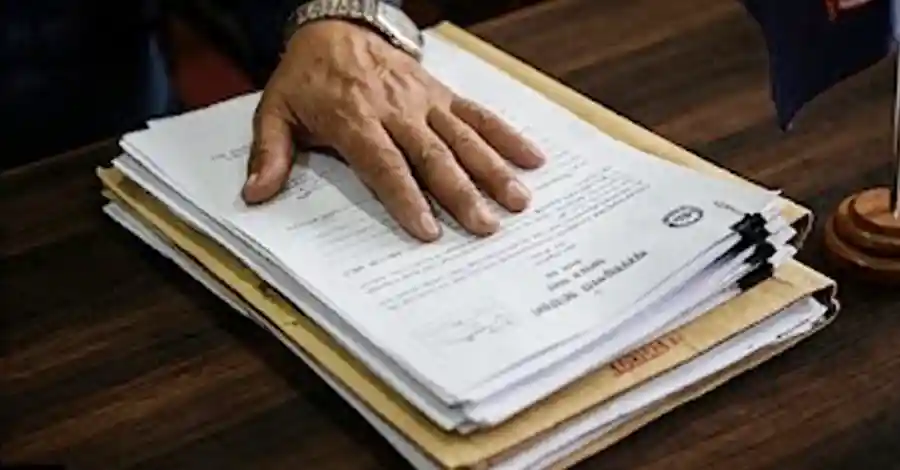
A fresh Finance Secretary Ghanashyam Upadhyay investigation demand has landed at Nepal’s Office of the Prime Minister and Council of Ministers, putting one of the government’s most powerful bureaucrats squarely in the spotlight. A formal complaint, registered on August 17 under registration number 1419, calls for a thorough inquiry into Upadhyay, who currently serves as Finance Secretary under Finance Minister Dr. Swarnim Wagle, over allegations ranging from a fabricated disability certificate to undisclosed company shares linked to a businessman already under investigation for money laundering.
The complaint arrives at a politically sensitive moment. Nepal’s coalition government, formed on promises of clean governance following last year’s youth-led protests, has already seen a home minister resign and several senior finance ministry officials transferred over similar allegations involving the same network of businesspeople. Critics argue that Upadhyay, despite facing comparable accusations, has so far remained untouched in one of the country’s most consequential government posts.
Quick Facts: The Complaint Against Finance Secretary Upadhyay
- Complaint registration number: 1419, filed at the PM’s Office on August 17 (Bhadra 1)
- Position held: Finance Secretary, Ministry of Finance, under Minister Dr. Swarnim Wagle
- Key allegations: Fake disability certificate, undisclosed insurance company shares, a Rs 3.5 million bribery case, and an allegedly disqualifying government recommendation
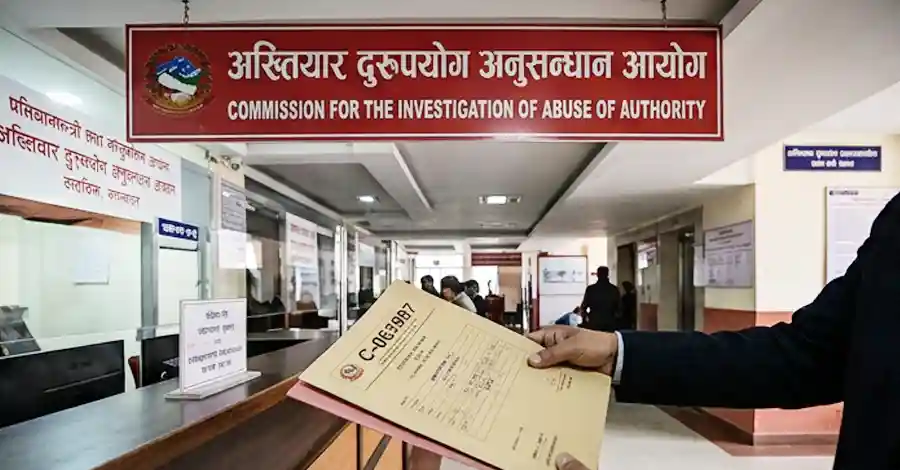
- Related CIAA complaint: Registration number C-063987, filed separately at the Commission for the Investigation of Abuse of Authority (CIAA)
- Demand: Immediate removal from office and investigation under the Central Investigation Bureau (CIB)
- Context: Comes after Home Minister Sudan Gurung’s resignation and the transfer of multiple finance ministry officials over related allegations
What the Complaint Alleges
According to sources at the Prime Minister’s Office, the complaint filed on August 17 carries a straightforward but serious core demand: that authorities investigate Finance Secretary Ghanashyam Upadhyay and take appropriate legal action if the allegations are proven true. The complainant argues that a person holding such a sensitive post, responsible for the country’s economic policy, revenue administration, and public financial management, should face impartial scrutiny given the seriousness of the accusations already in the public domain.
The complaint lists four principal allegations against Upadhyay.
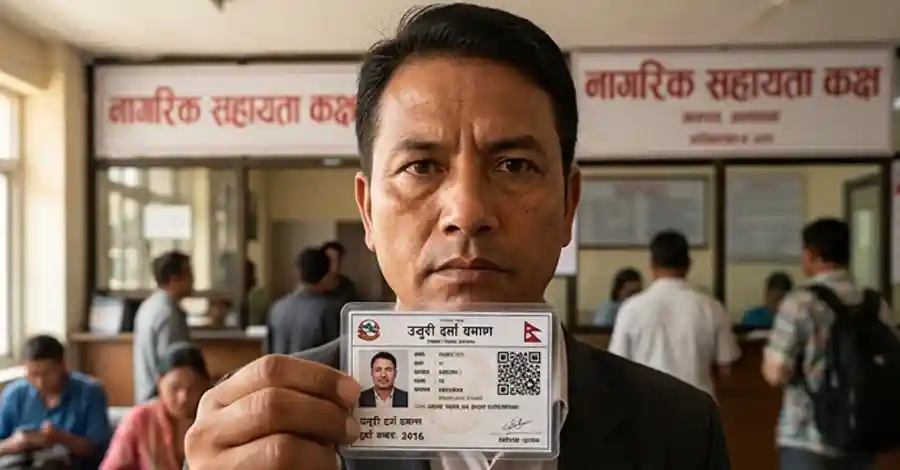
1. Alleged Use of a Fake Disability Certificate
The complaint claims Upadhyay obtained undue advantages by using a fraudulent long-term disability identity card, allegedly benefiting from a disability quota during his promotions to the posts of joint secretary and secretary. The complainant has specifically asked authorities to investigate the legitimacy of this disability certificate and determine whether any improper benefit was obtained through it.
2. Undisclosed Shares in an Insurance Company Linked to a Controversial Businessman
Company registrar records reportedly show that 10,000 shares in Nepal Micro Insurance Limited are held in the name of Bhagawati Upadhyaya, identified in the complaint as Ghanashyam Upadhyay’s wife. Nepal Micro Insurance was established under the leadership of Deepak Bhatt, a businessman now facing money laundering charges. Sources allege the shares in question were received as a gift.
The Department of Money Laundering Investigation has separately filed a case seeking recovery of more than Rs 100 billion from businessman Deepak Bhatt, along with Sahil Agrawal and Shekhar Golchha, accusing them of policy-level corruption through the sale of founder shares in one reinsurance company and seven microinsurance companies at premium prices.
The eight companies named in that investigation include Nepal Micro Insurance, Guardian Micro Life Insurance, Crest Micro Life Insurance, Liberty Micro Life Insurance, Protective Insurance Company, Star Micro Insurance Company, Trust Micro Insurance Company, and Himalayan Reinsurance. The Department has reportedly already written to founder members of all eight companies as part of its investigation, though Upadhyay himself remains in his post.
Because the Department of Money Laundering Investigation functions under the Ministry of Finance, the complaint also raises a conflict-of-interest concern, arguing that Upadhyay, as the ministry’s top bureaucrat, has effective oversight of the very department investigating a company in which his family holds shares.
3. A Rs 3.5 Million Bribery Allegation
The complaint further accuses Upadhyay of being entangled in a bribery case involving Rs 3.5 million (Rs 35 lakh), though the complaint does not provide extensive detail on the circumstances of this alleged transaction in the portion made public so far.
4. A Recommendation That Allegedly Should Have Disqualified Him From Government Service
Perhaps the most striking claim in the complaint concerns Upadhyay’s earlier career as a revenue officer. The complaint alleges that Upadhyay spent three months in police custody during that period, and that then-Finance Secretary Rameshwar Prasad Khanal formally wrote to the Public Service Commission declaring Upadhyay unfit for government service. If accurate, this would mean a formal disqualification recommendation existed on record well before Upadhyay’s later promotions to joint secretary and eventually secretary.
The complaint explicitly states that since Upadhyay has been implicated in multiple controversies, he should be arrested immediately and a formal investigation process initiated.
The “Almirah Scandal” and a Pattern of Controversy
The complaint does not exist in isolation. It references what has been informally dubbed the “daraj kanda,” or “almirah scandal,” a separate controversy from earlier in Upadhyay’s career as a revenue officer, though public details of that specific episode remain limited. Combined with the disability-certificate and insurance-share allegations, the complaint paints a picture of what the complainant describes as a “controversial journey” through Nepal’s civil service.
It is important to note, as the original reporting on this matter makes clear, that none of these allegations have been proven. They remain claims made in a complaint seeking investigation, and their veracity can only be established through a fair and independent inquiry by the relevant authorities. Nepal’s Finance Secretary position carries substantial responsibility over economic policy, revenue administration, and public financial management, which is precisely why serious allegations against an officeholder in this role tend to generate significant public demand for transparency.
A Wider Pattern: Officials Linked to Businessman Deepak Bhatt
The allegations against Upadhyay are part of a broader unfolding story in Nepal involving businessman Deepak Bhatt and a cluster of officials and politicians allegedly connected to share transactions in his companies.
Home Minister Sudan Gurung resigned just 26 days into his tenure after it emerged that he held shares in Star Micro Insurance and Liberty Micro Insurance, both companies linked to Bhatt, who was in custody on money laundering charges at the time.
Gurung initially defended the investment, saying he had taken a loan to purchase roughly Rs 5 million worth of shares through the banking system, and argued that investing in the stock market was not illegal. Facing mounting pressure from within his own party, the Rastriya Swatantra Party, and calls for resignation from opposition figures, Gurung stepped down, citing ethics, conflict of interest, and the need for a fair investigation. He was later reappointed to the same post after the controversy cooled.
Finance Minister Dr. Swarnim Wagle has separately taken action against four joint secretaries in his own ministry over allegations of a similar nature. The then Director General of the Department of Money Laundering Investigation, Gajendra Thakur, was removed from that post over allegations of colluding with the broker to purchase shares, and has since been transferred to the Office of the Vice President. Joint Secretaries Mahesh Bhattarai and Sewantak Pokharel were also transferred, as were Madan Dahal and Mahesh Baral, both Directors General at the Inland Revenue Department.
Against that backdrop, the complaint against Upadhyay pointedly asks why he, facing allegations described as comparable in nature, remains in one of the ministry’s most powerful positions while numerous other officials linked to the same network have already been reassigned or removed.
A Separate Complaint at the Anti-Corruption Watchdog
According to the complaint filed at the PM’s Office, a related complaint against Upadhyay was already registered earlier at the Commission for the Investigation of Abuse of Authority (CIAA), Nepal’s principal anti-corruption body, under registration number C-063987. The complainant alleges that despite this CIAA complaint being on file, no effective investigation has moved forward, and specifically claims that CIAA Chief Commissioner Prem Kumar Rai has declined to advance an investigation against Upadhyay.
This claim, like the others in the complaint, has not been independently verified and reflects the complainant’s own characterization of the CIAA’s handling of the matter.
Who Is Ghanashyam Upadhyay?
Ghanashyam Upadhyay’s rise through Nepal’s civil service has been closely watched even before the current controversy. He was promoted to the rank of secretary in July 2023, having previously served as Chief District Officer of Kathmandu. He went on to serve as Secretary at the Commission for the Investigation of Abuse of Authority before being appointed Finance Secretary in February 2025, replacing Dr. Ram Prasad Ghimire, who was transferred to the Office of the President. His appointment placed him at the helm of the country’s economic policy, budget management, and revenue policy at a critical juncture for Nepal’s public finances.
The irony of Upadhyay’s CIAA background is not lost on observers: the complainant behind the new PM Office complaint specifically points to a prior CIAA complaint against him, raising questions about how thoroughly the anti-corruption body has scrutinized someone who recently served within its own ranks.
What Happens Next: The Investigation Process
For a complaint like this to lead to concrete action, several institutional steps typically need to unfold in Nepal’s civil service and anti-corruption framework:
Review at the PM’s Office. Complaints registered at the Office of the Prime Minister and Council of Ministers are typically screened and, where warranted, referred to appropriate investigating bodies, which could include the CIAA, the Department of Money Laundering Investigation, or an internal ministry inquiry committee.
Potential CIAA action. Since a related complaint already exists at the CIAA under registration C-063987, any renewed public and political pressure could prompt the commission to formally open or expand its inquiry.
Central Investigation Bureau involvement. The complaint specifically requests that any investigation proceed under the oversight of the Central Investigation Bureau (CIB), Nepal Police’s specialized unit for complex financial and white-collar crime investigations.
Possible administrative action. As seen in the cases of Gajendra Thakur, Mahesh Bhattarai, Sewantak Pokharel, Madan Dahal, and Mahesh Baral, the government has, in recent months, opted to transfer or reassign officials facing similar allegations even before formal investigations conclude. Whether similar administrative action is taken against Upadhyay will likely depend on the level of political and public pressure that builds around this complaint.
Why This Case Matters for Nepal’s Governance Debate
Nepal’s current governing coalition took shape in the aftermath of last year’s Gen Z-led protest movement, which drew massive public anger over perceived corruption, nepotism, and lack of accountability among the country’s political and bureaucratic elite. The government that emerged from that upheaval explicitly promised a new era of clean governance.
Against that backdrop, allegations against a sitting Finance Secretary carry particular weight. The Finance Secretary oversees not just budget formulation but also revenue collection, public debt management, and coordination with international donors and financial institutions, functions that touch nearly every part of the Nepali economy. Any perception that officials in such roles are shielded from scrutiny, even as other officials tied to the same controversies face transfers or resignations, risks reinforcing public skepticism about whether the promised era of accountability has genuinely arrived.
At the same time, fairness requires acknowledging that a complaint is not proof of wrongdoing. Nepal’s legal and administrative processes provide mechanisms, through the CIAA, the courts, and internal government inquiry committees, to test such allegations before any punitive action is taken. How swiftly and transparently those mechanisms respond to this complaint will likely shape public perception of the current government’s genuine commitment to the “sushasan,” or good governance, banner under which it was formed.
How Nepal’s Disability Quota and Civil Service Rules Work
To understand the seriousness of one specific allegation in the complaint, the disability-certificate claim, it helps to know how Nepal’s civil service reservation system functions. Nepal’s Civil Service Act reserves a percentage of government positions and promotion opportunities for candidates from historically underrepresented groups, including persons with disabilities, as part of a broader inclusion policy. Candidates seeking to benefit from this quota must submit a disability identity card issued through the proper government channel, typically verified through a medical board process coordinated with local government bodies and the Ministry of Women, Children and Senior Citizens.
If a disability certificate used to claim quota benefits were found to be fraudulent, it would represent a serious breach of civil service integrity rules, potentially affecting the validity of the promotions obtained through that route. This is precisely why the complaint singles out this allegation for a call for formal verification, since confirming or disproving the certificate’s authenticity would be relatively straightforward for investigators with access to the original medical board records.
It is worth stressing again that this remains an allegation. Many civil servants legitimately qualify for and use disability-related provisions, and the mere existence of a complaint does not establish that any specific certificate was falsified.
The Broader Insurance Sector Scandal Nepal Is Watching
The insurance-company share allegation against Upadhyay connects to what has become one of Nepal’s more closely watched financial scandals in recent months. Businessman Deepak Bhatt, along with associates Sahil Agrawal and Shekhar Golchha, stands accused by the Department of Money Laundering Investigation of orchestrating a scheme to sell founder shares in newly licensed insurance companies at inflated premium prices, allegedly with the involvement of politically connected individuals and civil servants. The department’s claim seeks recovery of more than Rs 100 billion, an extraordinarily large figure that underscores the scale authorities believe this alleged scheme reached.
The eight companies at the center of the case, spanning both life and non-life microinsurance as well as reinsurance, were among a wave of new insurance licenses issued in Nepal in recent years as the sector expanded rapidly. Regulatory scrutiny of how founder shares in these newly licensed companies were allocated and priced has intensified since Bhatt’s arrest, drawing in not just Home Minister Gurung but reportedly a widening circle of officials whose family members or associates held shares in the affected companies.
For Upadhyay, the concern raised in the complaint is not simply that his wife’s name appears on a shareholder registry, but that his position atop the Ministry of Finance places him in a supervisory relationship with the very department investigating the companies in question, a textbook conflict-of-interest concern that investigators and ethics watchdogs would typically want to examine closely.
Frequently Asked Questions About the Upadhyay Complaint
Who filed the complaint against Finance Secretary Upadhyay? The complaint was registered at the Prime Minister’s Office and Council of Ministers on August 17 under registration number 1419. The identity of the complainant has not been publicly disclosed in available reporting.
What are the main allegations against Ghanashyam Upadhyay? The complaint alleges use of a fake disability certificate for career advancement, undisclosed insurance company shares connected to businessman Deepak Bhatt, involvement in a Rs 3.5 million bribery case, and a prior government recommendation allegedly declaring him unfit for civil service.
Has Upadhyay been formally investigated or charged? As of this report, no formal charges have been confirmed. The complaint calls for an investigation, and the allegations remain unproven pending inquiry by the relevant authorities.
Is there a related complaint at Nepal’s anti-corruption commission? Yes. The complaint references an earlier complaint filed at the Commission for the Investigation of Abuse of Authority (CIAA) under registration number C-063987, which the complainant says has not led to an effective investigation so far.
Have other officials faced similar allegations recently? Yes. Home Minister Sudan Gurung resigned over comparable share-related allegations linked to businessman Deepak Bhatt, and several finance ministry and Inland Revenue Department officials have been transferred amid related investigations.
What is Upadhyay’s current position? Ghanashyam Upadhyay currently serves as Finance Secretary of Nepal, working under Finance Minister Dr. Swarnim Wagle, having assumed the post in February 2025.
The Bottom Line
The complaint filed against Finance Secretary Ghanashyam Upadhyay adds another chapter to a broader accountability reckoning unfolding within Nepal’s bureaucracy, one that has already claimed a home minister’s tenure and reshaped leadership at the Department of Money Laundering Investigation and the Inland Revenue Department.
Whether this latest complaint results in a formal, independent investigation, or simply adds to a growing list of unresolved allegations against senior officials, will be an important test of how seriously Nepal’s current government intends to enforce the good-governance principles on which it was elected.
For now, the allegations remain just that: allegations, formally lodged and awaiting scrutiny. Nepal’s civil society and media will likely continue watching closely to see whether the Prime Minister’s Office refers this complaint for genuine investigation, or whether it joins the earlier CIAA complaint in an uncertain holding pattern.
Sources: Original Nepali reporting via Singha Darbar; Ministry of Finance official records via mof.gov.np.
Note: The allegations described in this article are drawn from a formal complaint and have not been independently verified or proven in a court of law or through a completed government investigation. This article reports on the existence and content of the complaint, not on the truth of its claims.

Economic Affair
- Budhigandaki Flood: 47 Rescued as Bridges Washed Away
- Nepal Supreme Court Handcuff Order: Police Barred From Routine Use
- 250+ Officials Deploy to Assess Rasuwa-Bhotekoshi Flood Damage
- Electricity VAT: Energy and Finance Ministers Strike Landmark Deal After Just 2 Months
- Nepal Inflation Shockingly Triples to 5.96% — Food and Transport Hit Hardest



Comments