




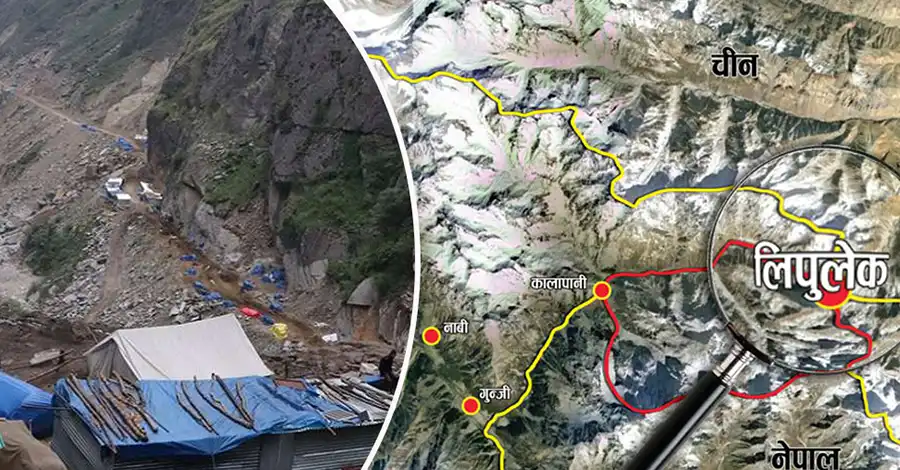
Kathmandu — India and China have gone ahead with cross-border trade through the disputed Lipulekh pass, brushing aside Nepal’s repeated objections over the contested territory. A group of 20 Indian traders, accompanied by four support staff, has already crossed into Taklakot (Purang County) in Tibet to resume commercial activity that has remained frozen since 2019.
The development marks a significant diplomatic flashpoint, reviving old tensions between Kathmandu, New Delhi, and Beijing over the Kalapani-Lipulekh-Limpiyadhura territory that Nepal officially claims as its own.
Nepal Raises Alarm Over Lipulekh Trade Resumption
Chief District Officer of Darchula, Bartaraj Paudel, confirmed that his office has already alerted Nepal’s Ministry of Home Affairs after learning that 20 Indian traders had passed through Lipulekh en route to Tibet. Home Ministry spokesperson Anand Kafle said the matter has been forwarded to the Ministry of Foreign Affairs, adding that a formal response is expected soon.
Nepal’s Ministry of Foreign Affairs has said it is “studying the developments” surrounding the trade resumption and will issue an official statement shortly.
How the India-China Trade Restart Unfolded
According to Indian media reports, China has permitted an initial batch of 20 Indian traders to enter Tibet, part of a broader plan involving 62 traders and 93 helpers cleared to import 155 categories of goods this season. Jeevan Singh Ronkali, president of the border traders’ association on the Indian side, said the reopening would allow traders to finally retrieve merchandise that has been sitting in Taklakot warehouses since the route shut down in 2019.
Independent reporting confirms this timeline. Trade through Lipulekh was first suspended after the 1962 India-China war before resuming through Taklakot in 1992, and the route was halted again in 2019 because of the Covid-19 pandemic. According to trade data, commerce through Lipulekh in 2019, the last operational year, was valued at nearly Rs 30 million, with exports at about Rs 12.5 million and imports around Rs 19 million.
Separately, the current trade season is expected to run until October, with a possible extension into November depending on mutual agreement between the two countries. Officials say the initial group of traders travelled without goods, instead visiting their old warehouses at the Pulan market in Taklakot to assess facilities before commercial activity is gradually restored.
The India-China Agreement Nepal Was Never Part Of
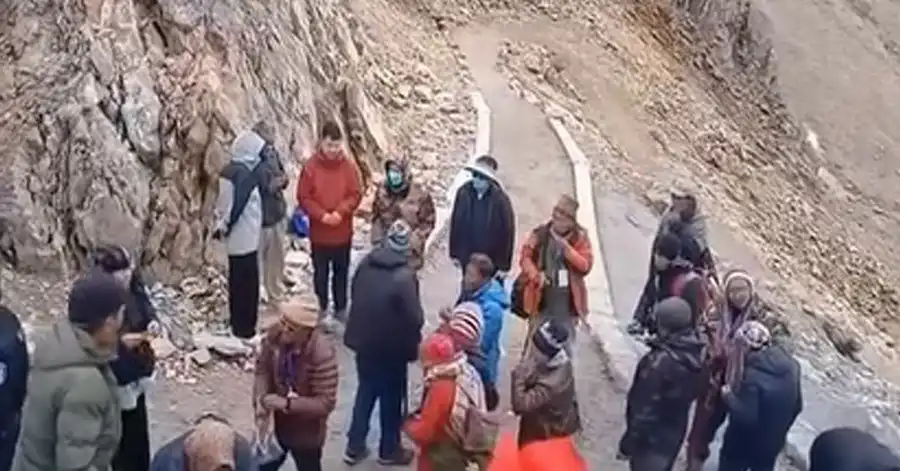
The current trade arrangement traces back to a bilateral understanding reached roughly a year ago, when Chinese Foreign Minister Wang Yi visited India and held talks with his Indian counterpart, S. Jaishankar. During those discussions, both sides agreed in principle to restart border trade through three historic Himalayan routes — Lipulekh in Uttarakhand, Shipki La in Himachal Pradesh, and Nathu La in Sikkim — none of which involved consultation with Nepal, despite Kathmandu’s territorial claim over Lipulekh.
Indian officials have publicly rejected Nepal’s objections. According to a report citing India’s Ministry of External Affairs, Nepal’s claims on the areas within India’s territory were described as “neither justified nor based on historical facts and evidence,” with officials adding that “any unilateral artificial enlargement of territorial claims is untenable”. In response, Kathmandu maintained that Nepal remains committed to resolving the border dispute through diplomatic means, based on historical treaties, agreements, facts, maps and evidence.
A Familiar Pattern of Nepal Being Sidelined
This is not the first time Nepal has been left out of decisions affecting Lipulekh. In 2015, then-Prime Minister Narendra Modi and Chinese leaders agreed to develop Lipulekh as a trade and pilgrimage corridor — a move that prompted then-Nepali Prime Minister Sushil Koirala to send formal protest notes to both the Indian and Chinese embassies in Kathmandu. The controversy reportedly even led to the postponement of a planned Koirala visit to India.
Tensions resurfaced sharply in November 2019, when India released a new political map placing Lipulekh and Kalapani within its own territory. Nepal strongly objected, and matters escalated further in May 2020 when India inaugurated a link road connecting Lipulekh to Gunji village in Darchula district — a move Nepal again protested. Nepal’s Parliament subsequently approved a revised national map incorporating Lipulekh, Kalapani, and Limpiyadhura as Nepali territory in June 2020, a position India has consistently rejected.
During a visit to China, former Prime Minister KP Sharma Oli reportedly raised the Lipulekh issue with President Xi Jinping, but China responded that the matter was a bilateral issue between Nepal and India to be resolved between the two countries. Foreign Minister Wang Yi reportedly repeated the same position to Nepal’s Foreign Minister Shishir Khanal during a more recent visit, urging Kathmandu and New Delhi to settle the dispute through dialogue.
What Happens Next
Despite Nepal sending formal diplomatic notes to both India and China objecting to the unilateral resumption of trade, neither country appears to have paused its plans or engaged Nepal in talks before restarting commercial activity through the pass. For now, Kathmandu’s options remain limited to diplomatic protest, while trade caravans continue moving through territory it officially claims as its own.
The broader reopening also extends beyond Lipulekh. Reports indicate the two countries have agreed to expand the Kailash Mansarovar Yatra pilgrimage route through Shipki La, Lipulekh, and Nathu La starting in 2026, further cementing the routes’ importance to both nations regardless of Nepal’s territorial position.
Sources: The Tribune India, Deccan Herald, Tibetan Review

Economic Affair
- Budhigandaki Flood: 47 Rescued as Bridges Washed Away
- Nepal Supreme Court Handcuff Order: Police Barred From Routine Use
- 250+ Officials Deploy to Assess Rasuwa-Bhotekoshi Flood Damage
- Electricity VAT: Energy and Finance Ministers Strike Landmark Deal After Just 2 Months
- Nepal Inflation Shockingly Triples to 5.96% — Food and Transport Hit Hardest




Comments