







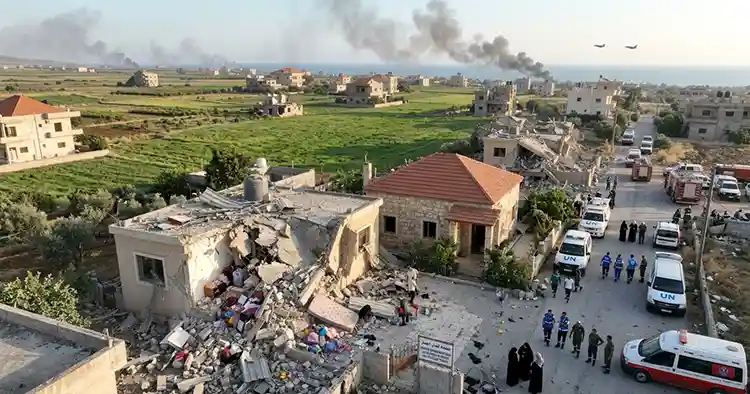
Israeli airstrikes on southern Lebanon killed at least 11 people, including three children, and wounded roughly 19 others in two separate attacks on Saturday, marking the deadliest single day of violence since a truce between Israel and Hezbollah took hold in June. Lebanese President Joseph Aoun said the strikes sent a “clear message” threatening the ongoing negotiation process between the two countries, adding a fresh layer of tension just as talks were expected to resume in Rome in early September.
What Happened: Two Strikes, One Deadly Morning
According to Lebanon’s Health Ministry and the state-run National News Agency (NNA), the pre-dawn strikes hit the Nabatieh district in two locations roughly nine miles apart: the town of Ansar and the nearby village of Deir al-Zahrani. Residents reported hearing aircraft overhead followed by loud explosions at around 4:30 a.m. local time, before rescue crews began pulling casualties from the rubble of collapsed homes.
Deir al-Zahrani: Four Killed, 17 Wounded
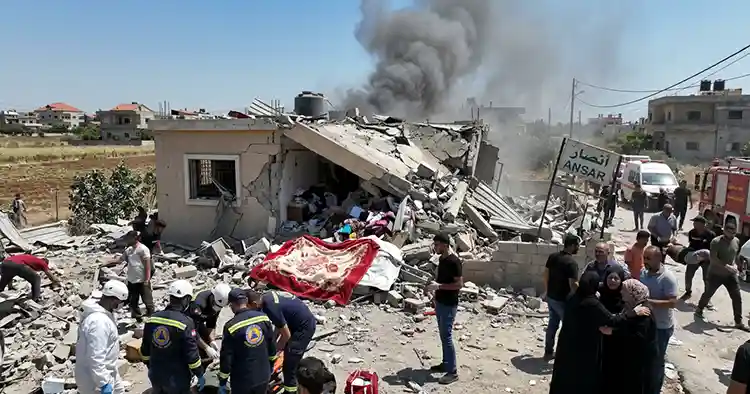
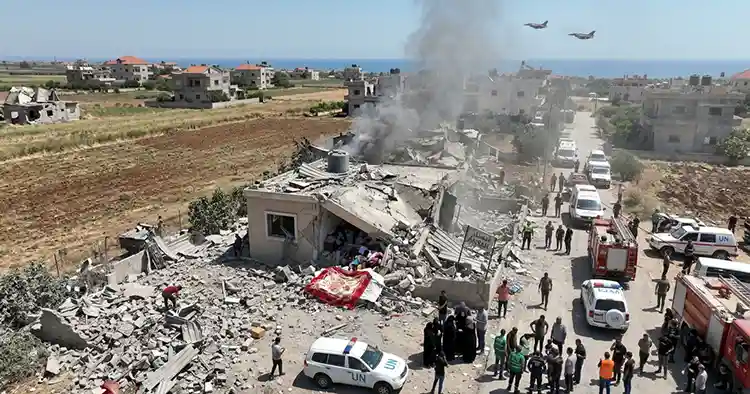
In Deir al-Zahrani, an Israeli strike hit a two-storey residential building, killing four people and wounding at least 17 others. Local eyewitness accounts described extensive damage to surrounding homes, and rescue workers spent hours clearing debris in search of survivors. Photos from the scene, carried by international wire services, showed emergency responders and heavy machinery working through collapsed structures well into the morning.
Ansar: An Entire Family Wiped Out
The deadlier of the two strikes hit a home on the edge of Ansar, killing seven people, including three children and two women, and wounding two others. Local witness Abbas Khalil said the explosion struck without warning just before dawn, and that the victims were members of a single family. Lebanese Prime Minister Nawaf Salam condemned the strike directly, stating plainly that the children and women killed in Ansar were not military targets.
The Israeli military later issued a statement identifying one of those killed in the Ansar strike as Ali Samir Al-Haj Hassan, whom it described as a battalion commander in Hezbollah’s elite Radwan Force. The Israel Defense Forces (IDF) acknowledged that Al-Haj Hassan’s family was present and harmed in the strike but said they were not the intended target. Hezbollah supporters circulated photographs online identifying the dead as Al-Haj Hassan, his wife, three sons, and a daughter.
Why Israeli Says It Struck
The Israeli military said the overnight strikes were carried out in retaliation for an earlier attack by Hezbollah on Israeli troops stationed near the Ali al-Taher Ridge in the Nabatieh area, beneath which Hezbollah is believed to maintain a major underground facility. The IDF said three soldiers from its elite Yahalom combat engineering unit, including an officer, were seriously wounded after an explosive drone launched by Hezbollah detonated near their position around 2:30 a.m. In response, Israeli forces said they struck Hezbollah infrastructure across the Nabatieh area, including intensified strikes on the ridge itself.
Hezbollah has not publicly confirmed carrying out the drone attack that Israel says triggered the retaliatory strikes, though the group has separately warned that Israeli attacks on Lebanese territory would be met with an “appropriate response.”
Lebanon’s Political Response: “A Clear Message”
President Joseph Aoun condemned what he called “repeated violations” of the ceasefire framework and international law protecting civilians, and said the scale of Saturday’s strikes amounted to a deliberate signal aimed at the ongoing negotiation track between Lebanon and Israel. Aoun specifically pointed to the killing of an entire family in Ansar as evidence that the escalation went well beyond routine military exchanges.
Lebanese officials have consistently argued that continued Israeli strikes on the south undermine the credibility of the framework agreement reached in June, under which Israel agreed to a phased withdrawal from parts of southern Lebanon in exchange for the disarmament of Hezbollah and the deployment of the Lebanese army across the border region.
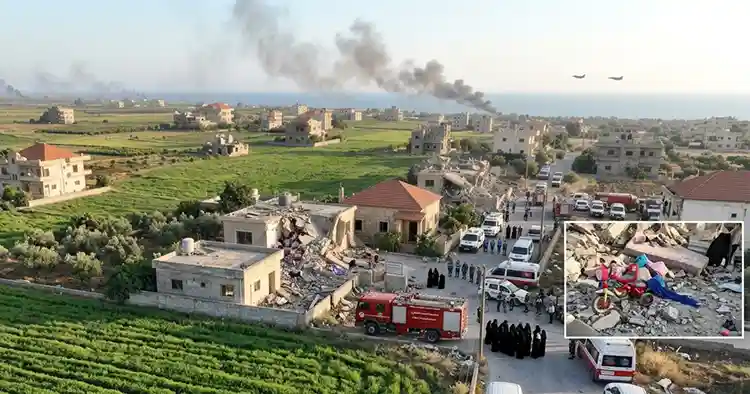
Israeli airstrikes southern Lebanon destroyed home Ansar Nabatieh
The Backdrop: A Truce Under Strain Since June
Saturday’s violence was the deadliest since a fragile truce between Israel and Hezbollah went into effect on June 20, following more than a year and a half of intermittent war that began after Hezbollah opened fire on northern Israel in solidarity with Hamas after the October 7, 2023 attack. On June 26, Israel and the Lebanese government announced a broader framework agreement laying out a roadmap for Israeli withdrawal in exchange for Hezbollah’s disarmament and a stronger Lebanese army presence in the south.
Despite that agreement, sporadic Israeli strikes on southern Lebanon have continued in the weeks since, with Israeli officials saying they remain necessary to prevent Hezbollah from rebuilding military infrastructure near the border. Lebanese officials, in turn, say the strikes routinely kill civilians and threaten to collapse the very process the ceasefire was meant to protect. Saturday’s death toll made it the single deadliest day of violence since the truce began.
Path to Rome: Diplomacy Under Pressure
The strikes came just weeks before Lebanon and Israel were due to hold an eighth round of United States-sponsored direct negotiations in Rome in early September, following a seventh round of talks held in the Italian capital earlier in August. Those negotiations, mediated by Washington, are aimed at translating the June framework agreement into a durable, long-term security arrangement between the two countries.
Despite Saturday’s bloodshed, Israeli officials pushed back against any suggestion that the violence should derail the talks. A spokesman for Israeli Prime Minister Benjamin Netanyahu told international media that Israel wanted the upcoming round of talks to be more ambitious, not less, arguing that the escalation should “jumpstart” negotiations rather than stall them. Lebanese officials, by contrast, have framed continued Israeli strikes as the primary obstacle to progress, arguing that Beirut cannot be expected to negotiate in good faith while civilians continue to die in cross-border attacks.
A Pattern of Escalation in Nabatieh
The Nabatieh district, and the town of Ansar in particular, have been repeatedly targeted in Israeli strikes over the past two years of conflict, reflecting the area’s proximity to Hezbollah infrastructure along the Lebanon-Israel border. The wider village and town network across southern Lebanon has absorbed the bulk of Israeli military operations since the war began, leaving thousands of residents displaced multiple times as fighting has ebbed and flared.
Following Saturday’s strikes, local media reported that hundreds of residents in Nabatieh and surrounding villages fled toward the southern coastal city of Sidon, citing fears of further attacks. The exodus underscored how quickly renewed violence can undo months of gradual return by displaced families to the south, even under a nominally active ceasefire.
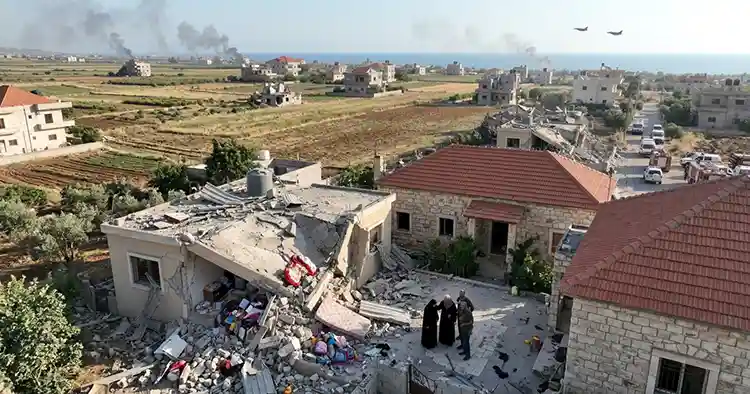
Israeli airstrikes southern Lebanon destroyed home Ansar Nabatieh
What Comes Next
With the ceasefire framework already under strain, the coming weeks are likely to test whether the June agreement can survive its most serious challenge yet. Both governments have signaled they intend to proceed with the next round of Rome talks, but the human cost of Saturday’s strikes — an entire family killed in Ansar, a residential building destroyed in Deir al-Zahrani, and hundreds newly displaced — has hardened public sentiment in Lebanon against further concessions.
For now, the ceasefire technically remains in place, but Saturday’s toll stands as the clearest signal yet that the space between “active truce” and “renewed war” in southern Lebanon remains dangerously thin.

Economic Affair
- Budhigandaki Flood: 47 Rescued as Bridges Washed Away
- Nepal Supreme Court Handcuff Order: Police Barred From Routine Use
- 250+ Officials Deploy to Assess Rasuwa-Bhotekoshi Flood Damage
- Electricity VAT: Energy and Finance Ministers Strike Landmark Deal After Just 2 Months
- Nepal Inflation Shockingly Triples to 5.96% — Food and Transport Hit Hardest



Comments