


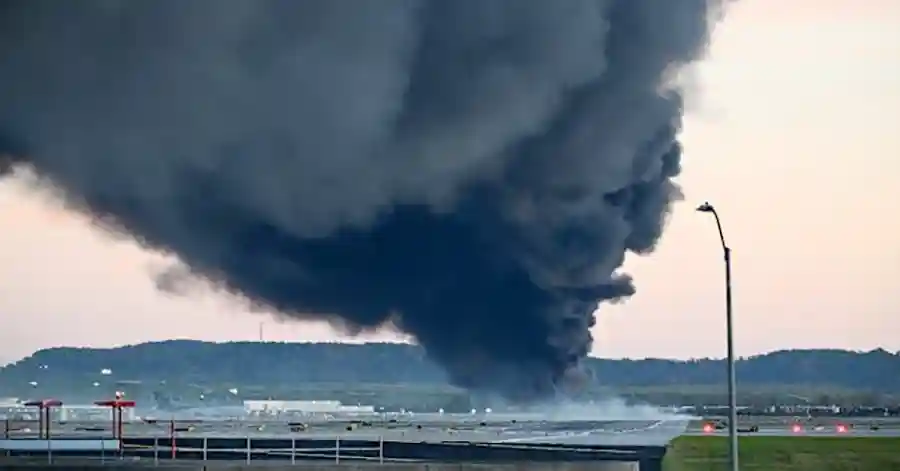


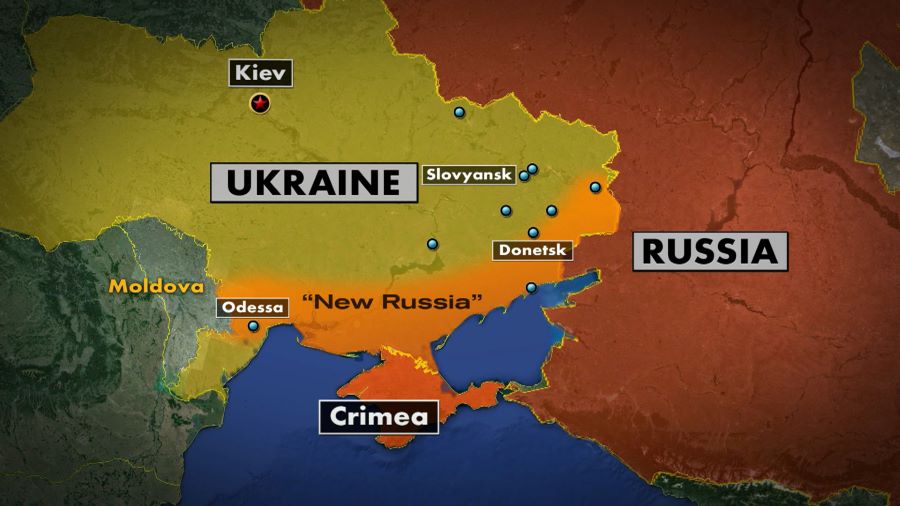

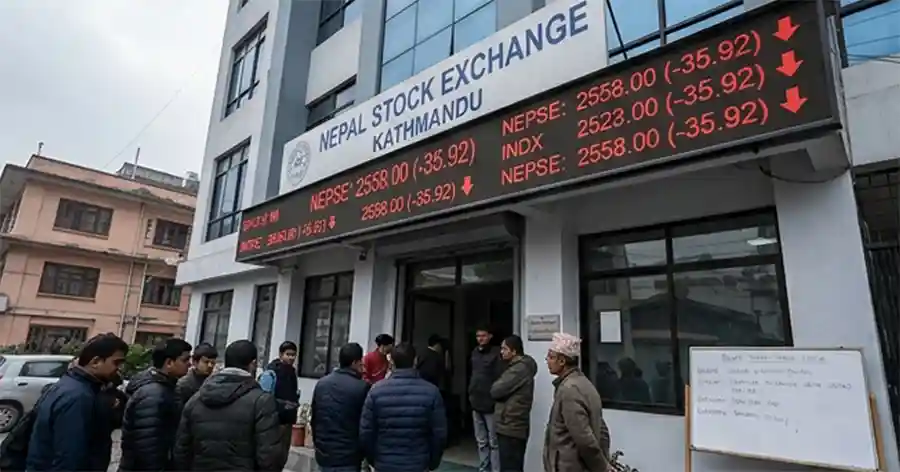
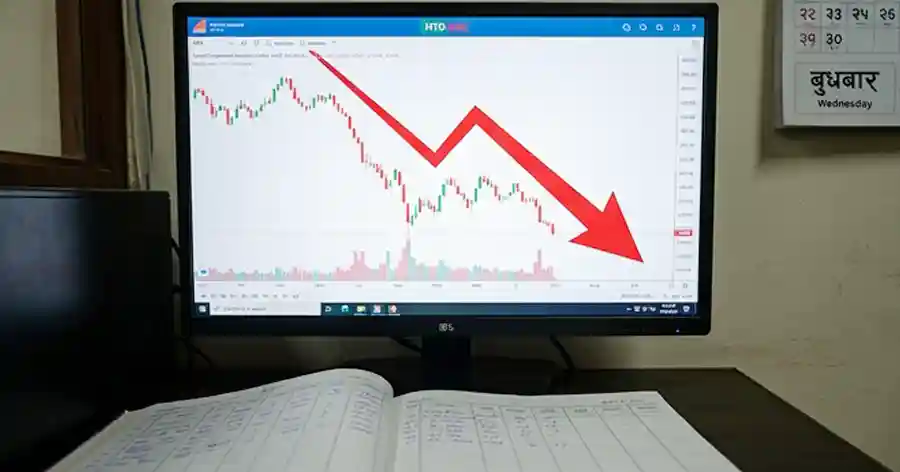
The Nepal share market suffered a sharp, flood-triggered sell-off on Wednesday, as the benchmark NEPSE index tumbled 35.92 points to close at 2,558, wiping out billions in investor wealth in a single trading session. The steep fall came after a sudden flash flood originating in Tibet swept into Nepal’s Rasuwa district, damaging more than a dozen hydropower projects and rattling confidence across the entire energy and insurance sectors of the Nepal Stock Exchange (NEPSE).
Wednesday’s decline in the Nepal share market was broad and unforgiving. Out of the companies traded, only 23 managed to post gains, while a staggering 252 companies closed in negative territory and 3 remained unchanged. Despite the market bloodbath, trading turnover actually rose to Rs 4.77 billion, higher than the previous session, suggesting many investors rushed to exit hydropower and insurance holdings even as the index slid.
This article breaks down exactly what happened on the Nepal Stock Exchange today, why hydropower and non-life insurance stocks were hit hardest, which individual companies lost or gained the most value, and what this flood-driven crash means for the broader Nepali investment landscape going forward.
NEPSE Index Today: Key Numbers At A Glance
Before diving into the causes behind Wednesday’s slump in the Nepal share market, here is a quick snapshot of how the session played out on the trading floor.
- NEPSE index closed at: 2,558 points
- Points lost: 35.92
- Total turnover: Rs 4.77 billion (higher than the previous trading day)
- Companies that gained: 23
- Companies that declined: 252
- Companies unchanged: 3
- Worst-performing sector: Non-Life Insurance, down 3.90 percent
- Second worst-performing sector: Hydropower, down 2.84 percent
- Best-performing stock: Sarbottam Paints, up 15 percent
These numbers confirm that Wednesday was one of the more punishing single-day sessions the Nepal share market has experienced in recent weeks, with almost every sector index closing lower and market breadth heavily skewed toward losers.
What Triggered The Selloff? A Flash Flood From Tibet Hits Rasuwa
The primary driver behind the steep fall in the Nepal share market was not a change in monetary policy, an interest rate hike, or a shift in investor sentiment about the broader economy. Instead, it was a natural disaster hundreds of kilometres away in the mountains that instantly reshaped how traders viewed Nepal’s hydropower and insurance stocks.
Bhotekoshi And Trishuli Rivers Swell Without Warning
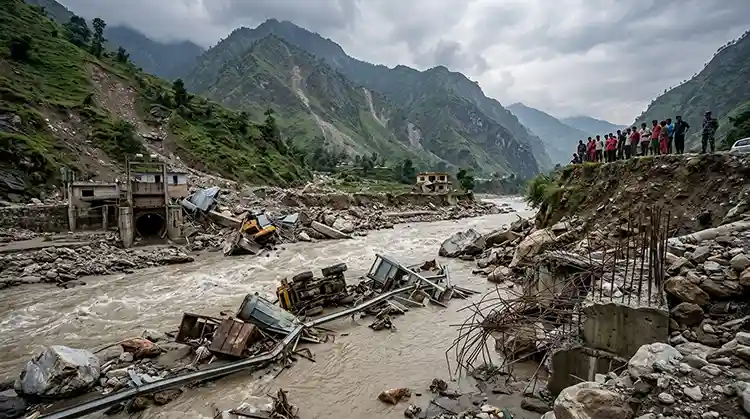
A sudden surge of water originating from a river in Tibet crossed into Nepal through the Rasuwa border region, swelling the Bhotekoshi river and threatening to raise water levels further downstream along the Trishuli river.
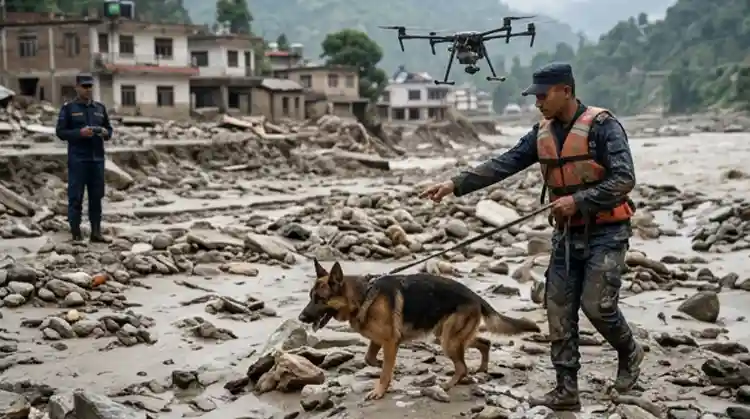
Local authorities in Rasuwa confirmed they had received reports of unusually high river flows early in the day, though the full scope of the damage was still being assessed as the trading session opened. District officials urged residents, fishermen, and workers near the riverbanks to move to safer ground immediately, while also asking hydropower companies operating along the corridor to activate emergency protocols.
By the time trading closed on the Nepal Stock Exchange, it had become clear that the flood had physically damaged more than a dozen hydropower installations along the Bhotekoshi-Trishuli corridor, several of which are publicly listed companies whose shares trade actively on NEPSE.
A Familiar Disaster: Echoes Of The 2025 Rasuwa Flood
For investors who have followed Nepal’s hydropower sector closely, Wednesday’s disaster carried an uncomfortable sense of déjà vu. As reported by The Kathmandu Post, this is not the first time a flood originating from Tibet’s river systems has devastated this exact stretch of Nepal’s northern border.
A similarly destructive flash flood struck the same Rasuwa corridor roughly a year earlier, killing several people, sweeping away a key bridge linking Nepal and China, and severely damaging hydropower infrastructure and road access in the area. The recurrence of such flooding has again raised questions among market analysts about the geological and climate-related vulnerability of hydropower assets built along glacier-fed, cross-border river systems in this part of the Himalayas.
Because so much of Nepal’s listed hydropower capacity sits precisely in this high-risk river corridor, any repeat flooding event tends to trigger an immediate, sector-wide repricing on the Nepal Stock Exchange, rather than being treated as an isolated, single-company problem.
Hydropower Index Sinks 2.84 Percent As Power Plants Take A Direct Hit
Given that hydropower remains one of the most heavily traded and closely watched sectors on the Nepal share market, it is little surprise that the Hydropower sub-index bore the brunt of Wednesday’s decline, falling 2.84 percent.
Physical damage to power infrastructure directly threatens two things that matter enormously to shareholders: near-term electricity generation revenue and the replacement cost of damaged equipment. When transmission lines, intake structures, desilting basins, or powerhouses along a river corridor are damaged or swept away, affected companies typically face weeks or months of reduced or halted generation, which can materially dent quarterly earnings. Traders reacted instantly to this risk on Wednesday, selling down hydropower counters across the board rather than waiting for individual companies to release formal damage assessments.
It is worth noting that Nepal’s installed hydropower capacity has expanded rapidly over the past decade, and the Nepal Electricity Authority has increasingly relied on private and public hydropower producers listed on NEPSE to help meet national demand and even export surplus power to India during the monsoon season. Any disruption to this pipeline, even temporary, has ripple effects that go beyond the stock market and touch national energy planning.
Non-Life Insurance Stocks Fall 3.90 Percent On Claims Exposure Fears
Interestingly, the single hardest-hit sector on the Nepal share market on Wednesday was not hydropower itself, but Non-Life Insurance, which dropped 3.90 percent — the steepest sectoral decline of the day.
The logic behind this sell-off is straightforward once you understand how insurance economics work. Hydropower projects in Nepal typically carry property and business-interruption insurance policies underwritten by domestic non-life insurance companies to protect against exactly this kind of flood damage.
When a dozen-plus power projects are damaged simultaneously in a single event, the insurance companies that underwrote those policies suddenly face a wave of claims that could significantly dent their underwriting profits for the current fiscal year. Investors, anticipating higher claims payouts and tighter margins, moved quickly to reduce their exposure to non-life insurers, pushing the sector index down even harder than hydropower itself.
Broader Market Sectors Also Close In The Red
While hydropower and non-life insurance stood out as the worst-hit sectors, Wednesday’s decline was not confined to just these two groups. Every major sectoral index on the Nepal Stock Exchange closed lower, reflecting a broadly risk-off mood among traders rather than a narrow, sector-specific correction.
- Banking: down 0.74 percent
- Development Bank: down 0.84 percent
- Finance: down 1.10 percent
- Hotels and Tourism: down 0.54 percent
- Investment: down 1.31 percent
- Life Insurance: down 1.52 percent
- Manufacturing and Processing: down 0.40 percent
- Microfinance: down 0.91 percent
- Others: down 1.44 percent
- Trading: down 0.04 percent
The fact that even sectors with no direct exposure to hydropower assets, such as banking and manufacturing, also declined suggests that Wednesday’s flood news triggered a degree of general risk aversion across the entire Nepal share market, not just among investors specifically holding hydropower or insurance shares.
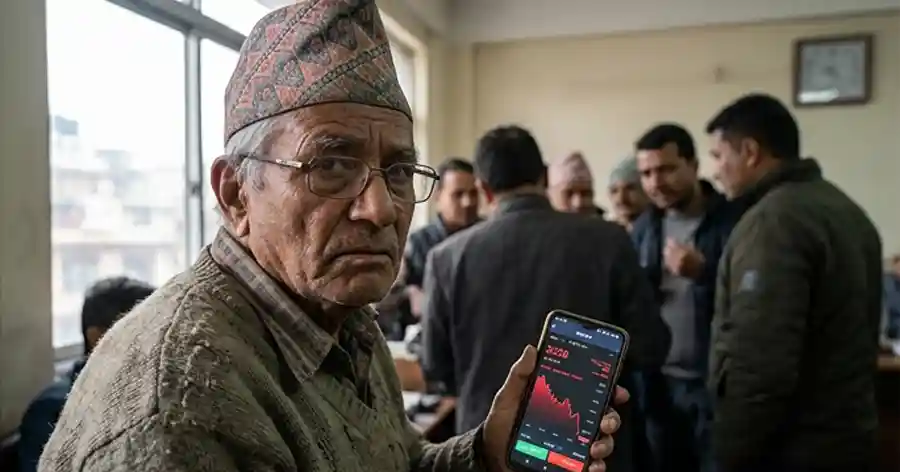
Biggest Losers: Rasuwagadhi, Mailung Khola, And Trishuli Hydropower Shares Plunge
The companies whose physical assets were most directly affected by the Tibet-origin flood saw their share prices punished the hardest on Wednesday, in several cases hitting the maximum permitted single-day decline (commonly referred to as the “circuit limit” on the Nepal Stock Exchange).
- Rasuwagadhi Hydropower Company: down 15 percent, the steepest fall of the day
- Mailung Khola Hydropower: down 14.99 percent
- Trishuli Jal Vidyut (Trishuli Hydropower): down 12.95 percent
- Upper Mailung Khola Hydropower: down 11.56 percent
- Sanjen Jal Vidyut Company (Sanjen Hydropower): down 11.18 percent
- Crest Micro Life Insurance: down 10.85 percent
Each of these hydropower companies operates generation assets in or near the Bhotekoshi-Trishuli river corridor in Rasuwa, precisely the area struck by Wednesday’s flood. The fact that four of the six biggest single-day losers on the entire Nepal Stock Exchange were hydropower companies from this specific geographic cluster underscores just how localized, yet financially significant, this disaster was for the market.
The inclusion of Crest Micro Life Insurance among the top losers is also notable, and reinforces the broader theme of the day: insurers with meaningful underwriting exposure to hydropower and disaster-prone regions were penalized almost as heavily as the physically damaged power companies themselves.
Top Gainers Buck The Trend: Sarbottam Paints Surges 15 Percent
Even on a day dominated by losses, a handful of Nepal share market counters managed to defy the broader downtrend and post solid gains, offering a reminder that sell-offs driven by sector-specific news rarely affect every single stock uniformly.
- Sarbottam Paints: up 15 percent, the day’s biggest gainer, hitting its upper circuit limit
- Aapareshwor Khola Hydropower: up 10.43 percent
- Kalinchowk Hydropower: up 3.21 percent
The strong showing from Sarbottam Paints is particularly striking given that the company operates outside the hydropower and insurance sectors that dominated Wednesday’s headlines, suggesting company-specific catalysts, such as strong earnings expectations or renewed retail investor interest, rather than any connection to the flood news. Meanwhile, the gains posted by Aapareshwor Khola Hydropower and Kalinchowk Hydropower are a useful reminder that not every hydropower company on the Nepal Stock Exchange operates in the flood-affected Rasuwa corridor; investors appear to have differentiated between geographically exposed producers and those located elsewhere in the country.
Most Active Stocks By Turnover
Trading volume on Wednesday was concentrated heavily around a familiar cluster of frequently traded hydropower and energy names, several of which were also among the biggest decliners of the day. The companies that recorded the highest turnover included Chilime Hydropower Company, Sanima Middle Tamor Hydropower, Sahas Urja, Solu Hydropower, and Ridi Power. This pattern of heavy volume in hydropower counters is consistent with recent weeks on the Nepal Stock Exchange, where energy stocks have consistently dominated daily turnover figures compared to banking, manufacturing, or insurance shares.
Market Context: NEPSE’s Broader Downtrend In Late August 2026
Wednesday’s flood-driven decline did not occur in isolation. It extended a period of sustained weakness that has gripped the Nepal share market through much of August 2026. According to reporting from The Kathmandu Post, the NEPSE index had already fallen roughly 25 points, or close to 1 percent, over the trading week ending August 21, as total market capitalisation slipped from about Rs 4.547 trillion to Rs 4.504 trillion, erasing tens of billions of rupees in investor wealth even before Wednesday’s flood news broke. Analysts cited in that report pointed to oversupply of shares and generally weak buyer demand as persistent headwinds weighing on prices throughout the month.
Separately, coverage from OnlineKhabar English News noted that the index had already slipped below the psychologically important 2,600-point level earlier in the week, ending what had been a roughly two-month period during which NEPSE traded consistently above that threshold. That earlier decline was also led by hydropower and non-life insurance stocks, even before Wednesday’s flood added a fresh and far more severe shock to the same two sectors.
Taken together, this context suggests that Wednesday’s crash was not a one-off shock in an otherwise calm market, but rather a sharp acceleration of an already-fragile downtrend that had been building for roughly two weeks, driven first by oversupply and soft demand, and now compounded by a genuine physical disaster affecting real infrastructure.
Why Hydropower And Insurance Dominate NEPSE Sentiment
For readers less familiar with the structure of the Nepal share market, it helps to understand why news from a relatively remote mountain district can move the entire national index so dramatically. Hydropower is one of the largest and most actively traded sectors on the Nepal Stock Exchange by both number of listed companies and daily turnover, reflecting the central role hydroelectricity plays in Nepal’s energy strategy and export ambitions.
Non-life insurance companies, meanwhile, are deeply intertwined with the hydropower sector because they underwrite the property, machinery-breakdown, and business-interruption policies that protect power projects against exactly this kind of flood or landslide risk.
This tight structural linkage means that any physical disaster affecting hydropower assets almost automatically becomes a two-sector story on NEPSE: first the power producers themselves, and then the insurers who must eventually pay out on damage claims. Wednesday’s trading session was a textbook example of this dynamic playing out in real time.
What This Means For Nepali Investors
For retail and institutional investors holding hydropower or non-life insurance shares, Wednesday’s flood-driven sell-off raises several practical considerations worth watching in the days and weeks ahead.
First, the true financial impact on individual hydropower companies will depend heavily on the extent of physical damage, how quickly repairs can be completed, and whether affected companies carry sufficient insurance coverage to offset lost generation revenue. Investors should watch for official damage assessments and stock exchange disclosures from the specific companies involved, particularly Rasuwagadhi Hydropower, Mailung Khola Hydropower, Trishuli Jal Vidyut, Upper Mailung Khola Hydropower, and Sanjen Jal Vidyut.
Second, non-life insurance companies with meaningful exposure to hydropower underwriting, such as Crest Micro Life Insurance, may see their claims ratios rise in upcoming quarterly results, which could pressure profitability even after share prices stabilize.
Third, the recurrence of destructive, Tibet-origin flooding in the same Rasuwa corridor for a second time in roughly a year may prompt renewed scrutiny of risk models used to price hydropower project insurance and to value hydropower equities more broadly, particularly for projects situated along glacier-fed river systems vulnerable to sudden outburst floods.
Finally, given that Wednesday’s crash extended an already two-week-long downtrend driven by oversupply and weak demand, some market watchers may view the added flood shock as a further reason for caution in the near term, even as historically, Nepal’s hydropower sector has tended to recover once damaged infrastructure is repaired and normal generation resumes.
Frequently Asked Questions
Why did the Nepal share market fall on Wednesday? The NEPSE index fell 35.92 points to 2,558 primarily because a flash flood originating in Tibet damaged more than a dozen hydropower projects in Nepal’s Rasuwa district, triggering heavy selling in hydropower and non-life insurance stocks.
Which sector was hit hardest on NEPSE? Non-Life Insurance was the worst-performing sector, falling 3.90 percent, followed closely by Hydropower, which dropped 2.84 percent, as investors priced in both physical damage and rising insurance claims risk.
Which hydropower stocks fell the most? Rasuwagadhi Hydropower Company led the declines, falling 15 percent, followed by Mailung Khola Hydropower down 14.99 percent, Trishuli Jal Vidyut down 12.95 percent, Upper Mailung Khola Hydropower down 11.56 percent, and Sanjen Jal Vidyut down 11.18 percent.
Did any stocks gain on Wednesday despite the crash? Yes. Sarbottam Paints rose 15 percent to hit its upper circuit limit, while Aapareshwor Khola Hydropower and Kalinchowk Hydropower also posted gains of 10.43 percent and 3.21 percent respectively, showing that not every hydropower counter was affected equally.
Is this the first time a Tibet-origin flood has hit Nepal’s hydropower sector in this area? No. A similarly destructive flood struck the same Rasuwa river corridor roughly a year earlier, damaging infrastructure and a key Nepal-China border bridge, highlighting the recurring flood risk facing hydropower assets built along this stretch of river.

Final Thoughts On Wednesday’s NEPSE Crash
Wednesday’s session serves as a stark reminder of just how directly Nepal’s stock market remains tied to the physical, on-the-ground realities of its hydropower infrastructure. A natural disaster hundreds of kilometres from Kathmandu’s trading floors was enough to erase billions of rupees in market value within a single session, hitting not only the power companies whose assets were physically damaged, but also the insurers who now face the financial consequences of underwriting that risk.
As recovery and damage-assessment efforts continue in Rasuwa, investors on the Nepal Stock Exchange will be watching closely for company-specific updates that could determine whether Wednesday’s sharp decline proves temporary or marks the start of a longer, more sustained repricing of flood risk across Nepal’s hydropower-heavy stock market.
This article is based on publicly available Nepal Stock Exchange trading data and news reports and is intended for general informational purposes only. It does not constitute investment advice. Readers considering buying or selling shares mentioned in this article should consult a licensed financial advisor and verify current prices directly through NEPSE or a registered brokerage.

Economic Affair
- Budhigandaki Flood: 47 Rescued as Bridges Washed Away
- Nepal Supreme Court Handcuff Order: Police Barred From Routine Use
- 250+ Officials Deploy to Assess Rasuwa-Bhotekoshi Flood Damage
- Electricity VAT: Energy and Finance Ministers Strike Landmark Deal After Just 2 Months
- Nepal Inflation Shockingly Triples to 5.96% — Food and Transport Hit Hardest



Comments