





Nepal is being battered by climate change at a pace few nations have experienced, and a growing body of scientific and legal evidence now backs up what mountain communities have been saying for years. Glacial avalanches, sudden rock falls, glacial lake outburst floods, and monsoon disasters that were once rare events in the Himalayan region are now becoming disturbingly routine.
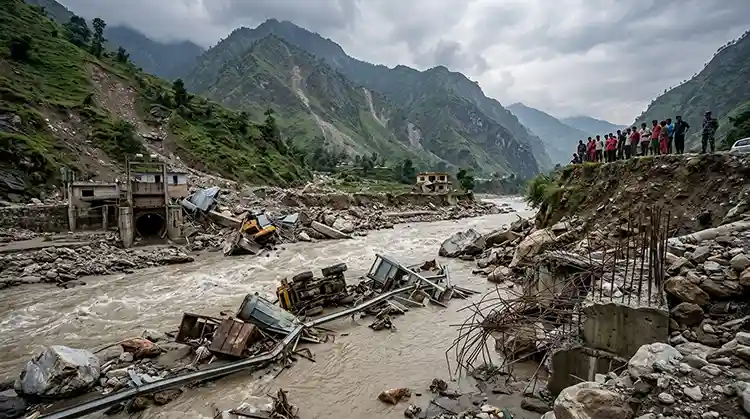
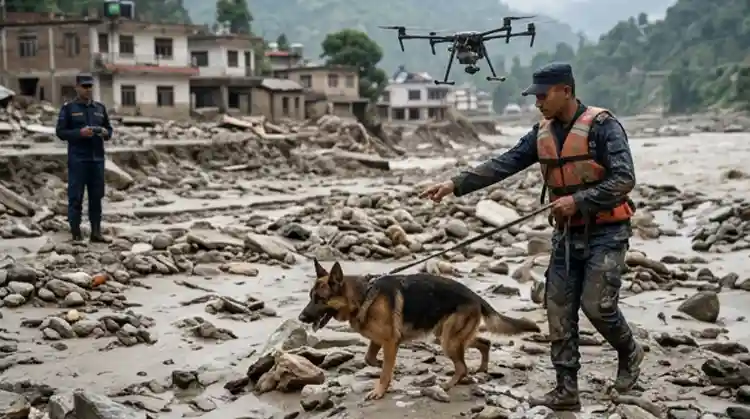
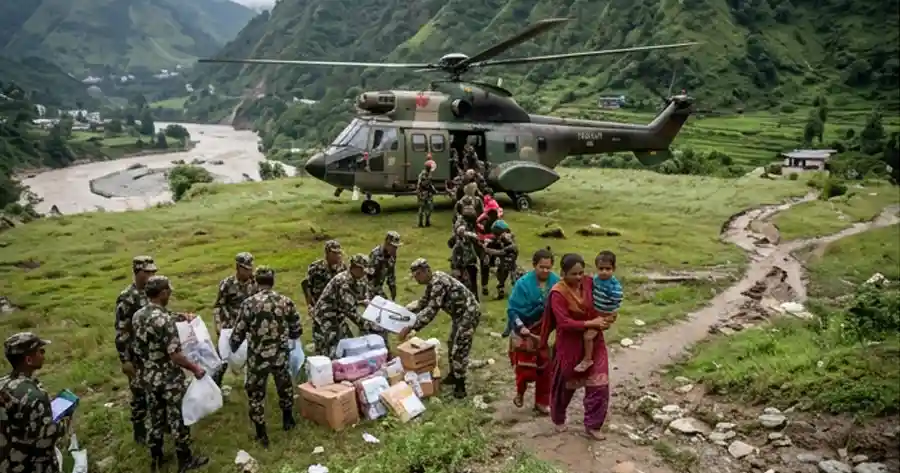
The catastrophic flash flood that tore through Nepal’s Rasuwa district in late August 2026 — triggered by an ice-and-rock collapse along the Lhende Khola near the Nepal-Tibet border — is only the latest and deadliest reminder that the high Himalaya is changing faster than anyone anticipated. With thousands reported missing and entire settlements swept away, the disaster has reignited an urgent question in Kathmandu’s policy circles: who should bear the cost when a country that barely contributes to global warming suffers its worst consequences?
This is where the concept of Nepal climate justice enters the conversation — not as an abstract slogan, but as a framework backed by international treaties, customary international law, and, as of July 2025, a historic advisory opinion from the International Court of Justice (ICJ). This article breaks down the science, the law, and the diplomacy behind Nepal’s emerging climate justice case, and why the country may finally be building the legal and scientific foundation to make its claims heard on the world stage.
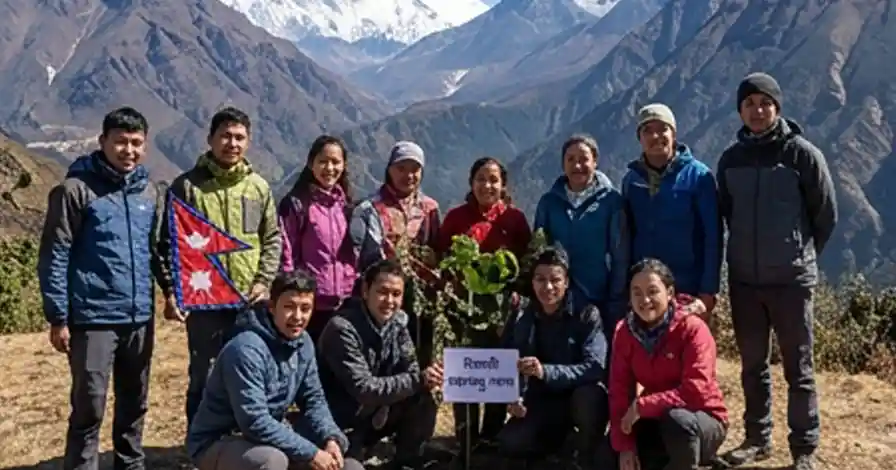
Why the Himalayas Are Becoming Ground Zero for Climate Disasters
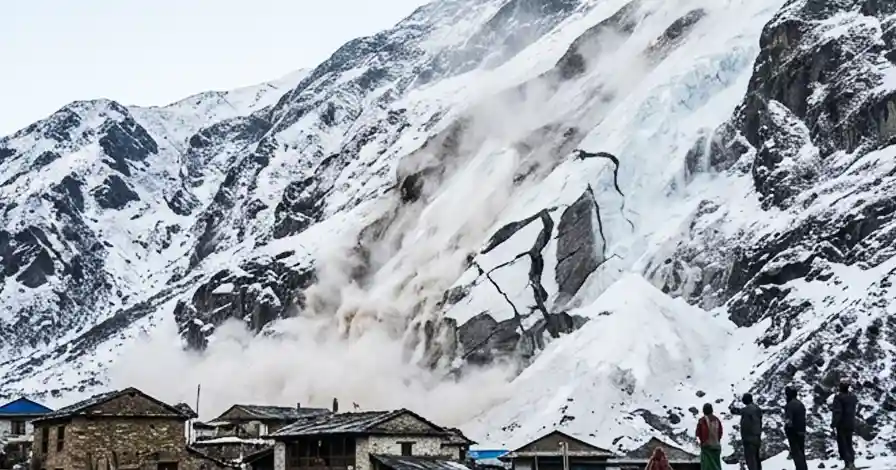
Nepal’s high mountain regions are undergoing rapid, visible transformation. Avalanches, rockfalls, glacial lake outbursts, and landslide-triggered floods — events that were once considered unusual — are now recurring with alarming frequency. Scientists broadly agree that the underlying driver is the disruption of the global climate system, and the Nepal Himalaya is disproportionately exposed to its effects.
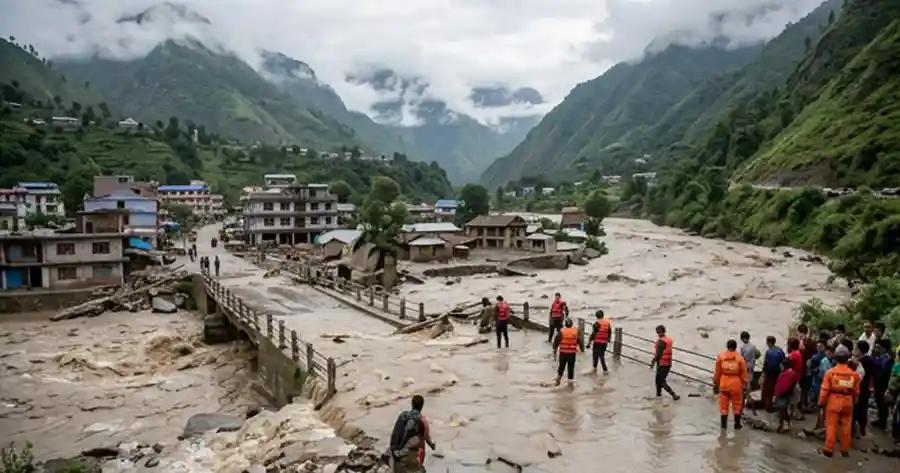
The August 26, 2026 disaster in Rasuwa is a stark case study. According to on-the-ground reporting, an ice avalanche is believed to have blocked the Lhende River, triggering a sudden flood that raced into the Bhote Koshi and then the Trishuli River, with water levels in the Trishuli rising as much as nine metres in just thirty minutes (Al Jazeera). The flood damaged hydropower infrastructure supplying roughly one-eighth of the country’s installed electricity capacity and left thousands of people, including thousands of foreign pilgrims and workers, unaccounted for in the immediate aftermath (Down To Earth).
Strikingly, this was not an isolated event. The same river system had already produced a catastrophic glacial outburst flood in July 2025 that destroyed the Nepal-China Friendship Bridge at Rasuwagadhi — a bridge that had only recently been rebuilt (Mappr analysis). Scientists studying the region point to a common thread: warming glaciers and thawing permafrost are destabilizing high-altitude slopes, making ice-and-rock collapses and the outburst floods that follow both more frequent and far harder to predict, often leaving communities in narrow mountain gorges with almost no warning time.
Some observers in Nepal have historically dismissed climate change as an exaggerated or overused concept. Events like the Rasuwa disaster make that position increasingly difficult to sustain. Every individual disaster may have some local or site-specific contributing factor, but set against the backdrop of accelerating global climate disruption, those local factors look increasingly secondary rather than decisive.
What Is Climate Attribution Science — and Why It Matters for Nepal
A central scientific and legal question now facing Nepal is how much of this damage is driven by global climate change versus local or regional factors. This is where the field known as climate attribution science becomes critical.
Climate attribution is the scientific process of identifying and measuring how much of a role climate change played in a specific extreme weather or climate-related event — whether that’s an unusually intense rainfall event, a flood, a drought, a heatwave, or the melting of a glacier or bursting of a glacial lake. Rather than simply asking “was this disaster caused by climate change,” modern attribution science increasingly asks a more precise question: how much did human-caused global warming increase the likelihood or intensity of this specific type of event?
This distinction matters enormously for Nepal’s diplomatic and legal strategy. Instead of trying to prove that a single foreign nation’s emissions caused a single Himalayan landslide — an extremely difficult, if not impossible, scientific and legal exercise — Nepal can lean on attribution science to demonstrate that global warming, driven cumulatively by decades of greenhouse gas emissions from industrialized nations, has measurably increased the probability and severity of the very category of disasters now devastating its mountain communities.
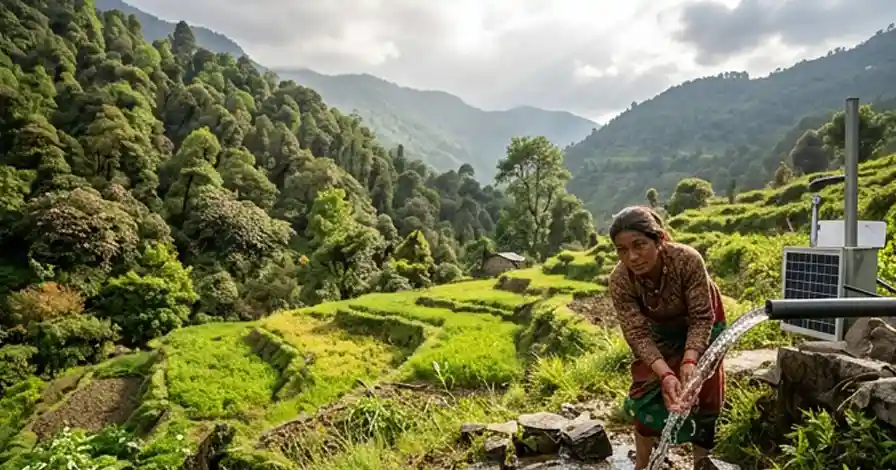
Nepal’s Own Climate Record: A Small Emitter Doing More Than Its Share
Any credible climate justice claim needs to be grounded in an honest accounting of a country’s own record, and Nepal’s numbers are striking. Nepal’s historical contribution to the greenhouse gases that have accumulated in the atmosphere since the industrial era is extremely small compared to major industrialized economies.
At the same time, Nepal has made real, measurable progress on the mitigation side of the ledger:
- Forest cover has expanded substantially in recent decades, and community forest management — a model Nepal pioneered — has become a widely cited success story in forest conservation and restoration.
- Hydropower now dominates Nepal’s electricity generation mix, giving the country one of the cleanest electricity grids in South Asia.
- Adoption of electric vehicles and electric cooking appliances has expanded rapidly in urban centers.
- Climate adaptation, disaster risk reduction, and environmental protection programs have gradually been extended down to the local government level.
This combination — a country that has contributed almost nothing to the historical build-up of greenhouse gases, while actively investing in clean energy and forest restoration, yet bearing an outsized share of the resulting climate damage — is precisely the profile that international climate justice frameworks were designed to address.
Adaptation vs. Loss and Damage: Two Different Legal and Policy Problems
Climate policy distinguishes between two related but distinct concepts, and Nepal’s case draws on both:
Adaptation addresses the forward-looking question: how can future damage from climate change be prevented or reduced? This includes early warning systems, glacial lake monitoring, resilient infrastructure, and land-use planning that keeps communities out of high-risk zones.
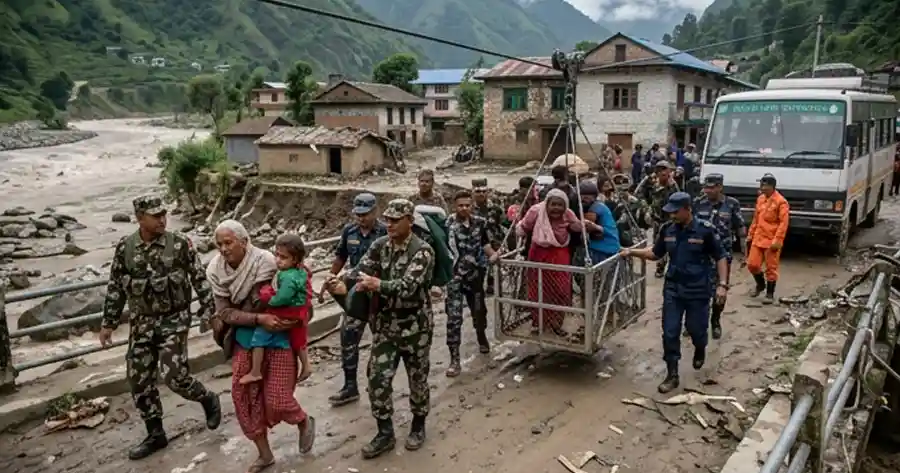
Loss and damage, by contrast, addresses what happens when adaptation efforts fail, are insufficient, or arrive too late — the climate-related harm that occurs despite best efforts at prevention. This is precisely the category into which disasters like the Rasuwa flood fall: harm that could not be fully prevented even with reasonable precaution, and which now needs to be accounted for, financed, and, where possible, remedied.
The Legal Backbone: “Common But Differentiated Responsibilities”
Nepal’s climate justice argument does not rest on goodwill or sympathy alone — it rests on specific, binding international legal instruments that Nepal and the international community have already agreed to.
The foundational text is the 1992 United Nations Framework Convention on Climate Change (UNFCCC), which formally established the principle of “common but differentiated responsibilities and respective capabilities.” In plain terms, this means that while every nation shares a common duty to protect the climate system, that duty is not distributed equally. Nations that have historically emitted far more greenhouse gases, and that have greater economic and technological capacity, are expected to bear a proportionally greater share of the burden.
Two specific provisions of the UNFCCC are especially relevant to Nepal:
- Article 4(4) obligates developed countries to assist developing countries that are particularly vulnerable to the adverse effects of climate change in meeting the costs of adaptation.
- Article 4(8) specifically requires special consideration for the needs and concerns of countries with fragile ecosystems, including mountainous ecosystems, and countries prone to natural disasters. Nepal’s geography and ecological profile map almost directly onto this clause.
The Paris Agreement: Why Nepal’s Climate Finance Demands Are a Legal Claim, Not Charity
Built on the foundation of the UNFCCC, the 2015 Paris Agreement reaffirmed the principle of equity and common but differentiated responsibilities. Under Article 9 of the Agreement, developed countries are obligated to provide financial resources to assist developing countries with both climate change mitigation and adaptation.
This is a crucial point for how Nepal should frame its diplomacy: climate finance directed toward Nepal is not simply foreign aid or philanthropy that wealthier nations may choose to extend out of generosity. It is a treaty-based obligation, negotiated and accepted by the very governments that are now being asked to honor it.
Article 8 of the Paris Agreement goes a step further, formally recognizing “loss and damage” associated with the adverse effects of climate change as a distinct area requiring international cooperation and support. Following years of advocacy from vulnerable nations — a movement Nepal has actively participated in — the international community established a dedicated Loss and Damage Fund to help finance recovery from climate disasters in the countries least responsible for causing them.
It’s worth noting an important legal limitation here: decisions taken by the Conference of the Parties (COP) to the Paris Agreement have made clear that Article 8 itself does not, on its own, create a legal basis for liability or compensation claims.
This means Nepal cannot simply point to Article 8 and demand direct compensation from a specific developed nation after a disaster. However, this does not make the loss and damage question purely theoretical — it means the conversation now needs to be grounded in broader principles of international law, which is exactly where the 2025 ICJ advisory opinion becomes so significant.
The Game-Changer: The ICJ’s Landmark July 2025 Advisory Opinion
Perhaps the single most important legal development for Nepal’s climate justice strategy is the International Court of Justice’s advisory opinion of July 23, 2025, formally titled “Obligations of States in Respect of Climate Change.” This was the first time the ICJ — the United Nations’ principal judicial body — had ever examined the international legal framework governing climate change, and the opinion was delivered unanimously by all fifteen sitting judges (ICJ-CIJ official summary).
Crucially, the Court did not limit its analysis to the UNFCCC and the Paris Agreement alone. It expanded its reasoning into customary international law, human rights law, and the broader law of state responsibility. The Court affirmed that states are legally obligated to prevent significant harm to the environment and the climate system, and to ensure that their own actions — and failures to act — do not cause harm to other states through their greenhouse gas emissions (ELAW summary of the ICJ opinion).
The opinion also recognized that a healthy environment is a precondition for the enjoyment of basic human rights, reinforcing the human dimension of climate harm rather than treating it as a purely technical or economic issue.
Legal analysts have described the ruling as largely rejecting arguments advanced by major historical and current greenhouse gas emitters, and as adopting an expansive interpretation of what states owe one another under international law (UK House of Commons Library briefing). The United Nations’ own European office described the opinion as a “historic” turning point with substantial political implications, warning that continued climate inaction may now amount to more than a policy failure — it may constitute a violation of international law (UNRIC coverage).
In practical terms, this means that if a state can be shown to have breached its international legal obligations on climate change, and another state or its people can be shown to have suffered harm as a result, the broader legal framework of state responsibility becomes potentially applicable — opening the door, at least in principle, to remedies that include halting the harmful conduct, guarantees of non-repetition, and reparations for damage suffered.
The Hardest Legal Question: Proving Causation
Even with this more favorable legal landscape, Nepal faces a genuinely difficult technical and legal hurdle: climate attribution as applied to liability, or proving the precise causal link between a specific country’s emissions and a specific disaster on Nepali soil.
It would be scientifically and legally very difficult to argue that the emissions of one particular developed nation directly caused one particular Himalayan avalanche or flood, and that this single nation should therefore bear the full cost of the resulting damage. Climate change is the product of more than a century of cumulative emissions from a vast number of countries and countless human activities worldwide — it is a diffuse, globally distributed problem, not the output of a single identifiable actor.
However, this does not mean the causation question is a dead end. Modern climate attribution science increasingly focuses on collective and probabilistic responsibility rather than single-source causation. Rather than asking whether climate change alone caused a given disaster, scientists can now often estimate how much human-caused global warming increased the likelihood or intensity of that category of extreme event.
This kind of scientific evidence — showing, for example, that a certain type of glacial lake outburst flood or extreme rainfall event has become measurably more probable or more severe because of global warming — is likely to become an increasingly important building block for future legal and diplomatic claims regarding climate-related damage and state responsibility.
Nepal Must Also Look Inward: Domestic Disaster Governance Matters Too
A mature and credible climate justice strategy requires Nepal to hold two ideas simultaneously, without letting one cancel out the other.
The first is the question of global climate responsibility: why has the risk of Himalayan disasters increased in the first place, and who bears responsibility for the emissions driving that increased risk?
The second is a distinct question of domestic governance responsibility: even where climate change has genuinely increased underlying risk, did Nepal’s own planning and disaster-management systems unnecessarily expose people, homes, and infrastructure to that heightened risk? This includes questions such as whether settlements were allowed to expand into known hazard zones without adequate risk assessment, whether early warning systems for glacial lake outburst floods and landslides were sufficiently developed, and whether critical infrastructure was built with appropriate safety margins in high-risk mountain terrain.
These two responsibilities operate on different levels and do not cancel each other out. The existence of a legitimate global climate justice claim against major historical emitters does not erase Nepal’s own obligation to responsibly govern development and disaster risk within its borders — and, conversely, gaps in domestic disaster governance do not diminish the legitimacy of Nepal’s broader claim that it is bearing a grossly disproportionate share of a crisis it did almost nothing to create.
A Possible Path Forward: A Himalayan Climate Justice Coalition
Nepal’s diplomatic position offers it a genuine, if underused, strategic advantage: it is widely regarded internationally as a constructive, good-faith actor rather than a confrontational one. That reputation — sometimes called diplomatic goodwill — is a real asset in international negotiations, but Nepal will likely need to combine it with greater technical capacity and a more coordinated long-term strategy to convert scientific and legal groundwork into concrete outcomes.
One promising avenue is regional coalition-building. Just as small island nations have successfully placed sea-level rise at the center of global climate justice discussions for over a decade, Nepal has a strong foundation to work with fellow Himalayan nations — including Bhutan — to establish “Himalayan climate justice” or a dedicated framework for addressing Himalayan-specific loss and damage as a recognized category within global climate diplomacy.
Mountain ecosystems and the communities that depend on them face a distinct cluster of risks — glacial retreat, permafrost thaw, glacial lake outburst floods, and cascading downstream disasters — that arguably deserve the same dedicated international attention that sea-level rise has received for vulnerable coastal and island states.
The Bottom Line for Nepal’s Climate Diplomacy
Nepal is not simply a passive victim of a crisis playing out elsewhere. It is a country that has made a demonstrably minimal contribution to the historical build-up of greenhouse gases, while actively investing — within real resource constraints — in forest conservation, clean hydropower, and climate adaptation. At the same time, the consequences of a crisis it barely contributed to — melting glaciers, expanding glacial lakes, destabilized mountain terrain, extreme rainfall, flooding and landslides, disrupted water sources, and escalating risk to lives, livelihoods, and infrastructure — are being borne disproportionately by Nepal and its people.
Leaving the entire economic and human burden of Himalayan conservation, climate adaptation, disaster risk reduction, and loss and damage on the shoulders of a low-emitting country like Nepal runs directly counter to the principle of climate justice that the international community has, at least on paper, already agreed to.
With scientific evidence on climate attribution steadily improving, a clear treaty-based foundation in the UNFCCC and Paris Agreement, and now a landmark 2025 ICJ advisory opinion reinforcing states’ obligations under customary international law and human rights law, Nepal has more coherent legal and scientific ground to stand on than at almost any point in its climate diplomacy history. What is needed now, as officials in Kathmandu have themselves acknowledged, is patient, capable, and well-prepared diplomacy — not hasty rhetoric — to translate that legal foundation into real outcomes for the communities living, quite literally, on the front lines of a warming world.

Economic Affair
- Budhigandaki Flood: 47 Rescued as Bridges Washed Away
- Nepal Supreme Court Handcuff Order: Police Barred From Routine Use
- 250+ Officials Deploy to Assess Rasuwa-Bhotekoshi Flood Damage
- Electricity VAT: Energy and Finance Ministers Strike Landmark Deal After Just 2 Months
- Nepal Inflation Shockingly Triples to 5.96% — Food and Transport Hit Hardest



Comments