



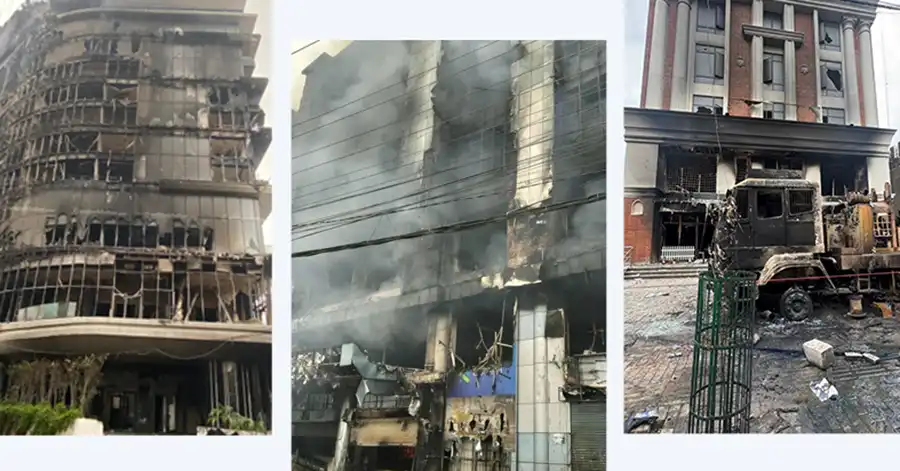
Nepal protests arson has become an alarming pattern, with billions of rupees in public and private property reduced to ashes over the past two years alone.
In any democracy, protests, demonstrations, and rallies are a normal part of civic life. But in Nepal today, the moment a demonstration is announced, a familiar fear grips ordinary citizens: will this turn into vandalism and arson again? Nepal protests arson has repeatedly overshadowed the legitimate grievances behind recent movements, turning peaceful marches into scenes of destruction.
From Burning Tyres to Burning Cities
Protests in Nepal once meant burning tyres or effigies as symbolic acts of defiance. Today, the targets have shifted dramatically — vehicles, department stores, factories, private homes, government offices, and even heritage buildings are now routinely set ablaze. Regardless of the original cause, a dangerous pattern has taken hold: movements increasingly end in fire.
A Long History of Protest, But a New Level of Destruction
Nepal is no stranger to mass movements. The 1990 People’s Movement, the 2006 Janaandolan, the Madhesh Protests, and various civil-service and student uprisings all shaped the country’s political history. While some arson occurred during these earlier movements, they did not involve the scale of attacks on private property and economic infrastructure witnessed in recent years.
The Durga Prasai Movement
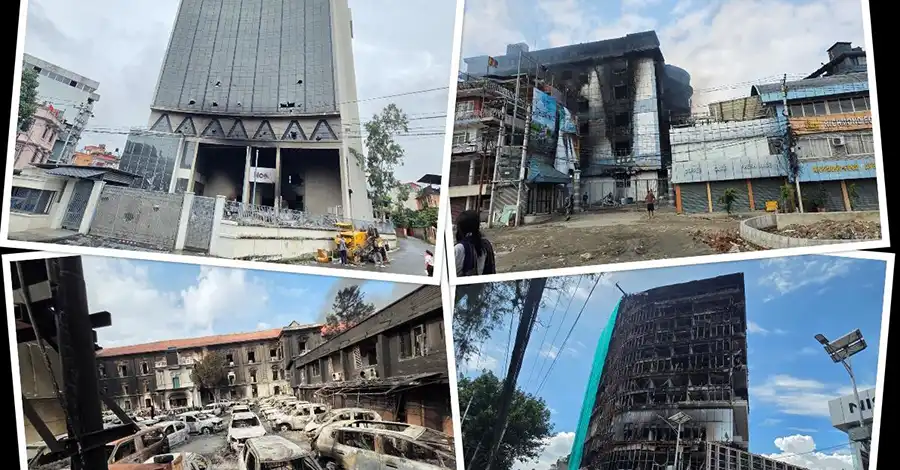
In March 2025, a pro-monarchy movement led by businessman Durga Prasai turned violent in Kathmandu’s Tinkune and Koteshwar areas. Protesters set fire to media houses, commercial buildings, the Bhatbhateni superstore in Koteshwar, private vehicles, and political party offices — even though the movement was aimed at restoring the monarchy and opposing the government, not at private businesses.
The Gen Z Protests of September 2025
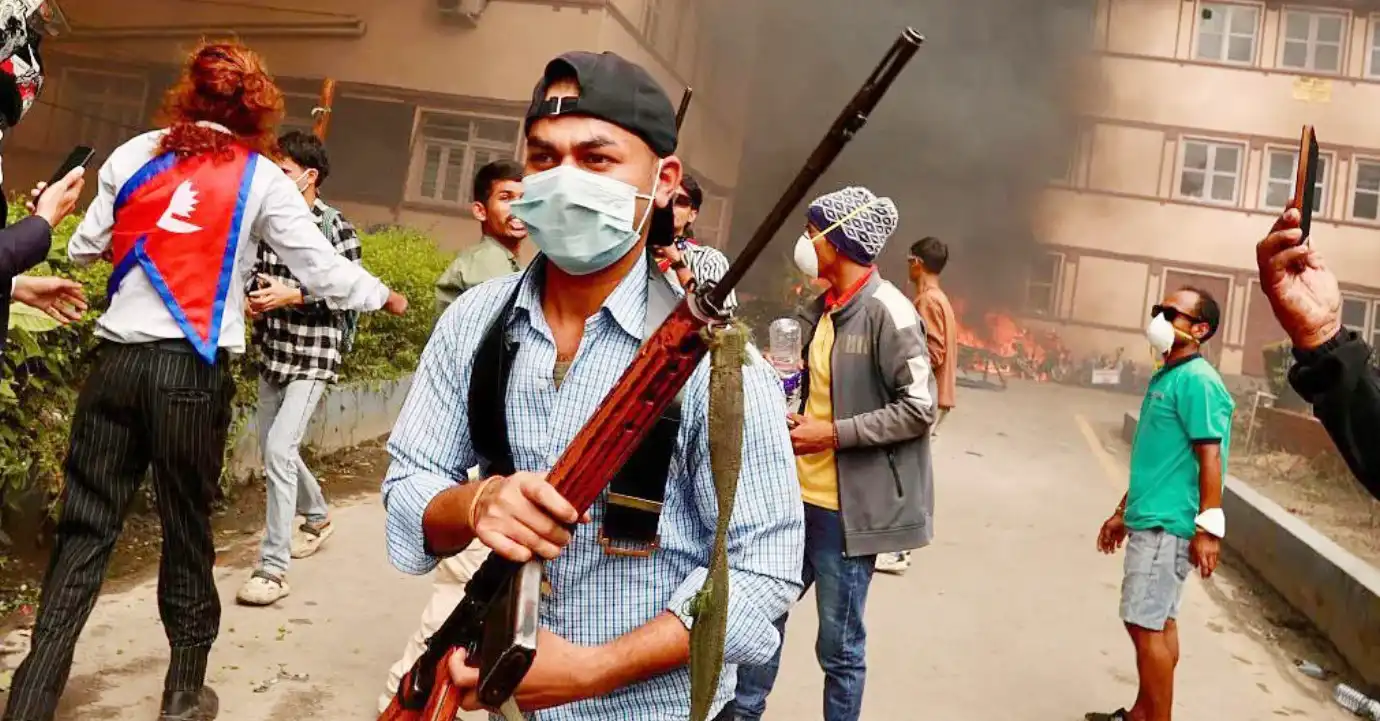
The most devastating example is the Gen Z protest movement of September 8–9, 2025, which became one of the largest incidents of urban unrest and arson in Nepal’s history. What began as a protest against corruption, a demand for good governance, and accountability escalated into nationwide violence. Singha Durbar, Sheetal Niwas, the Supreme Court, police stations, media houses, and private companies across the country suffered massive losses.
Religious Tensions Also Turn Violent
Even disputes with no political motive have followed the same pattern. A minor disagreement between Hindu and Muslim communities in Sunsari district recently escalated into demonstrations across the country, again resulting in shops, private property, vehicles, and shopping malls being vandalized or set on fire.
Why Has “Fire” Become the First Language of Protests ?
1. Impunity for Offenders
Many individuals involved in arson are publicly identifiable, yet very few face legal consequences. When perpetrators go unpunished, other groups come to see arson as an easy and effective tactic.
2. Crowd Psychology
Alone, almost no one would set fire to a department store. But in a crowd of hundreds, individual accountability dissolves. One person breaks a window, another pours petrol, a third lights the match — and within minutes, property worth millions is destroyed.
3. Social Media Amplification
Unverified information, provocative videos, and emotionally charged appeals spread across social media within minutes, reaching millions of people. In such moments, rumors are often accepted as fact faster than they can be verified, fueling uncontrolled crowd behavior.
4. A Flawed Protest Strategy
A troubling mindset has taken hold among some protest groups: that the government won’t listen unless something burns. This thinking treats vandalism, arson, and violence as sources of “strength” rather than as crimes with lasting consequences.
Who Actually Benefits From Arson? No One.
When a department store burns down, it isn’t just the owner who suffers — employees, suppliers, lending banks, insurance companies, and consumers are all affected. When a factory catches fire, production halts, workers lose jobs, and government tax revenue falls. When a private home burns, a family’s lifetime savings vanish. Government offices set ablaze mean disrupted public services, while burned police posts weaken security and demoralize law enforcement. Destroyed heritage buildings can never be recovered.
Economically, arson-driven unrest weakens investor confidence. The state is forced to spend billions on reconstruction, and foreign investors increasingly view Nepal as a high-risk destination — directly hurting employment, investment, and economic growth.
What Should the State Do Now?
- End the normalization of arson as an unavoidable byproduct of protest. Peaceful demonstrations deserve a response to their demands, but arson and vandalism call for zero tolerance.
- Investigate every arson incident scientifically and prosecute those responsible through the courts, without political protection.
- Enforce compensation laws that hold vandals financially responsible for destroyed public and private property, alongside criminal penalties.
- End political parties’ habit of shielding their own cadres who commit violence, treating them as lawbreakers rather than political workers.
Protest is a constitutional right and a vital part of democracy. But no one has the right to burn private shops, destroy industries, vandalize media houses, torch private homes, or reduce public property to ashes in the name of protest. If the state continues to treat arson as a routine political outcome, the next protest’s opening scene may not be a placard — it may be a plume of smoke. What would be lost then is not just buildings, factories, or vehicles, but public trust in the rule of law, a safe investment climate, citizens’ sense of security, and the very foundations of democracy itself.

Economic Affair
- Budhigandaki Flood: 47 Rescued as Bridges Washed Away
- Nepal Supreme Court Handcuff Order: Police Barred From Routine Use
- 250+ Officials Deploy to Assess Rasuwa-Bhotekoshi Flood Damage
- Electricity VAT: Energy and Finance Ministers Strike Landmark Deal After Just 2 Months
- Nepal Inflation Shockingly Triples to 5.96% — Food and Transport Hit Hardest



Comments