







The Strait of Hormuz crisis shows no sign of easing, with Iran doubling down on its blockade of the critical oil waterway even as President Donald Trump tells Americans they must accept painfully high gasoline prices as the cost of the ongoing war. Nearly six months after the conflict began, both sides remain locked in a standoff that has choked off one of the world’s busiest oil shipping lanes and rattled global energy markets.
Tehran says it will not budge until Washington accepts what it calls the reality of defeat, while the White House insists the economic pain being felt by American drivers is a price worth paying to keep Iran from developing a nuclear weapon. With peace talks stalled and tanker traffic through the strait still a fraction of pre-war levels, the standoff is increasingly shaping both US domestic politics and the global energy outlook.
Iran’s Deputy Foreign Minister Issues Fresh Warning
Iran’s Deputy Foreign Minister, Kazem Gharibabadi, used social media on Saturday to deliver one of the government’s sharpest warnings yet, saying the strait would only ever open or close under Iran’s own command. He added that Tehran would keep enforcing its blockade for as long as Washington refused to accept what he described as the reality of its defeat.
Gharibabadi’s remarks came directly in response to comments from President Trump, who has said he intends to declare the Strait of Hormuz a US territory once the war against Iran is fully won. In his own public statement, Gharibabadi pushed back hard on that idea, arguing that a strategic international waterway cannot simply be claimed through a social media post, a warship’s presence, an executive order, or a political speech.
Iran Says No Decision Yet On Resuming Talks
Iranian Foreign Minister Abbas Araghchi added to the defiant tone on Saturday, telling the Iranian outlet Shahrara News that Tehran had not yet decided whether to return to negotiations with Washington. He said any resumption of shipping through the strait would depend on the United States first meeting Iran’s conditions, a waterway that handled roughly one-fifth of the world’s oil supply before the war began.
Araghchi separately rejected the idea that ongoing efforts to revive an earlier ceasefire amount to an extension of any prior truce. He argued there had never really been a formal ceasefire to begin with, only a declared “end of the war” that has since given way to what he called an entirely new situation on the ground.
Trump Defends Painful Gas Prices As “Worth It”
Speaking at a political rally in Garden City, New York, on Friday, President Trump told supporters that paying a little more at the pump is a small price for preventing what he called a dangerous country from acquiring nuclear weapons, one of the central justifications he has offered for the war since it began. He has repeatedly framed the economic sacrifice as necessary, even as it becomes an increasingly visible political liability heading into the November midterms.
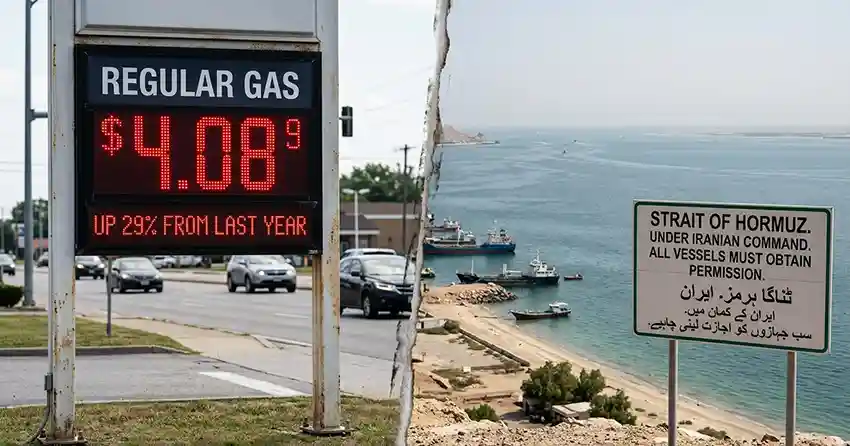
That political risk is grounded in real numbers. According to data from the American Automobile Association, the average price of a gallon of gasoline in the United States stood at roughly $4.08 on Friday, a 29 percent jump compared to the same time last year. For a president who campaigned heavily on lowering energy costs, the sustained price surge has become one of the most tangible ways ordinary Americans are feeling the war’s economic fallout.
Democrats Eye Gas Prices As A Midterm Issue
With Republicans controlling the White House, Democratic lawmakers are increasingly signaling they intend to make the war’s economic consequences, particularly gas prices, a central campaign issue ahead of the November congressional elections. Rising fuel costs tend to be one of the most politically sensitive economic indicators in the United States, since they are visible to nearly every driver on a near-daily basis.
Treasury Secretary Scott Bessent, meanwhile, has signaled the administration has no plans to ease pressure on Iran economically, regardless of the domestic political cost. In an interview on Newsmax’s “Rob Schmitt Tonight” program, Bessent said additional financial measures targeting Iran would be announced in the coming week, suggesting Washington is leaning further into economic pressure rather than immediate negotiation.
Oil Markets React As Tanker Traffic Stays Near Historic Lows
Global oil markets have continued to register the strain of the standoff. Crude oil futures rose by roughly a dollar a barrel on Friday, with benchmark Brent crude on track for a weekly gain of about 6 percent and US West Texas Intermediate up around 5.4 percent over the same period, reflecting persistent market anxiety over the strait’s status.
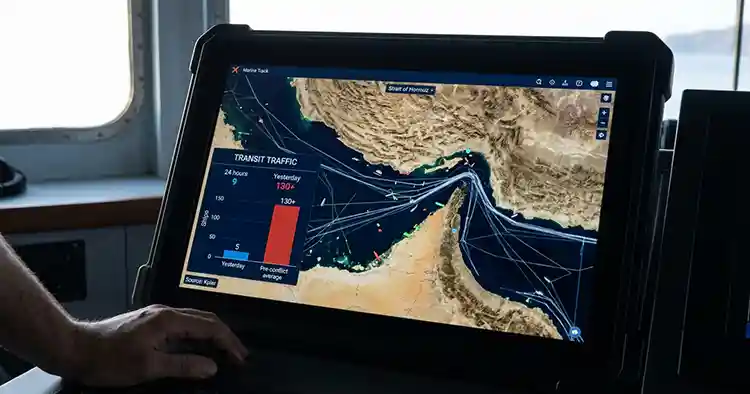
Ship-tracking firm Kpler reported that only two vessels transited the Strait of Hormuz on Friday, with no visible crude oil shipments among them. While analysts note that some vessels may cross with their transponders switched off to avoid detection, even accounting for that possibility, current traffic remains nowhere close to the more than 130 ships that used to pass through the strait each day before the war began.
That collapse in shipping volume lines up with separate reporting from the UK Maritime Trade Operations Centre, which has tracked repeated attacks and near-misses involving commercial vessels attempting to use the waterway without explicit Iranian permission.
Vessels Face Real Risk Attempting The Crossing
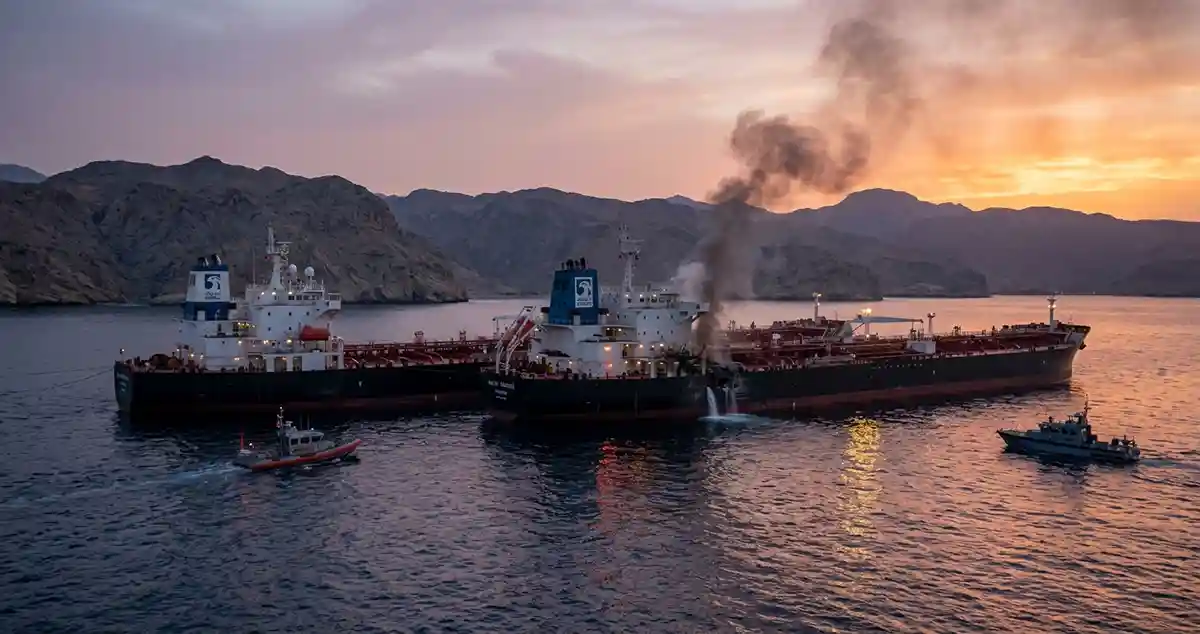
The danger to ships attempting the crossing without Iran’s blessing is not merely theoretical. The UAE’s Abu Dhabi National Oil Company confirmed that two of its vessels came under attack while transiting the strait on Thursday evening, and the Emirati state news agency WAM reported that a separate vessel was also attacked on Friday.
Separately, the UK Maritime Trade Operations Centre said a bulk carrier was struck in the hull by an unidentified projectile in the Strait of Hormuz on Friday. The agency confirmed the crew survived the incident, though no formal damage assessment had yet been completed and the resulting environmental impact remained unknown at the time of reporting.
Iran Feels Its Own Economic Strain
While Tehran has struck a defiant public tone, there are clear signs the standoff is inflicting real economic costs on Iran as well. Iranian President Masoud Pezeshkian addressed the issue directly in remarks broadcast on state television, attributing the country’s rising inflation to a combination of a US naval blockade on Iranian ports and continued sanctions targeting Iran’s oil exports.
That dynamic underscores just how mutually damaging the standoff over the strait has become. Even as Iran insists it retains full control over one of the world’s most important oil chokepoints, its own economy is absorbing significant collateral damage from the blockade and the broader sanctions regime accompanying it.
Washington Signals More Financial Pressure Is Coming
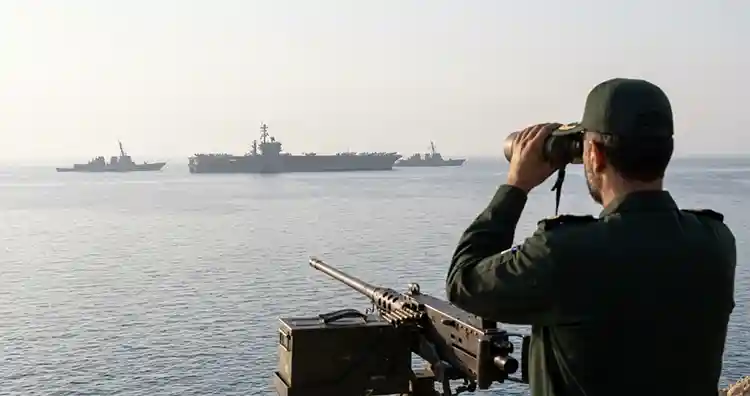
President Trump and Treasury Secretary Bessent have both pledged to escalate financial pressure on Iran rather than pull back, framing the strategy as a way to force Tehran’s hand without further direct military escalation. Trump defended the broader war effort in blunt terms, describing the campaign as a valuable service to the world and insisting a 260-day deployment of a US aircraft carrier supporting the operation had not lasted nearly long enough.
Iran, for its part, continues to describe its actions in the strait as a defensive blockade rather than an aggressive act, a characterization that puts it at odds with how Washington frames its own threats against Iranian vessels attempting to leave their home ports. Both sides are, in effect, using the same word, blockade, to describe what the other side is doing to them.
A Collapsed June Deal And A Fragile Diplomatic Track
The current standoff traces back to a tentative agreement reached in June that was meant to bring the war to a close. According to Araghchi, that arrangement never functioned as a genuine ceasefire in the traditional sense; instead, it represented what Iran considered a declared end to the war, a distinction he says has since been overtaken by renewed hostilities and a fundamentally different situation on the ground.
Background compiled on the notes that the conflict originally began on February 28, 2026, when Israel and the United States launched coordinated airstrikes against Iranian military and government targets. Subsequent diplomatic efforts, including a temporary truce reached in April and further talks held in Doha in July, repeatedly broke down before fighting resumed and the naval blockade was reinstated.
A separate documents a steady escalation since the war’s opening days, including Iran’s initial closure of the strait to what it called unfriendly nations, repeated attacks on commercial shipping, and the eventual formation of a body known as the Persian Gulf Strait Authority to manage traffic through the contested waterway.
Houthi Attacks Add To Regional Instability
The standoff over the Strait of Hormuz is unfolding alongside a broader pattern of regional unrest tied to the war. Yemen’s internationally recognized government said Iran-backed Houthi forces fired six ballistic missiles at the Red Sea port of Mocha on Friday, an attack it said killed four civilians.
The Houthi-run SABA news agency, for its part, said the group had also targeted an Aramco facility in the Saudi city of Najran using a drone, though that claim has not been independently verified by outside observers. Taken together, the attacks illustrate how the conflict’s reach now extends well beyond the strait itself, touching multiple flashpoints across the wider Middle East and Red Sea shipping corridor.
Why The Strait Of Hormuz Matters So Much
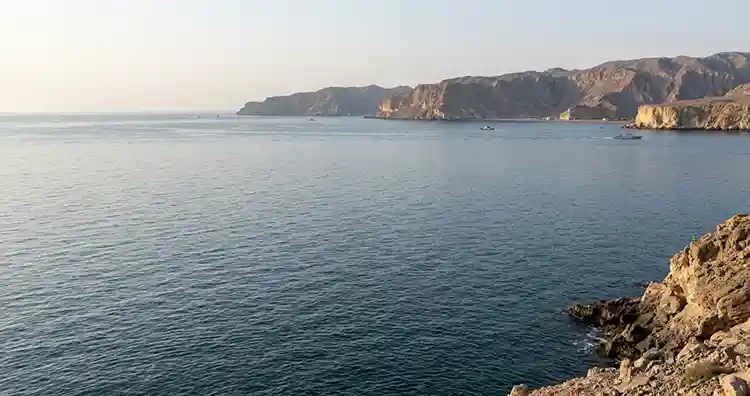
The Strait of Hormuz sits between Iran and Oman, connecting the Persian Gulf to the Gulf of Oman and, from there, to the open waters of the Indian Ocean. Before the war, it served as the transit route for roughly one-fifth of the world’s total oil consumption, making it one of the single most important chokepoints in global energy markets.
Because so much crude oil and refined fuel historically passed through this narrow waterway, even a partial disruption tends to ripple quickly through global prices, insurance costs for shipping companies, and the broader logistics of moving energy supplies from the Gulf region to markets in Asia, Europe, and beyond. That outsized importance helps explain why both the United States and Iran have been willing to escalate so sharply over control of the passage, even at significant cost to their own economies.
How The War Escalated Over Six Months
The path from the war’s opening strikes to today’s tanker standoff has been anything but linear. Fighting broke out on February 28, 2026, when US and Israeli forces launched a coordinated air campaign against Iranian military and government sites, an operation that also killed Iran’s Supreme Leader and several other senior officials. Iran responded with missile and drone strikes against Israel, US military installations in the region, and countries allied with Washington across the Middle East, while simultaneously moving to shut down the Strait of Hormuz.
In the war’s early weeks, Trump repeatedly rejected any negotiated settlement short of what he called Iran’s unconditional surrender, while separately threatening to destroy Iranian infrastructure if Tehran refused to reopen the strait. A temporary ceasefire arrangement in April, reportedly brokered with help from Pakistani and US officials, briefly slowed the fighting, though Iran continued asserting control over the waterway and began charging steep tolls on ships it allowed through.
That fragile arrangement gave way to renewed diplomacy in June, when both sides signed a memorandum of understanding aimed at pausing hostilities while negotiators worked toward a lasting resolution. The truce held for a period before unraveling in July following fresh clashes centered on the strait itself, which triggered the resumption of the US naval blockade and a broader expansion of the conflict that continues today.
Washington’s Naval Blockade By The Numbers
The United States formally reimposed its naval blockade of Iranian ports in mid-July, following the collapse of the June understanding, with the stated goal of cutting off Iran’s oil export revenue until Tehran agrees to reopen the strait on terms acceptable to Washington. According to figures tracked by the US Central Command, American forces have intercepted dozens of vessels attempting to reach or leave Iranian ports since the blockade began, redirecting many of them away from Iranian waters entirely.
Despite the scale of the operation, the blockade has not been airtight. Shipping analysts have noted that a modest number of vessels continue to slip through using alternate routes or by disabling their transponders to avoid detection, though the volume of traffic bypassing the blockade remains far smaller than what moved through the strait before the war. US officials have said the economic toll on Iran from the blockade runs into hundreds of millions of dollars per day, a figure Tehran has not directly disputed even as it continues to describe the underlying conflict in defiant terms.
Iran, in turn, has occasionally retaliated by seizing foreign-flagged cargo vessels of its own, a tactic that has further chilled international shipping companies’ willingness to risk transiting the region at all, regardless of which side’s blockade technically applies to a given route.
What Comes Next For Peace Talks
Diplomatic efforts to end the war have continued in fits and starts even as fighting persists. Indirect talks held in Doha, Qatar, in early July were described by Qatari officials as showing positive progress at the time, only for the negotiations to collapse within days after Iran fired on commercial vessels near the strait and formally announced the waterway’s closure to what it called unfriendly nations.
Since then, mediators have reportedly continued working behind the scenes to revive elements of the June memorandum of understanding, though a source described as holding a senior position within the Iranian government told international media that no real breakthroughs had been achieved on the core sticking points. Chief among those unresolved issues is the question of whether Washington will formally return to the terms of the June agreement and commit to a concrete timeline for implementing its own obligations under that arrangement.
Until that gap narrows, both sides appear to be settling into a prolonged standoff: Iran maintaining its blockade and demanding US concessions before any resumption of normal shipping, and Washington leaning on financial pressure and its own naval presence rather than rushing back to the negotiating table.
Frequently Asked Questions About The Strait Of Hormuz Crisis
When did the war between the US, Israel, and Iran begin? The conflict began on February 28, 2026, when the United States and Israel launched coordinated airstrikes against Iranian military and government targets.
Why is the Strait of Hormuz blocked? Iran closed the strait in response to the initial airstrikes and has continued enforcing what it calls a blockade, while the United States separately maintains its own naval blockade targeting Iranian ports.
How much has gasoline in the US increased because of the war? According to the American Automobile Association, the average US gas price reached about $4.08 per gallon, a 29 percent increase compared to the same period the previous year.
Is oil still flowing through the strait? Shipping traffic remains a small fraction of pre-war levels, with ship-tracking data showing only a handful of vessels transiting the strait on some days, far below the more than 130 daily crossings recorded before the conflict.
What does Iran want before reopening the strait? Iranian officials have said the United States must meet specific conditions before shipping fully resumes, though Tehran has not publicly detailed every term it is demanding.
Is the conflict affecting other parts of the Middle East? Yes. Iran-backed Houthi forces in Yemen have carried out missile attacks in the Red Sea region, and separate drone attacks have been reported targeting Saudi oil infrastructure, indicating the conflict’s effects are spreading beyond the strait itself.
Conclusion: No End In Sight For The Standoff
Nearly six months into the conflict, the Strait of Hormuz crisis remains a stubborn, high-stakes standoff with no clear resolution in view. Iran continues to insist it alone controls access to the waterway, while the Trump administration signals it is prepared to ratchet up financial pressure rather than compromise on its core demands.
For ordinary Americans, the most visible consequence remains the price at the gas pump, a cost the president continues to defend as necessary even as it becomes an increasingly potent political issue heading into the fall elections. For the wider Middle East, the risk of further escalation, whether through Houthi attacks in the Red Sea, strikes on shipping in the Gulf, or a renewed diplomatic breakdown, continues to loom over an already fragile regional balance.
This article reflects the latest publicly reported developments in the ongoing Strait of Hormuz standoff and will be updated as the situation evolves.

Economic Affair
- Budhigandaki Flood: 47 Rescued as Bridges Washed Away
- Nepal Supreme Court Handcuff Order: Police Barred From Routine Use
- 250+ Officials Deploy to Assess Rasuwa-Bhotekoshi Flood Damage
- Electricity VAT: Energy and Finance Ministers Strike Landmark Deal After Just 2 Months
- Nepal Inflation Shockingly Triples to 5.96% — Food and Transport Hit Hardest




Comments