
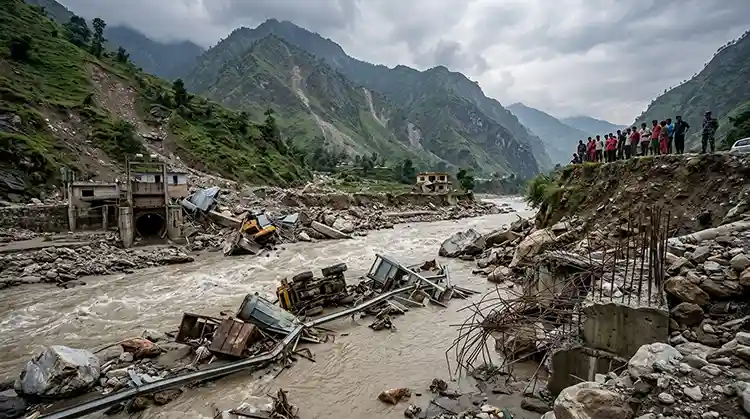




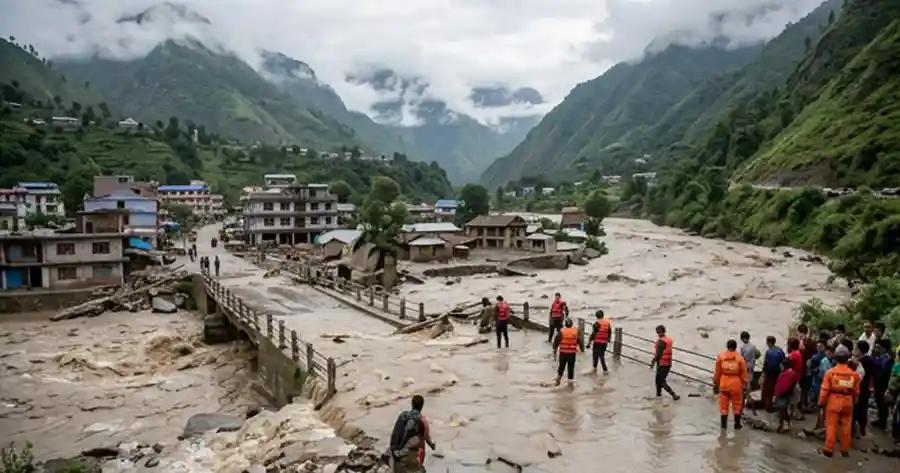
Kathmandu, October 11, 2026. The Budhigandaki flood has forced one of the largest emergency rescue operations Gorkha has seen in years. Officials say 47 people have been moved to safety after a sudden surge tore through the Budhi Gandaki River basin, sweeping away bridges, houses and parts of hydropower project sites.
47 People Rescued From the Flood Zone
The National Disaster Risk Reduction and Management Authority (NDRRMA) held a press conference on Sunday afternoon. It confirmed that 47 people trapped in the affected areas have been rescued and relocated.
Security Forces Deployed
NDRRMA Executive Chief Dr. Dharmaraj Upreti said 386 security personnel have been deployed for search and rescue. They are supported by four Nepal Army helicopters.
The personnel come from three forces:
- Nepal Army: 127
- Nepal Police: 83
- Armed Police Force: 177
Alerts Across Downstream Districts
Authorities have also urged people living along the river and further downstream to stay away from the riverbanks. Alerts were issued beyond Gorkha because Budhigandaki Flood water and debris can travel long distances once they enter a major river system.
Bridges Swept Away in Gorkha
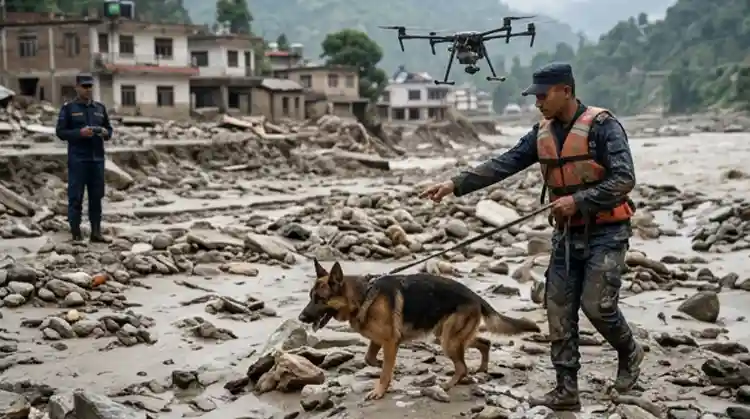
The most visible damage is to bridges. Many of them are lifelines for villages in northern Gorkha, and their loss has cut off communities that depend on them.
Old Suspension Bridge at Nyakchet
In Chumnubri Rural Municipality-3, the Budhigandaki Flood washed away the old suspension bridge linking Nyakchet to Sirdibas. It also destroyed one house in the same area, and floodwater entered another.
Machhikhola Suspension Bridge
In Dharche Rural Municipality-5, a suspension bridge connecting Machhikhola with Karauja was also swept away. Floodwater entered the lower settlement near Machhikhola, putting more than 20 houses at risk.
Arughat Bridge Connecting Gorkha and Dhading
At Naya Pul in Arughat Rural Municipality-9, theBudhigandaki Flood damaged the bridge linking Gorkha with Dhading. The bridge has three sections, and the Gorkha-side section was washed away.
According to preliminary details from the Department of Roads, a 22-metre RCC section of the Arughat bridge was lost. The truss section still appeared to be standing.
Soti Iron Bridge
An iron bridge at Soti, connecting wards 2 and 3 of Arughat Rural Municipality, was also swept away. The Department of Roads says the Soti Khola bridge was completely washed away.
Homes and Hydropower Projects Hit
Houses Near Salleri
In Dharche Rural Municipality-3, theBudhigandaki Flood hit the under-construction Sahaj Urja power house at Salleri. Reports say seven to eight houses nearby were also swept away.
Budhi Gandaki 341 MW Project
Floodwater washed away the main camp area and some construction equipment of the 341 MW Budhi Gandaki hydropower project. The Dovan Khola 24.5 MW project’s camp area also suffered damage to several buildings, and its Bailey bridge was swept away.
Damage details are still being collected. Officials have warned the final tally could rise as teams reach more remote settlements.
What Caused the Budhigandaki Flood?
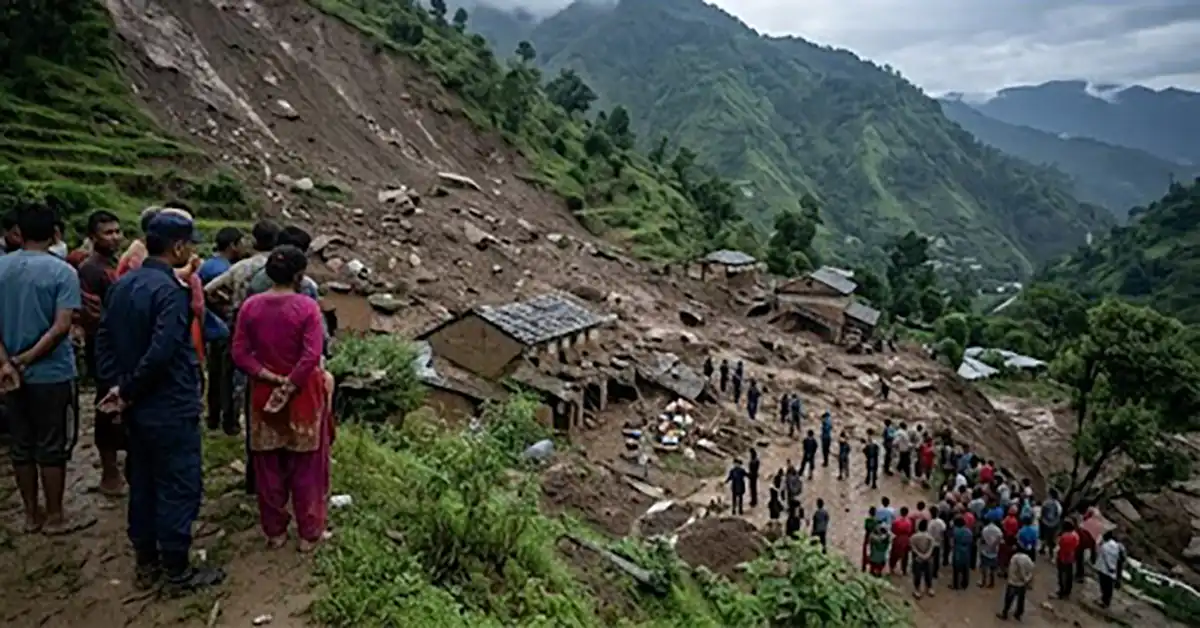
The exact cause has not been confirmed. Dr. Upreti said preliminary information points to an ice avalanche, which may have sent snow, mud and debris into the river. Other reports say a landslide blocked the river before the water broke through.
To settle the question, a technical team from NDRRMA and the Department of Roads has gone to the area with drones. The team will:
- Study the cause of the flood
- Inspect the condition of the damaged bridges
- Assess whether a Bailey bridge can be installed quickly at Arughat
Local people say the Budhigandaki Flood came without warning. Chumnubri Rural Municipality Deputy Chair Laxmi Gurung reportedly said it had not rained and the river’s behavior was unclear in the dark. He compared it to the Budhigandaki Flood in Rasuwa.
Missing Persons: Reports Differ
Accounts of how many people are missing vary by source. The Himalayan Times reported five missing, OnlineKhabar reported four, and ANI cited figures as high as ten. Early disaster reports often change as teams verify names and locations, so these numbers should be read with caution until NDRRMA publishes a consolidated figure.
Rescue work has also faced difficulty. Weather conditions initially made it hard for helicopters to land in some areas.
A Region Under Repeated Flood Stress
This is not the first scare on the Budhi Gandaki system this year. In early September, a flood on the Therang River in Chumnubri swept away four houses and a suspension bridge, with no casualties. The Therang River joins the Budhi Gandaki, which is why residents downstream were urged to stay alert then too.
The pattern matters because Nepal’s high mountain rivers are vulnerable to sudden debris floods and outburst events. Blocked rivers, avalanches and landslides can all release large volumes of water with little warning.
Safety Advice for People Near the River
Disaster authorities have asked residents along the Budhi Gandaki to follow these steps:
- Stay away from riverbanks and low-lying settlements until officials say it is safe.
- Move to higher ground if the water level rises or you hear warning sirens or loudspeakers.
- Follow only official updates from NDRRMA, district administration and security forces.
- Avoid crossing damaged bridges or temporary crossings.
- Help children, older people and people with disabilities evacuate first.
Trekkers and travelers in the Gorkha and Manaslu region should check route conditions before setting out, since several crossings are damaged.
What Happens Next
Authorities are focused on three priorities:
- Search for anyone still missing.
- Restore connectivity between Gorkha and Dhading.
- Complete the damage assessment for homes, bridges and energy projects.
A temporary Bailey bridge at Arughat could restore essential movement of people and supplies while permanent repairs are planned. Whether that is feasible depends on the technical team’s findings.
The Budhigandaki Flood is a reminder that early warning systems, rapid helicopter rescue and coordinated security response save lives. It also shows how exposed bridges and hydropower infrastructure are to extreme river events. Updates will follow as NDRRMA releases verified figures.

Economic Affair
- Budhigandaki Flood: 47 Rescued as Bridges Washed Away
- Nepal Supreme Court Handcuff Order: Police Barred From Routine Use
- 250+ Officials Deploy to Assess Rasuwa-Bhotekoshi Flood Damage
- Electricity VAT: Energy and Finance Ministers Strike Landmark Deal After Just 2 Months
- Nepal Inflation Shockingly Triples to 5.96% — Food and Transport Hit Hardest

Comments