







KATHMANDU — Nepal’s fish farming industry stands at a transformative crossroads, with untapped potential to revolutionize youth employment and strengthen food security through modern aquaculture technology. Dr. Ramchandra Bhujel, Research Associate Professor and Director of Aqua Centre at Thailand’s prestigious Asian Institute of Technology, has revealed groundbreaking insights about how Nepal can multiply its current fish production while creating thousands of jobs for young entrepreneurs.
In an exclusive interview, Dr. Bhujel emphasized that Nepal’s barren agricultural lands could become fertile grounds for commercial fish farming, offering youth an attractive alternative to foreign employment migration while addressing the nation’s protein deficiency crisis.
Nepal’s Current Fish Production Landscape
Annual Production Crosses 113,000 Metric Tons
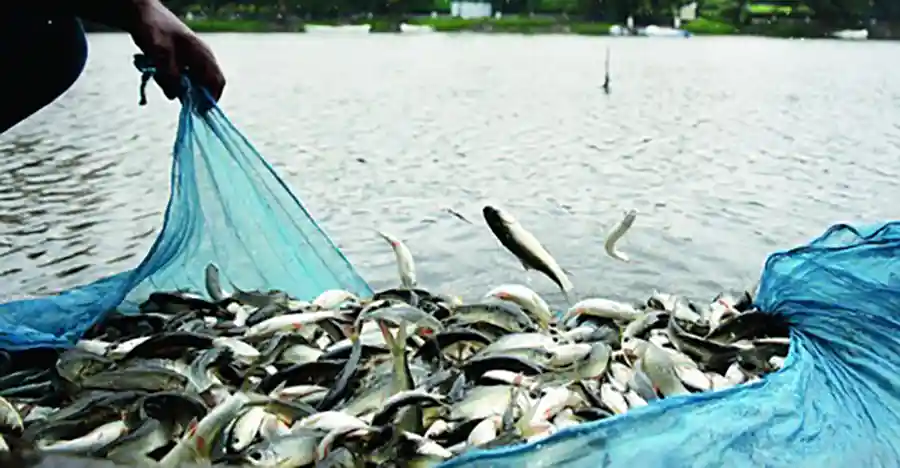
Nepal currently produces approximately 113,736 metric tons of fish annually, with 80% coming from aquaculture operations and 20% from capture fisheries. However, this production barely scratches the surface of the country’s potential, according to Dr. Bhujel, who has spent three decades researching and teaching fisheries science at one of Asia’s most renowned aquaculture institutions.
“Nepal lags behind in fish production and consumption compared to other countries, but the potential is enormous,” Dr. Bhujel stated. “Fish is inherently a healthy and nutritious food. Nepal’s barren lands can become fertile grounds for fish farming and youth employment.”
Import Dependency Drains Rs 3 Billion Annually
Despite having over 6,000 rivers and water bodies, Nepal imports approximately 10,000 tons of fish annually, primarily from India, draining roughly Rs 3 billion from the national economy each year. The imported varieties include pangasius and rohu from India, as well as fish from Norway, Vietnam, and other countries.
The current per capita fish consumption in Nepal stands at just 3.9 kg annually, significantly lower than the global average of 16-20 kg. This consumption gap represents both a challenge and an opportunity for domestic producers.
Revolutionary Technology Transfer from Thailand
Asian Institute of Technology’s Three-Decade Legacy
The Asian Institute of Technology’s Aquaculture and Aquatic Resources Management (AARM) program, established in the 1980s, has produced over 500 postgraduates since 1982, creating a powerful network of aquaculture experts worldwide. Dr. Bhujel has been instrumental in this program, focusing on transferring proven technologies to Nepal.
“We are introducing profitable fish species and technologies from Thailand to Nepal,” Dr. Bhujel explained. “Thailand has suitable climate conditions, and we’re bringing fast-growing species like pangasius, tilapia, and pearl-producing fish varieties that can generate quick economic returns.”
Modern Aquaculture Techniques Boost Production 3x
Dr. Bhujel revealed that using modern technology, Nepal’s current fish production could be tripled without expanding land area. While traditional paddy cultivation yields approximately 4 tons per hectare, fish farming averages 6 tons per hectare — with prices nearly 10 times higher than rice.
“With new technologies for fast-growing species like pangasius and tilapia, production can reach 20 to 40 tons per hectare,” Dr. Bhujel emphasized. “This is when youth will truly be attracted to this sector. Commercial fish farming can provide excellent employment and income opportunities for young people who want to stay in their homeland.”
Regional Potential and Pocket Areas
Terai Districts Lead Production Rankings
The subtropical Terai region offers ideal conditions for commercial fish farming due to its warm climate and flat terrain. Leading districts include:
- Chitwan – Pioneer in integrated fish farming systems
- Rupandehi – Strong commercial production base
- Bara and Parsa – Expanding aquaculture zones
- Dang and Kailali – Emerging production hubs
- Rautahat, Sarlahi, and Dhanusha – Growing commercial operations
The government has designated certain districts as “super zones” and “pocket areas” under the Prime Minister Agriculture Modernization Project, providing subsidies and technical support to farmers.
Mountain Regions Hold Trout Farming Promise
High-altitude regions like Kaski (Pokhara area) and Kakaani host successful trout farms catering to premium markets. Dr. Bhujel noted that Nepalese trout has received demand from Singapore, though production remains limited.
“Cold-water indigenous species like asala, sahar, and gardi also have excellent market potential with no shortage of buyers,” he added.
Economic Analysis: Fish vs Traditional Crops
10x Price Premium Over Rice
The economic advantages of fish farming over traditional agriculture are compelling:
- Rice production: 4 tons/hectare with lower market value
- Traditional fish farming: 6 tons/hectare average
- Modern intensive fish farming: 20-40 tons/hectare possible
- Fish price: Approximately 10 times higher than rice per kilogram
Dr. Bhujel emphasized that one kilogram of mutton prices could purchase up to four kilograms of fish in some areas, making fish an affordable protein source for all economic segments.
Integrated Farming Maximizes Returns
“Fish farming and paddy cultivation can be done simultaneously,” Dr. Bhujel explained. “Similarly, ducks, chickens, pigs, cattle, buffalo, and goats can be raised alongside fish ponds or on embankments, creating multiple revenue streams from the same land.”
Youth Employment Generation Potential
Addressing Foreign Migration Crisis
With thousands of Nepali youth leaving for foreign employment annually, Dr. Bhujel sees fish farming as a powerful retention strategy.
“If we can make commercial fish farming profitable through proper publicity, the number of youth going abroad will definitely decrease,” he asserted. “Currently, the country has idle young workforce. Soil and water are the biggest sources of money — we just need to know how to use them correctly.”
Government Support and Subsidized Loans
The government provides subsidies for pond construction, and banks offer concessional loans for aquaculture ventures. Dr. Bhujel stressed that farmers must utilize these resources properly with expert consultation and proper business planning.
Species Diversity and Market Opportunities
185 Fish Species, Strategic Focus Needed
Nepal is home to approximately 182-185 fish species inhabiting altitudes from a few hundred meters to as high as 4,000 meters above sea level. However, only a fraction are commercially cultivated.
Commercial species currently farmed include:
- Carp varieties: Common carp, rohu, naini, bhakur (indigenous major carps)
- Chinese carps: Grass carp, silver carp, bighead carp
- Fast-growing species: Tilapia, pangasius
- Cold-water species: Trout, asala, sahar, gardi
Dr. Bhujel emphasizes selecting species based on climate, land area, growth rate, feed requirements, and disease resistance before commercial operations.
Thailand’s Success Model
$8 Billion Annual Fish Export
Though smaller than India geographically, Thailand has developed a highly successful aquaculture industry with sophisticated education and research programs at institutions like AIT. The country earns approximately $8 billion annually from fish exports — equivalent to India’s total — demonstrating the sector’s economic potential.
“Thai farmers are self-reliant with appropriate climate. Nepal needs government encouragement,” Dr. Bhujel noted. “If Nepal produces sufficient fish, it can export to India’s Uttar Pradesh and Bihar states where fish farming is limited.”
Food Security and Nutritional Benefits
Protein-Rich Alternative to Red Meat
Fish provides exceptional nutritional value with proteins, vitamins, and other essential nutrients that are easily digestible for all age groups.
“Doctors recommend fish over other meats in many cases,” Dr. Bhujel emphasized. “Eating fish at least two to three times weekly promotes good health. Many people avoid fish due to lack of awareness or fear of bones.”
Addressing Nepal’s Protein Deficiency
To match global average consumption, Nepal needs to increase fish intake five-fold from the current under-4 kg per capita to 20 kg annually. This requires expanding farming areas, adopting new technologies, and cultivating fast-growing species.
Climate Change Adaptation Strategies
Water Management and Pond Systems
Climate change impacts like drought can affect natural water bodies, but purpose-built fish ponds help mitigate these effects. Rainwater harvesting and pond construction provide climate resilience while supporting fish farming.
Dr. Bhujel warned that hydroelectric dam construction without fish passage systems disrupts natural migration patterns, affecting wild populations. Many fish species migrate between cold and warm waters for spawning, and dam barriers prevent this essential movement.
Disease Management Challenges
Fish farming faces bacterial, viral, and parasitic diseases that can cause mortality. Overcrowding with insufficient oxygen also threatens production. Proper pond management, appropriate stocking density, and disease prevention protocols are essential.
Marketing Infrastructure and Export Potential
Domestic Demand Exceeds Supply
“Marketing problems don’t exist in Nepal — demand far exceeds production,” Dr. Bhujel stated. However, organized harvesting and marketing systems are needed to prevent farmer competition in low-capacity markets.
He recommends establishing farmers’ associations or cooperative societies with facilities like live fish transportation vans and processing infrastructure for efficient marketing.
Cross-Border Trade Opportunities
Nepal’s proximity to India’s Uttar Pradesh and Bihar states, where fish farming is limited, creates natural export markets. Some Terai districts already export fish to India, and this trade could expand significantly with increased production.
Cultural Aspects and Community Engagement
Traditional Fish-Consuming Communities
Communities like Majhi, Kumal, Jalari, Bote, Tharu, and Newar have strong cultural connections to fish consumption. These groups traditionally serve fish to guests and incorporate it into festivals and ceremonies.
AIT has been instrumental in developing aquaculture education programs and providing training to communities throughout Asia, including Nepal, to enhance their traditional knowledge with modern scientific techniques.
Conservation and Sustainable Practices
Protecting Indigenous Species
Dr. Bhujel expressed concern about destructive fishing practices using poison and electric current in rivers, which threaten indigenous species that represent Nepal’s natural heritage.
“Nepal needs comprehensive programs for conserving river and stream fish populations,” he urged. “When species decline, producing fingerlings and releasing them into rivers is practiced, but this isn’t happening adequately.”
Research and Documentation Needs
The Geology Department at Tribhuvan University in Kirtipur conducts new species discovery work, while Rampur Campus, NARC, and the Ministry of Livestock offices handle fish farming education, research, and extension services.
Educational Programs and Training
Curriculum Development Support
Dr. Bhujel has contributed to developing higher education curricula in aquaculture science in Nepal, ensuring students receive world-class training aligned with international standards.
AIT offers a one-year Professional Master’s degree in Aquaculture Business Management designed to provide business management skills alongside latest scientific knowledge and innovative aquaculture technologies.
Hands-On Training Programs
“Youth interested in fish business need technical information and training,” Dr. Bhujel advised. “They should consult with experts to maximize profits. Planning and programming before starting business operations is crucial.”
Government Policy and Support Framework
Prime Minister Agriculture Modernization Project
The government’s flagship agricultural modernization program has prioritized aquaculture development with budget allocations and technical support. Historical government aquaculture development plans have included targets for seed production, infrastructure development, and farmer support.
Subsidy Programs and Financial Assistance
Initial pond construction requires capital investment, but government subsidies and bank financing make entry more accessible for aspiring farmers. Dr. Bhujel emphasizes proper utilization of these financial resources with expert guidance.
Success Stories and Inspirational Examples
Farmers Turned International Travelers
“Many Nepali farmers have traveled abroad as tourists after succeeding in fish farming,” Dr. Bhujel shared. “Returnees from foreign employment have also started fish farming with great interest. Fish business is flourishing in Nepal in recent times.”
Social Media’s Role in Awareness
Dr. Bhujel acknowledged that social media has played a significant role in promoting successful fish farming examples, encouraging others to enter the sector and contributing to sector development despite policy-making occurring in Kathmandu while operations concentrate in the Terai.
Future Outlook and Recommendations
Vision for Self-Sufficiency
Dr. Bhujel envisions Nepal achieving fish self-sufficiency and becoming a regional exporter within years if proper strategies are implemented:
- Technology adoption: Implement modern intensive farming techniques
- Species diversification: Introduce and cultivate fast-growing varieties
- Infrastructure development: Build hatcheries, processing facilities, and cold chains
- Market systems: Establish cooperative marketing networks
- Youth engagement: Create attractive business models with training support
- Research investment: Continue studying indigenous species and breeding programs
Expert’s Final Message
“Fish is an important diet for average Nepalis, especially when doctors advise against red meat consumption,” Dr. Bhujel concluded. “Globally, attraction toward fish is gradually increasing. We should emphasize local production over imports. Youth entering fish farming need technical knowledge, training, and market arrangements. They need willingness and expert consultation to achieve maximum benefits.”
Conclusion: A Blue Revolution Waiting to Happen
Nepal stands at the threshold of an aquaculture revolution that could transform rural economies, create thousands of jobs, and strengthen food security. With expert guidance from institutions like the Asian Institute of Technology, proven technologies from successful aquaculture nations, and growing government support, the sector’s potential appears limitless.
Dr. Bhujel’s three decades of experience and commitment to transferring knowledge offer Nepal a unique opportunity to leapfrog traditional development stages and embrace modern, profitable fish farming that benefits farmers, consumers, and the national economy alike.
As global fish demand continues rising and traditional agriculture faces labor and profitability challenges, Nepal’s water resources and suitable climate position the country perfectly for an aquaculture boom that could rival Thailand’s success story.
The question is no longer whether Nepal can develop a thriving fish farming industry, but how quickly it can mobilize resources, educate youth, and implement proven technologies to capture this golden opportunity.

Economic Affair
- Budhigandaki Flood: 47 Rescued as Bridges Washed Away
- Nepal Supreme Court Handcuff Order: Police Barred From Routine Use
- 250+ Officials Deploy to Assess Rasuwa-Bhotekoshi Flood Damage
- Electricity VAT: Energy and Finance Ministers Strike Landmark Deal After Just 2 Months
- Nepal Inflation Shockingly Triples to 5.96% — Food and Transport Hit Hardest



Comments