


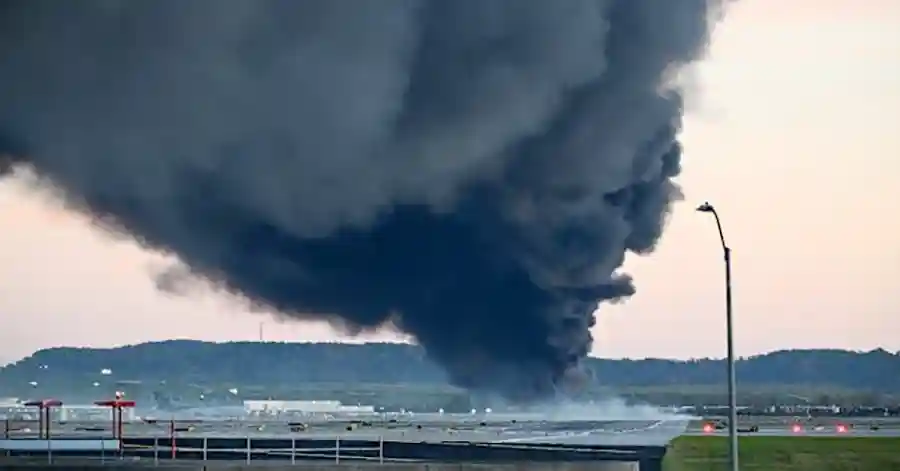




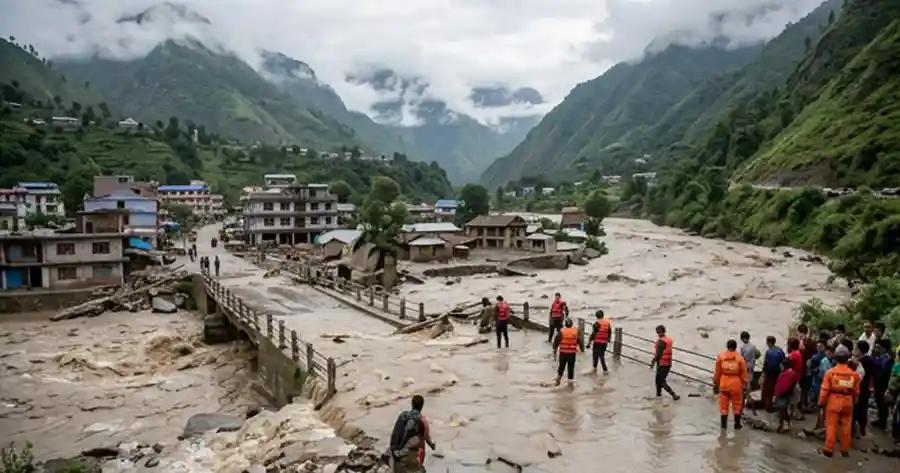
Asking how many rupees a flood destroyed is the easy part. Counting collapsed houses, washed-out roads and bridges, damaged hydropower plants, and flooded hectares of farmland is a straightforward accounting exercise, and so is pricing out what reconstruction will cost. Nepal has done this kind of arithmetic many times before.
But the latest disaster on the Bhotekoshi River has forced Nepal to confront a much harder question — one that simple rupee figures cannot answer. What is the true value of everything a disaster destroys: a person’s life, a family’s future, social relationships, culture, geography, the environment, livelihoods, and the national economy, all at once? This is not an easy calculation, but it is one Nepal can no longer avoid. It is the real starting point for understanding loss and damage Nepal must now grapple with as climate-driven disasters intensify across the Himalaya.
Settlements Gone in Days, Histories Gone With Them
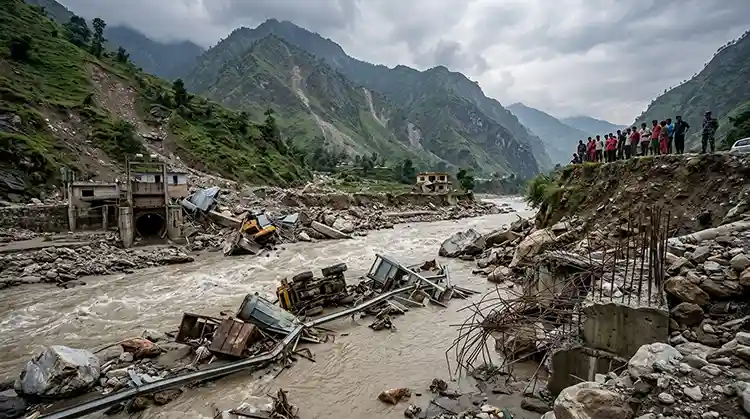
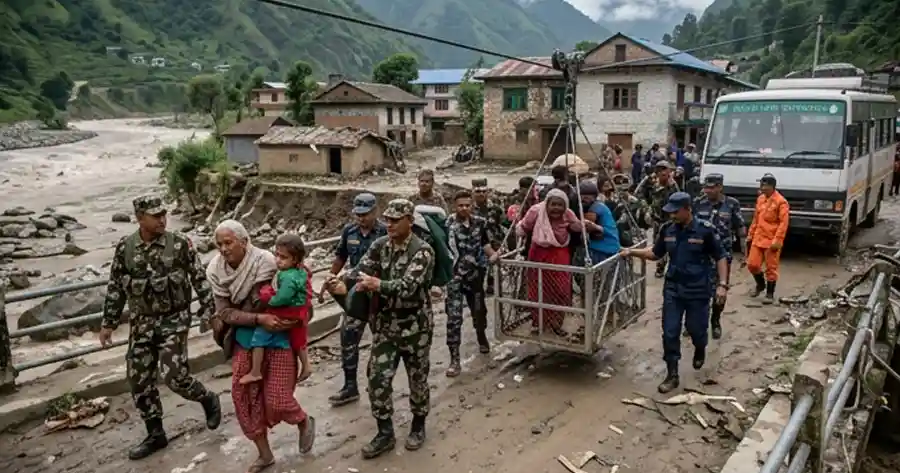
Within a matter of days, communities that had lived along the Bhotekoshi for generations were displaced. Property accumulated across multiple generations was destroyed. Family members went missing. Local markets and the small businesses that sustained entire neighborhoods were wiped out.
For some families, this was not simply the loss of a house — it was the loss of their social environment, their memories, and their sense of future security. What looks, from a distance, like a single washed-away home may in fact represent the destruction of generations of family history, community ties, and economic stability, all bound up in one structure.
This is precisely why the Bhotekoshi flood’s true cost cannot be reduced to the price of cement, steel, timber, and labor. A complete, evidence-based reckoning needs to capture every social, cultural, and environmental dimension of what was lost — not just the physical debris left behind.
Scientific Honesty Still Matters
None of this argues for abandoning scientific rigor. Any serious debate about the Bhotekoshi disaster’s causes needs to stay grounded in established science and systematic methodology, including whatever conclusions careful research eventually reaches.
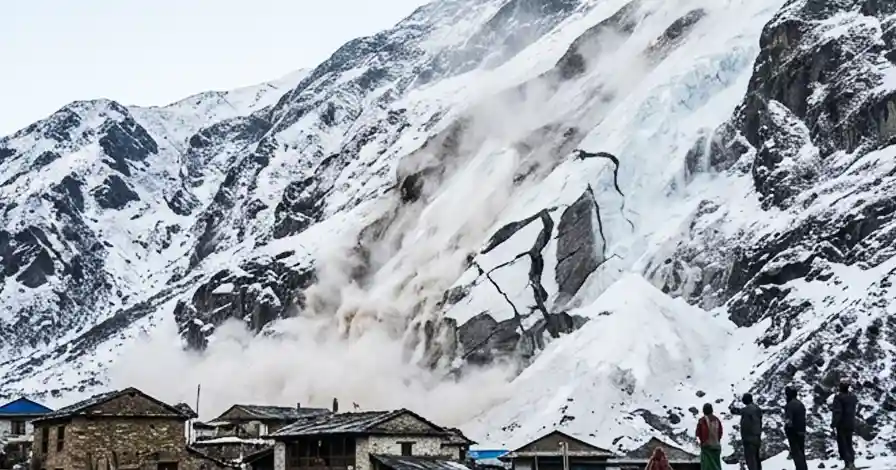
Investigations into the immediate trigger of the Bhotekoshi disaster — a glacier collapse, a rockfall, or a combination of natural processes — are still ongoing. Until that scientific evidence is complete, it would not be accurate to declare the disaster entirely a product of climate change. But that scientific caution cuts both ways: it is equally wrong to conclude that climate change and its potential contribution to the disaster shouldn’t even be discussed.
The body of scientific evidence linking rising global temperatures, glacial melt in mountain regions, shifting rainfall patterns, and the growing intensity of extreme weather events keeps expanding. That means the right question isn’t simply “did climate change cause this flood?” A more precise and more scientifically defensible question is: how much did climate change alter the probability or intensity of this kind of risk?
Why “Loss and Damage” Is the Right Frame
That reframing is exactly where the international loss and damage debate begins. Until now, Nepal has largely approached disaster losses through the narrow lens of emergency relief, physical damage assessment, and reconstruction requirements.
In the age of climate change, though, a disaster’s meaning runs far wider than that. A single event can destroy property instantly while also halting economic activity for months or years, costing jobs, cutting household income, disrupting children’s education, displacing entire communities, and weakening local economies and social structures for years afterward.
Nepal’s position looks starkly unequal next to the world’s industrialized, high-emitting economies. Nepal’s historical carbon emissions are extremely low. If anything, the country has been a net contributor to global environmental stability through forest conservation, community forestry, and natural resource protection. Yet the risks generated by climate change fall disproportionately on Nepal, precisely because of its mountain geography, fragile infrastructure, high dependence on climate-sensitive livelihoods, and overall geographic vulnerability.
So the question Nepal needs to be asking isn’t “how much relief do we need?” It should be: what is the true scale of the damage we have suffered? How much of it is attributable to human-caused climate change? How does responsibility connect to the global systems generating this risk? And what is the present and future social, cultural, and human cost — a cost nobody has yet systematically tried to calculate?
Rethinking the Definition of “Damage”: Nine Categories Nepal Should Track
To answer those questions, Nepal first needs to widen its definition of “damage” itself. Direct physical destruction is only one slice of the picture.
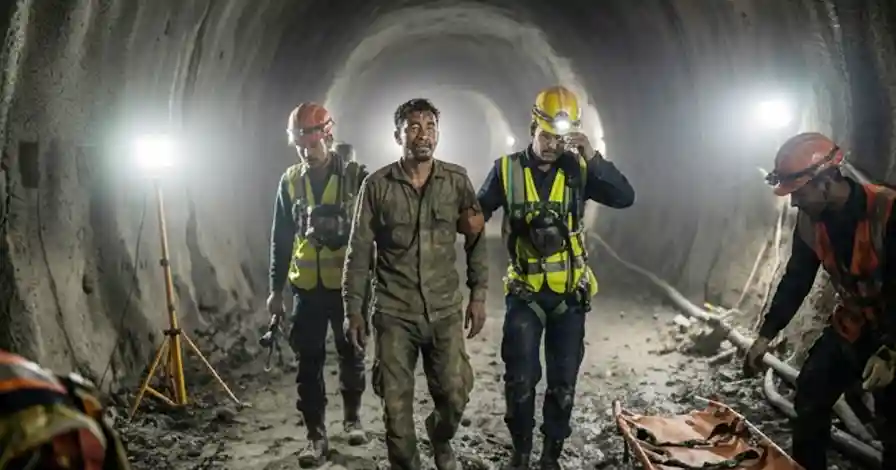
1. Direct Physical Damage
As outlined in UNDP’s disaster-assessment guidance, destroyed or damaged houses, buildings, roads, bridges, power projects, schools, health facilities, farmland, and irrigation systems form the core of direct physical damage (UNDP Pakistan PDNA methodology).
2. Indirect Economic Loss
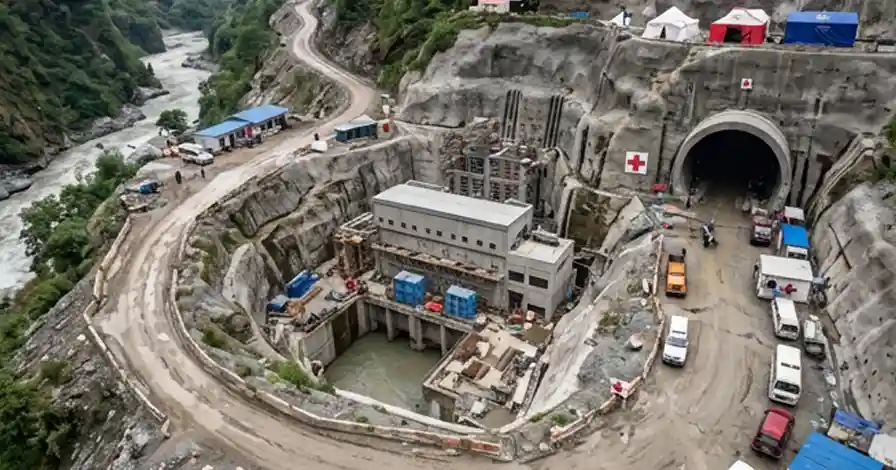
Damage cannot be confined to destroyed structures alone. Per UNDRR’s disaster-loss framework, the resulting decline in economic output — from halted production, disrupted trade, blocked transport and energy supply, shrinking local markets, lost jobs and income, and reduced government revenue — counts as indirect economic loss. The World Bank’s damage-and-needs assessment methodology likewise folds reduced economic flows into the total damage picture, not just the value of destroyed assets.
That means when a hydropower plant goes offline for months, the loss isn’t limited to repair costs. The electricity that wasn’t generated, the revenue that wasn’t earned, and the ripple effects on connected economic activity are all part of the bill too.
3. Livelihood Loss
Livelihood loss deserves its own separate category, because its long-term social impact — on individuals, families, communities, and the nation — can far outweigh physical infrastructure damage. When a farmer’s crops, a laborer’s job, a small business, livestock, tourism income, local trade, or a family’s regular earnings disappear, the damage is not confined to that year’s lost income. The cost of rebuilding a destroyed house can be calculated in a lump sum, but the income, savings, and financial security that same household will lose in the years ahead is a separate, ongoing loss.
4. Human Loss
The human toll is the most sensitive category of all. Death, disappearance, injury, displacement, family separation, psychological trauma, and long-term insecurity cannot be fully captured by any single economic indicator. Economics offers various methods for valuing risk to human life and safety, but these tools should never be mistaken for a way of pricing a human being. Economic valuation is a tool for policy and planning — it is not, and can never be, a substitute for human suffering.
5. Social Loss
Disasters erode social capital in ways that are easy to overlook. When families are displaced, villages emptied, people scattered to new locations, and local institutions weakened, the neighborly cooperation, community bonds, mutual trust, and social networks built up over generations can unravel. This kind of social loss cannot be captured by the value of a collapsed house alone — and it can leave communities socially, economically, and culturally unable to fully recover for generations.
6. Cultural Loss
Cultural loss carries its own weight. Temples, monasteries, religious and cultural sites, historic settlements, local memory, festivals, rituals, and orally transmitted knowledge and tradition, once destroyed, cannot simply be restored to their original state through reconstruction. Some cultural losses can be assigned a monetary value; others may be effectively priceless. Both monetary and non-monetary accounting need to run in parallel.
7. Geographical Loss
Geographical loss follows the same logic. A shifting river course, land erosion, the loss of farmland or habitable land, relocated settlements, disrupted transport access, and communities uprooted from traditional territory are not simply property losses — they can alter the entire historic relationship between a people and their landscape. Measuring the change in land’s market price alone does not capture geographical loss in full.
8. Ecological and Environmental Loss
Damage to forests, river systems, biodiversity, soil, watersheds, water sources, and broader ecosystems can persist far longer than the immediately visible economic damage. Some of this can be estimated through the economic value of ecosystem services, but no one should assume the entirety of environmental value can be translated into a price tag.
9. Future Loss
Perhaps the most consequential category is future loss — and the easiest one to overlook. If a bridge is destroyed today, the damage isn’t limited to reconstruction costs. The lost production, trade, education, health-service access, jobs, tourism, energy, and tax revenue over the next five, ten, or thirty years without that bridge are also part of the true cost. Loss and damage, in other words, should not be treated as a single snapshot taken on the day of the disaster — it is a cost that keeps unfolding across time.
Taken together, these nine categories — direct physical damage, indirect economic loss, livelihood loss, human loss, social loss, cultural loss, geographical loss, ecological and environmental loss, and future loss — could form the basis of a conceptual assessment framework for Nepal.
This isn’t an established international formula; it’s a proposed structure Nepal could use to build its own evidence base and debate. Each category needs a clear definition, indicators, data sources, an assessment method, and an honest range of uncertainty — and, critically, no double-counting between damage, recovery costs, and future economic loss.
How Much of This Is Climate Change? What International Experience Shows
The next question is how much of this total loss is actually connected to climate change. This is where climate attribution science comes in — comparing today’s climate conditions against a scientifically modeled counterfactual world without human-caused climate change.
If an attribution study shows that human-driven warming increased the probability or intensity of a given extreme rainfall event or related risk within a defined range, that range can serve as the basis for estimating climate-attributable loss. Arbitrarily declaring that “30% of this damage is due to climate change” without that scientific backing would not be a credible or scientific claim. Any estimate needs to rest on the range — and the uncertainty — that formal attribution science actually provides.
International experience reinforces the case for this approach. After Pakistan’s catastrophic 2022 floods, a Post-Disaster Needs Assessment led by Pakistan’s government with the World Bank, Asian Development Bank, European Union and UN agencies estimated total damages at over $14.9 billion.
with an additional $15.2 billion in broader economic losses, and reconstruction needs of at least $16.3 billion (World Bank press release). The assessment affected 33 million people and caused more than 1,730 deaths. Crucially, damage, loss, and recovery needs were tracked as three separate figures rather than being folded into one number — a scientific separation Nepal could adopt for its own Bhotekoshi assessment.
Fiji’s experience after Cyclone Winston in 2016 offers a second useful model. A government-led Post-Disaster Needs Assessment found damage and losses of roughly F$1.98 billion, equivalent to about 20 percent of Fiji’s GDP that year (ReliefWeb / Government of Fiji PDNA). That case shows how a single disaster’s combined effect on a national economy, agriculture, infrastructure, households, and public services can be measured as a national-scale economic loss.
It’s important, however, not to misread Pakistan and Fiji’s cases as instances where historically responsible industrialized nations paid direct compensation. These are primarily examples of disaster assessment methodology, international cooperation, and recovery and reconstruction financing — not precedents of liability payments. The established international practice of climate-vulnerable countries receiving direct compensation from high-emitting nations remains limited. But the legal debate is moving forward.
Vanuatu, the ICJ, and the Road Toward Legal Accountability
A campaign led by Vanuatu carried the concerns of climate-vulnerable nations all the way to the International Court of Justice. The Court’s July 2025 advisory opinion provided significant legal grounding for the principle that states have obligations to protect the climate system and environment from significant harm. Importantly, the opinion also left open the possibility that where a sufficiently direct and clearly established causal link can be shown, remedies — potentially including compensation — could become a live legal question.
That said, the Court did not order any specific country to pay any specific sum. This should be understood not as a finalized right to compensation, but as a legal foundation on which future debates over responsibility, compensation, and other remedies can be built.
Nepal’s Strategy: From Scientific Record to Accountability
This international experience clarifies what Nepal’s own strategy should look like. Nepal cannot simply walk into an international forum tomorrow and ask for a specific sum in aid. It first needs to build a rigorous, evidence-based scientific record of its own losses.
That means documenting, with evidence: how much direct damage occurred; how much broader economic and financial loss resulted; how much livelihood-related loss took place; how much human, social, cultural, geographical, and environmental loss occurred; and what the likely future impact will be. Only after that record is established does the next question follow — how much of that total loss is attributable to ordinary natural risk, and how much is connected to human-caused climate change? That, in turn, raises the legal and diplomatic question of how responsibility should be assigned.
Future loss assessments can also incorporate risk probability and the time value of money. Conceptually, an expected annual loss can be combined with risk probability to calculate the present value of expected future losses across coming years. This does not mean settling on one single fixed number — it is more scientifically sound to generate a range of estimates using different climate scenarios, time horizons of five, ten, or thirty years, and different discount rates. That range helps illustrate how much economic and social burden today’s disaster could pass on to the next generation.
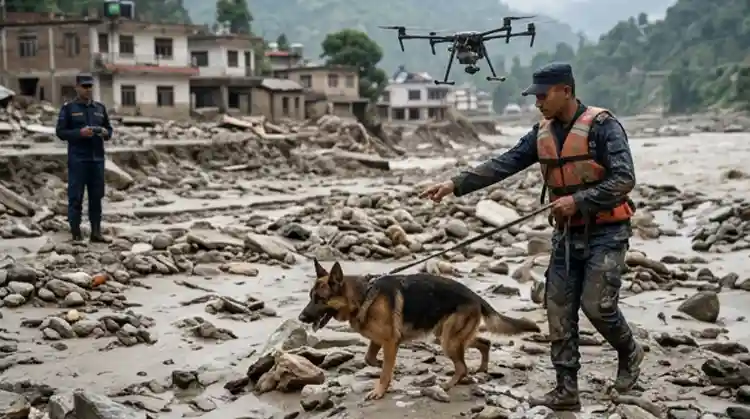
To build this kind of record for the Bhotekoshi flood, Nepal needs hydrologists, glaciologists, climate scientists, engineers, economists, sociologists, anthropologists, geographers, environmental scientists, cultural heritage experts, and legal specialists working within a single, coordinated process. What’s needed is a multidisciplinary, independent, evidence-based assessment — not simply to request relief funding, but to build Nepal’s own permanent scientific record of what this disaster actually cost.
Justice Means Building the Language of Loss Yourself
If Nepal only asks how many crores of rupees the Bhotekoshi flood cost, it captures just a fraction of the disaster’s true scope. The real questions run deeper: how many lives changed? How many families’ futures were altered? How many social bonds were broken? How much culture was lost? How much of the landscape changed? How much of the natural system was damaged? And how much additional burden did today’s disaster place on tomorrow’s generation?
Asking these questions is not a plea for sympathy, and Nepal does not need anyone’s pity. What Nepal needs is its own rigorous, evidence-based account of its losses — and only then does the question of responsibility become meaningful. When the historical benefits of global industrialization were captured by some nations, while the resulting risk burden fell disproportionately on countries like Nepal, that is not simply an environmental question. It is a question of justice.
The Bhotekoshi disaster should not be filed away and forgotten as just another natural disaster. It should become the turning point where Nepal builds its own scientific, social, economic, and legal case on loss and damage. Nepal’s task now goes beyond tallying relief and reconstruction costs — it must construct, in its own words, the full language of what it has lost. Nepal is not asking for charity; it is raising a question of accountability. It is not merely seeking grants; it is raising a question of justice. And proving the real value of its own losses is the first foundation of that justice.

Economic Affair
- Budhigandaki Flood: 47 Rescued as Bridges Washed Away
- Nepal Supreme Court Handcuff Order: Police Barred From Routine Use
- 250+ Officials Deploy to Assess Rasuwa-Bhotekoshi Flood Damage
- Electricity VAT: Energy and Finance Ministers Strike Landmark Deal After Just 2 Months
- Nepal Inflation Shockingly Triples to 5.96% — Food and Transport Hit Hardest



Comments