




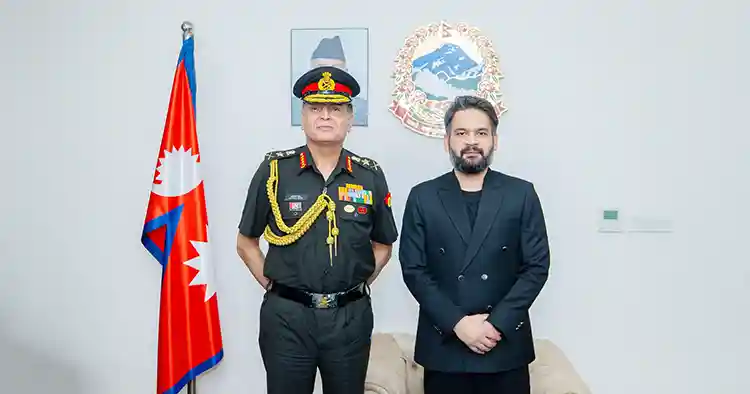
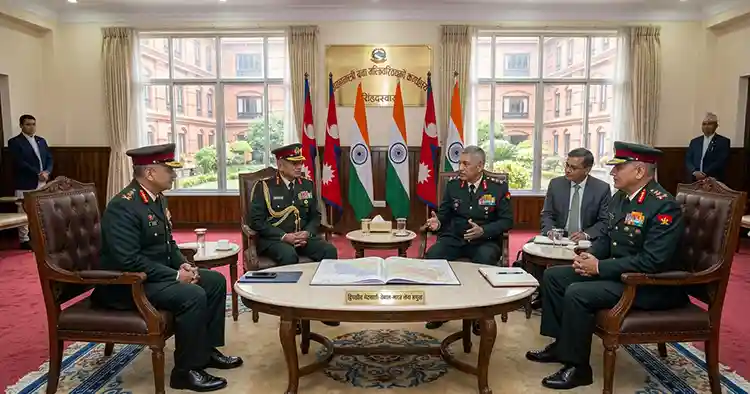
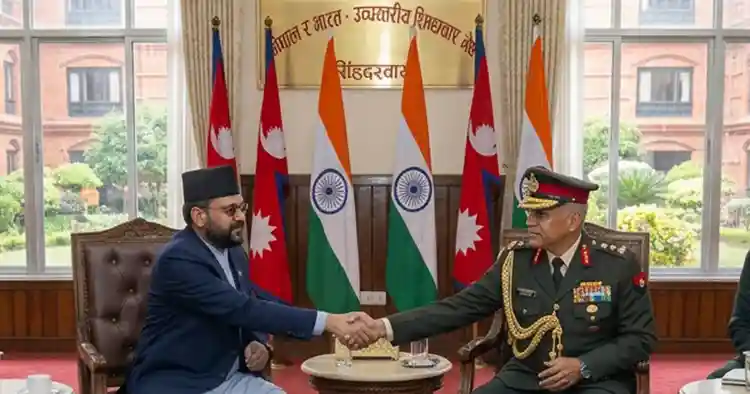
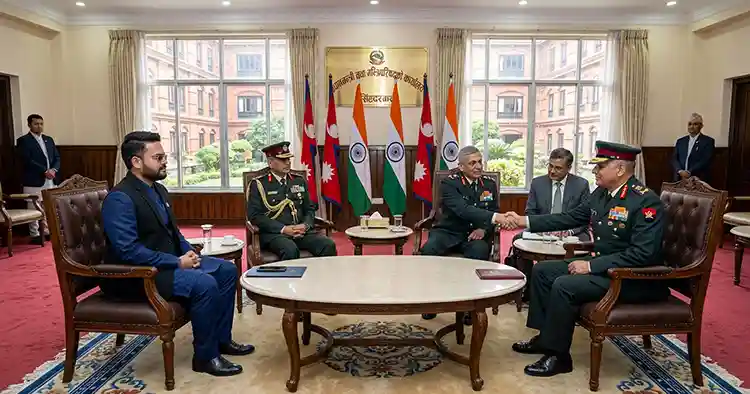
A significant diplomatic milestone unfolded in Kathmandu this week as Indian Army Chief General Dhiraj Seth paid a courtesy call on Nepal’s Prime Minister and Defence Minister Balendra Shah, cementing yet another chapter in one of South Asia’s oldest and most distinctive military partnerships. The Indian Army Chief Dhiraj Seth Nepal visit meeting took place at the Office of the Prime Minister and Council of Ministers in Singha Durbar, bringing together two of the region’s most closely watched leaders at a moment when Nepal-India relations are drawing fresh attention under a new government in Kathmandu.
The meeting, described by officials as warm and cordial, also included India’s Ambassador to Nepal, Naveen Srivastava, underlining the broader diplomatic significance attached to General Seth’s visit beyond its ceremonial military dimension.
A First Meeting Between Two New Leaders
For observers of Nepal-India relations, this courtesy call carried particular weight because it marked the first substantive interaction between General Seth and Prime Minister Shah since Shah’s government took charge in Kathmandu on March 27, 2026. General Seth, who assumed command of the Indian Army on June 30, 2026, chose Nepal as his very first official overseas destination as Chief of the Army Staff, a decision that itself signals the priority New Delhi continues to place on its northern neighbor.
Notably, the meeting had remained uncertain right up until General Seth’s arrival in Kathmandu. Nepali and Indian officials had spent days coordinating over whether the customary courtesy call between visiting Indian Army chiefs and the sitting Nepali prime minister would go ahead, given Prime Minister Shah’s reputation for maintaining strict protocol in his engagements with foreign dignitaries. The eventual confirmation of the meeting was therefore read by many analysts as a positive signal for the trajectory of bilateral ties under the new Kathmandu administration.
Why Indian Army General Seth Came To Nepal
General Seth arrived in Kathmandu on Sunday evening, leading a five-member Indian Army delegation that included his wife, Komal Seth, who serves as Chairperson of the Army Wives Welfare Association (AWWA) of the Indian Army. He landed at Tribhuvan International Airport and was received by Nepal’s Vice Chief of Army Staff, Lieutenant General Pradeep Jung KC, before beginning a four-day official visit running from August 17 to 19, 2026.
The trip was undertaken at the formal invitation of Nepali Army Chief General Ashok Raj Sigdel, continuing a long-standing custom under which the army chiefs of Nepal and India exchange official visits whenever a new chief assumes command in either country. This was General Seth’s first visit to Nepal since taking over as the 31st Chief of the Army Staff of the Indian Army, making the trip both a ceremonial and strategically symbolic occasion.
Receiving The Honorary Rank Of General Of The Nepali Army
The centerpiece of General Seth’s itinerary took place a day before his meeting with the Prime Minister, when President Ram Chandra Paudel formally conferred upon him the Honorary Rank of General of the Nepali Army during a special investiture ceremony at Sheetal Niwas, the President’s official residence in Kathmandu.
The conferment continues a remarkable, decades-old military tradition between the two countries. Since 1950, Nepal and India have followed the practice of reciprocally awarding the honorary rank of General to each other’s serving army chiefs, a gesture widely regarded as one of the most distinctive symbols of the close, historic bond between the Nepali Army and the Indian Army. The custom has endured through changes in government, shifts in regional geopolitics, and evolving security priorities on both sides of the border, making it one of the most consistent threads in the broader Nepal-India relationship.
The investiture ceremony was attended by a notable roster of Nepali dignitaries, including Vice President Ram Sahaya Prasad Yadav, Foreign Minister Shishir Khanal, Chief Secretary Govinda Bahadur Karki, and Chief of the Army Staff Ashok Raj Sigdel, alongside several former Nepali Army chiefs. Prime Minister Shah, who also holds the defence portfolio, did not attend the investiture ceremony itself, with his separate meeting with General Seth scheduled for the following day instead.
Reciprocal Honour: A Tradition Running Both Ways
The honorary rank exchanged between the two armies is not a one-way gesture. Nepali Army Chief General Ashok Raj Sigdel himself received the honorary rank of General of the Indian Army from Indian President Droupadi Murmu during a ceremony at Rashtrapati Bhavan in December 2024, continuing the same reciprocal tradition from the other direction. This back-and-forth exchange of honorary ranks, which has now continued for roughly 76 years, is frequently cited by officials and analysts on both sides as tangible evidence of the unusually close, people-to-people and institution-to-institution ties that bind the two militaries together, distinct from the ties either country maintains with any other neighbor.
Guard Of Honour And Engagements At Army Headquarters
Earlier in his visit, General Seth was accorded a ceremonial Guard of Honour at the Nepali Army Headquarters in Kathmandu. He also laid a wreath at the Army Pavilion in Tundikhel, the historic ceremonial ground in the heart of the capital, paying homage to fallen soldiers as part of the formal protocol extended to visiting army chiefs.
During his time at the Nepali Army Headquarters, General Seth held bilateral talks with General Sigdel, where the two military leaders discussed matters of mutual interest and explored avenues to further strengthen defence cooperation between their respective armed forces. According to officials familiar with the discussions, the two chiefs also received briefings from the Directorate General of Military Operations of the Nepali Army on issues of shared strategic concern along the broader Himalayan and border security landscape.
As part of the visit, General Seth also handed over military and medical equipment to the Nepali Army, a gesture that Indian officials described as part of ongoing efforts to support the modernization and operational readiness of Nepal’s armed forces. He additionally planted a sapling within the premises of the Nepali Army Headquarters, a customary gesture often extended to senior visiting dignitaries as a symbol of the enduring nature of the relationship.
Meeting The Indian Ambassador And Broader Diplomatic Engagements
Beyond his military-to-military engagements, General Seth also held a separate meeting with Indian Ambassador to Nepal Naveen Srivastava shortly after his arrival in Kathmandu. According to a statement from the Indian Embassy, the two discussed ways to further strengthen the comprehensive relationship between India and Nepal, and reviewed opportunities to deepen defence cooperation between the two countries going forward.
The Indian Embassy in Kathmandu described the visit as one that “reaffirms the unique and time-tested defence relationship between Nepal and India, founded on shared values, mutual trust and enduring army-to-army ties.” Officials on both sides have consistently framed the visit not merely as a ceremonial exercise, but as a substantive opportunity to review and advance practical defence cooperation between the two neighboring countries.
Separately, AWWA Chairperson Komal Seth also held her own engagements in Kathmandu, meeting with the President of the Nepali Army Wives Association (NAWA), Nita Chhetri Sigdel, reflecting the multi-layered nature of the visit that extended beyond the two army chiefs themselves.
Political Context: Why This Visit Matters For Nepal-India Ties
General Seth’s trip carries added significance because he is the first senior Indian official to visit Nepal since the formation of the Balendra Shah government in late March 2026. A previously scheduled visit by Indian Foreign Secretary Vikram Misri had been postponed for what officials described as protocol-related reasons, leaving General Seth’s trip as the first high-level touchpoint between New Delhi and the new administration in Kathmandu.
Given that backdrop, the courtesy meeting between General Seth and Prime Minister Shah has been widely interpreted as an early signal of how bilateral ties, particularly in the defence and security domain, may evolve under Nepal’s new leadership. Several regional commentators have noted that Prime Minister Shah, since taking office, has generally maintained a cautious, protocol-driven approach in his engagements with foreign officials, which made the final confirmation of this meeting a closely watched development in diplomatic circles in both capitals.
Defence Cooperation On The Agenda
Analysts tracking the visit suggest that discussions between the two sides are likely to have touched on several long-standing areas of India-Nepal military cooperation, including joint training programs, disaster-response coordination, and the historic Gorkha recruitment relationship that has linked the two countries for generations. The two armies regularly conduct the joint Surya Kiran military exercise, which brings together personnel from both sides to train in areas such as humanitarian assistance, disaster response, and counter-terrorism preparedness.
Some Indian media outlets have also suggested that the future of the Agnipath recruitment scheme, and its implications for the traditional recruitment of Nepali Gorkha soldiers into the Indian Army, could have featured in discussions during General Seth’s visit, given ongoing interest on both sides in resolving questions around the scheme that have lingered since its introduction. Neither government has issued a detailed official readout specifying every topic discussed, though both sides have publicly emphasized the broader goal of sustaining and deepening the historic army-to-army relationship.
A Relationship Built On History, Not Just Ceremony
Beyond the pageantry of guards of honour and investiture ceremonies, officials on both sides frequently point out that the Nepal-India military relationship is rooted in a much deeper, generational connection. Thousands of Nepali citizens have served in Gorkha regiments of the Indian Army over the decades, creating extensive family and community ties across the open border between the two countries. This human dimension is often cited as the real foundation beneath the formal traditions, such as the reciprocal exchange of honorary general ranks, that continue to define the relationship at the institutional level.
Nepal Army spokesperson Brigadier General Rajaram Basnet has previously described the exchange of honorary ranks as a custom that automatically comes into play whenever a new army chief assumes office in either country, underscoring how deeply institutionalized the practice has become over more than seven decades.
How This Visit Fits Into Nepal’s Wider Foreign Policy Balancing Act
Nepal has long pursued a careful balancing act in its relations with its two giant neighbors, India and China, a dynamic that shapes how every high-level visit from either side tends to be read by regional observers. Prime Minister Shah’s government, still in its early months, has faced expectations both at home and abroad to demonstrate a practical.
Even-handed approach to foreign relations rather than tilting decisively toward one neighbor. Against that backdrop, the successful conclusion of General Seth’s visit, including the courtesy meeting that had remained uncertain until the last moment, has been interpreted by several regional commentators as evidence that the new government intends to preserve the traditional warmth of the India relationship even while asserting its own independent foreign policy posture.
At the same time, analysts caution against reading too much strategic signaling into what remains, at its core, a military courtesy tradition dating back generations. The honorary rank ceremony and the accompanying meetings with senior Nepali leaders occur as a matter of institutional custom whenever a new army chief takes charge in either country, regardless of the particular political configuration in power at the time. What made this instance notable was less the meeting itself and more the uncertainty that preceded it, given Prime Minister Shah’s cautious approach to protocol since assuming office.
Continuing Military-To-Military Cooperation Beyond The Ceremony
Officials from both militaries have indicated that the substance of the relationship extends well beyond the ceremonial elements of General Seth’s visit. Nepal and India regularly collaborate on capacity-building initiatives, professional military education exchanges, and joint disaster-response planning, given the shared vulnerability of the Himalayan region to earthquakes, floods, and landslides.
The Surya Kiran joint exercise series, conducted periodically between the two armies, remains one of the most visible ongoing symbols of this cooperation, allowing troops from both sides to train together in counter-terrorism, humanitarian assistance, and disaster relief scenarios.
Indian officials have also periodically extended support to the Nepali Army in the form of equipment, training slots at Indian military academies, and technical assistance, a pattern that continued during this visit with General Seth’s handover of military and medical equipment to Nepali Army counterparts. Such contributions, while modest in scale compared to broader bilateral aid flows between the two countries, are often cited by officials as tangible markers of the operational, day-to-day cooperation that underpins the more visible ceremonial gestures such as the honorary General rank.
What Comes Next
Following his engagements in Kathmandu, General Seth’s itinerary was expected to include an address to student officers at a military training institution in Nepal, part of the broader academic and professional exchange dimension of the visit. His visit concludes on August 19, after which attention is likely to turn toward how the renewed high-level contact between New Delhi and Kathmandu translates into concrete follow-up, whether through future ministerial visits, expanded joint exercises, or continued dialogue on outstanding issues such as recruitment and border security cooperation.
For now, officials on both sides have chosen to emphasize continuity and goodwill. The successful courtesy meeting between General Seth and Prime Minister Shah, following the formal conferment of the honorary General rank by President Paudel, is being read in both capitals as a reaffirmation that the historic Nepal-India defence relationship remains intact even as political dynamics in Kathmandu continue to evolve.
Key Facts At A Glance
- Visiting dignitary: General Dhiraj Seth, Chief of the Army Staff, Indian Army (31st COAS, assumed office June 30, 2026).
- Visit dates: August 17–19, 2026 (four-day official visit to Nepal).
- Host: Nepali Army Chief General Ashok Raj Sigdel, at whose invitation the visit took place.
- Key ceremony: Conferment of the Honorary Rank of General of the Nepali Army by President Ram Chandra Paudel at Sheetal Niwas.
- Courtesy meeting: With Prime Minister and Defence Minister Balendra Shah at the Office of the Prime Minister and Council of Ministers, Singha Durbar.
- Also present: India’s Ambassador to Nepal, Naveen Srivastava.
- Tradition: Nepal and India have reciprocally conferred honorary General ranks on each other’s army chiefs since 1950 — a 76-year-old custom.
- Reciprocal honour: Nepali Army Chief Ashok Raj Sigdel received the honorary rank of General of the Indian Army from President Droupadi Murmu in December 2024.
Frequently Asked Questions
Who is General Dhiraj Seth? General Dhiraj Seth is the 31st Chief of the Army Staff of the Indian Army, having assumed office on June 30, 2026. His visit to Nepal was his first official overseas trip as army chief.
Why did General Seth meet Prime Minister Balendra Shah? The meeting was a customary courtesy call, a diplomatic tradition extended to visiting Indian Army chiefs when they travel to Nepal to receive the honorary rank of General of the Nepali Army.
What is the significance of the honorary General rank? Since 1950, Nepal and India have followed a tradition of reciprocally conferring the honorary rank of General on each other’s serving army chiefs, symbolizing the close and historic ties between the two militaries.
Who else attended the meeting or related ceremonies? India’s Ambassador to Nepal, Naveen Srivastava, attended the courtesy meeting with PM Shah, while Vice President Ram Sahaya Prasad Yadav, Foreign Minister Shishir Khanal, and Chief of Army Staff Ashok Raj Sigdel were among those present at the earlier investiture ceremony.
Conclusion
The courtesy meeting between Indian Army Chief General Dhiraj Seth and Nepal’s Prime Minister Balendra Shah offers an encouraging, if largely symbolic, early signal for Nepal-India relations under Kathmandu’s new government. Coming a day after General Seth received the honorary rank of General of the Nepali Army, a tradition now 76 years strong, the meeting reflects both continuity in one of South Asia’s most enduring military partnerships and cautious optimism that high-level engagement between the two neighbors will continue to deepen in the months ahead.
Related External Sources
- The Kathmandu Post — Indian army chief conferred honorary general of Nepali Army
- The Kathmandu Post — Indian Army chief Seth arriving Sunday amid uncertainty over meeting with PM Shah
- The Tribune — Indian Army Chief Dhiraj Seth conferred with honorary rank of General of Nepali Army
- The Week — Why Indian Army Chief General Dhiraj Seth was made an Honorary General of Nepal Army

Economic Affair
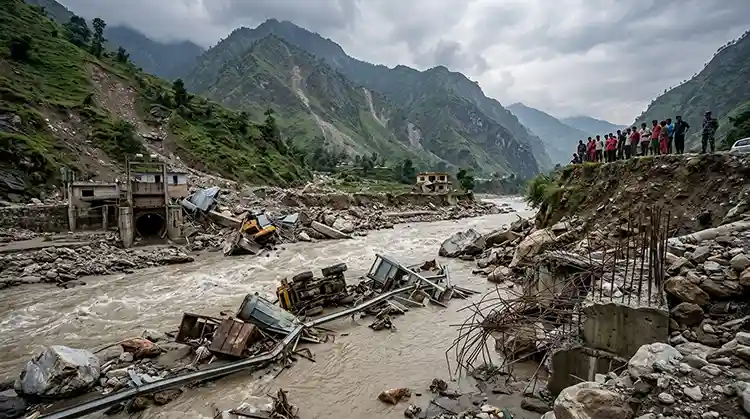
- Budhigandaki Flood: 47 Rescued as Bridges Washed Away
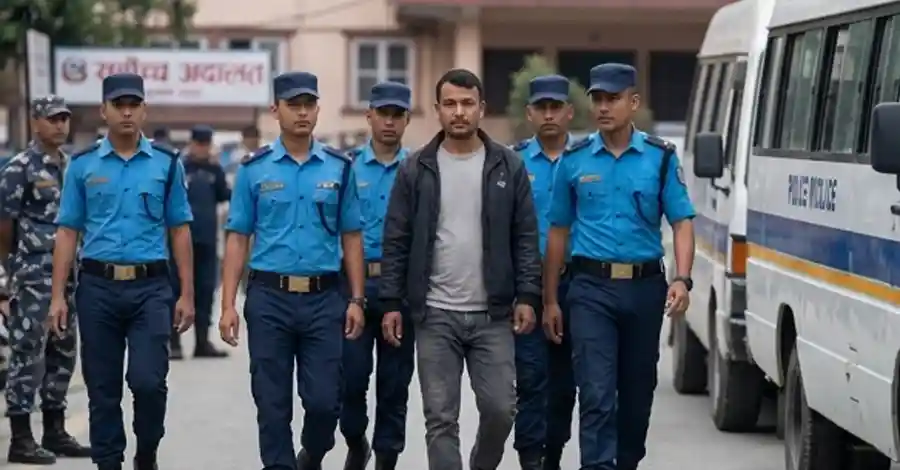
- Nepal Supreme Court Handcuff Order: Police Barred From Routine Use
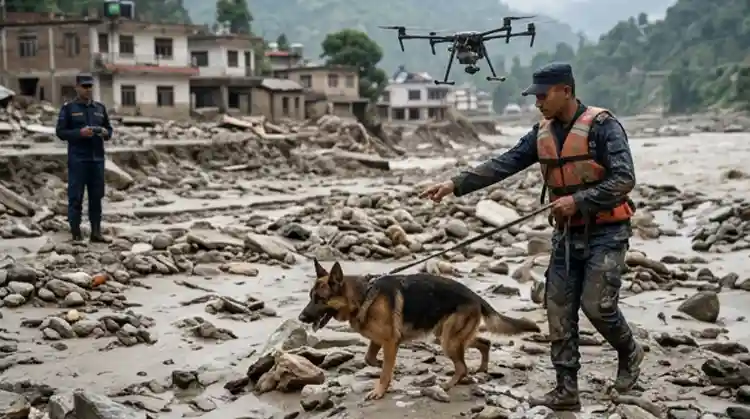
- 250+ Officials Deploy to Assess Rasuwa-Bhotekoshi Flood Damage
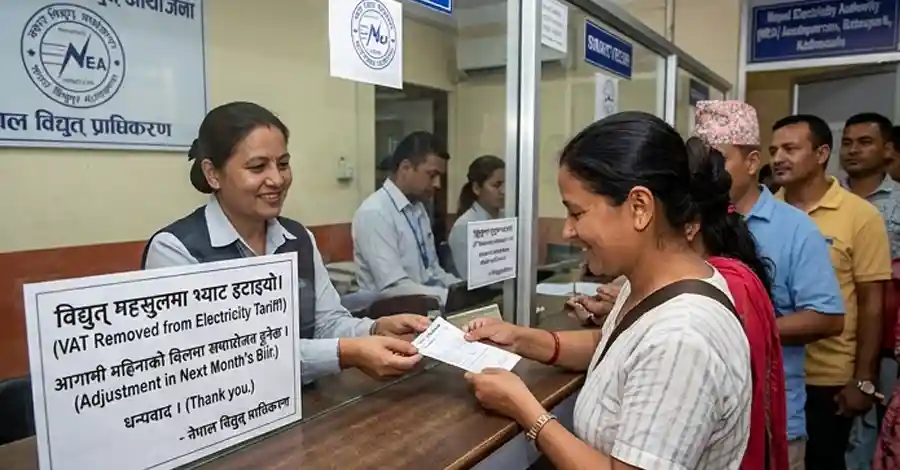
- Electricity VAT: Energy and Finance Ministers Strike Landmark Deal After Just 2 Months
- Nepal Inflation Shockingly Triples to 5.96% — Food and Transport Hit Hardest

Comments