





Nepal flood aid pledges poured in from three major international partners within hours of Wednesday’s devastating flash flood, as India, China, and the World Bank all raced to ask Kathmandu the same urgent question: what kind of help is needed, and where should it be sent? The extraordinary speed of this outreach highlights just how seriously the international community is treating the disaster that struck Nepal’s northern districts on Wednesday morning.
At 10:35 am, barely minutes after news of the flood broke, David Sislen, the World Bank’s Country Director for Nepal, contacted Finance Minister Dr Swarnim Wagle directly to inform him that the institution could mobilize approximately Rs 25 billion in emergency support from various funding sources. This immediate, high-level contact set the tone for what would become a coordinated, multi-country relief effort unfolding in real time throughout the day.
This article walks through exactly how India, China, and the World Bank have responded to Nepal’s flood emergency so far, what the Nepal government has done to formally unlock domestic and international assistance, and how this disaster compares to previous flooding events along the same vulnerable Nepal-Tibet border corridor.
A Rapid, Coordinated International Response
What makes Wednesday’s flow of Nepal flood aid pledges particularly notable is the speed and near-simultaneous nature of the outreach from three very different types of international partners: a neighboring democracy, a neighboring one-party state, and a multilateral development institution. Each approached Kathmandu with a different form of assistance, but all three moved within hours of the disaster becoming public knowledge.
World Bank Signals Up To Rs 25 Billion In Emergency Support
The World Bank’s swift engagement stood out as the fastest formal offer of the day. Country Director David Sislen reached out to Finance Minister Wagle directly, well before many domestic ministries had even finished their initial damage assessments, to flag that the Bank could draw on multiple funding windows to mobilize roughly Rs 25 billion in emergency assistance. This kind of rapid pre-positioning of funds is typical of the World Bank’s disaster response playbook in South Asia, where the institution often maintains contingency financing arrangements specifically designed to be activated quickly after a natural disaster, rather than requiring lengthy new project approvals.
India Requests A Relief Supply List And Prepares Same-Day Shipment
Nepal’s southern neighbor, India, took a more operationally immediate approach. New Delhi asked the Nepal government to urgently prepare and share a list of exactly which relief materials were needed most, so that Indian assistance could be tailored to actual on-the-ground requirements rather than generic aid packages. Foreign Minister Shishir Khanal, coordinating closely with the Prime Minister and other senior ministers, confirmed that preparations were already underway to fly Indian relief material into Kathmandu the very same day the flood struck.
This is consistent with India’s long-standing pattern of positioning itself as a first responder during Nepali disasters. As documented by India’s own government information services following earlier flooding events, New Delhi has previously delivered emergency relief materials including tarpaulins, sleeping bags, blankets, water purification tablets, and bottled water directly to affected Nepali districts, often within days of a disaster striking. India has also arranged standby helicopters and aircraft at the border for rescue operations during past floods, reflecting a consistent playbook of fast, tangible, on-the-ground assistance rather than purely financial pledges.
China Moves To Send Immediate Cash Assistance
Nepal’s northern neighbor, China, responded with a different but equally rapid form of support: direct cash assistance. Chinese Ambassador Zhang Maoming requested that Nepal’s Finance Minister help initiate the process for transferring funds as quickly as possible, signaling Beijing’s intent to provide immediate financial relief rather than in-kind supplies. Given that the flood itself is believed to have originated from a river system inside Tibetan territory before crossing into Nepal, China’s swift financial response also carries an added diplomatic dimension, addressing a disaster with origins partly on its own side of the border.
Nepal Declares Disaster Crisis Zones To Unlock Aid
Behind the scenes of these international pledges, Nepal’s own Cabinet took a critical procedural step on Wednesday that formally cleared the way for both domestic and foreign assistance to flow into the affected region. During its emergency meeting, the Council of Ministers officially declared flood-affected municipalities in Rasuwa, Nuwakot, and Dhading districts as “disaster crisis-affected areas.”
This formal declaration is far more than a symbolic gesture. Under Nepal’s disaster management framework, such a designation is often a legal or administrative prerequisite for unlocking emergency budget allocations, activating specific relief protocols, and formally requesting or accepting large-scale international assistance through official government channels. In effect, Wednesday’s Cabinet decision opened the door for the World Bank, India, and China’s pledges to be converted into actual disbursed funds and delivered supplies.
This declaration came alongside a broader package of emergency directives from the government. According to The Kathmandu Post, the Cabinet also ordered free medical treatment for injured flood victims, to be delivered through the Ministry of Health and Food Safety, the Nepali Army, and government hospitals. The Home Minister was directed to mobilize all available resources, including helicopters, for rescue operations, while the Ministry of Energy, Water Resources and Irrigation and the Nepal Electricity Authority were instructed to restore disrupted power supplies as quickly as possible.
The Ministry of Information and Communication was similarly tasked with restoring telecommunications, and the Finance Minister was assigned to coordinate the mobilization of funds needed to rebuild damaged public buildings and infrastructure.
Why This Flood Is So Severe: The Scale Of Wednesday’s Disaster
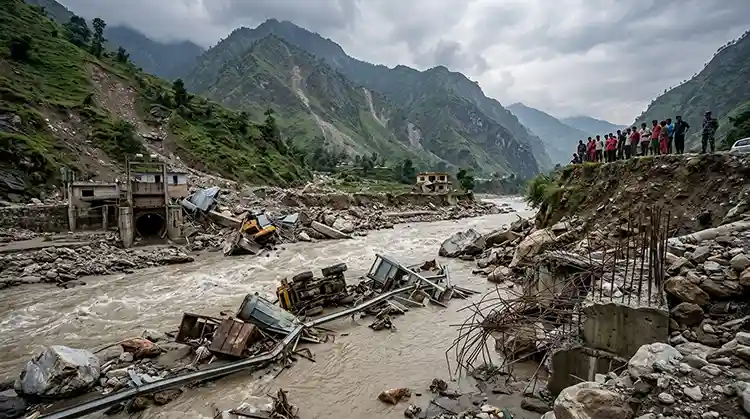
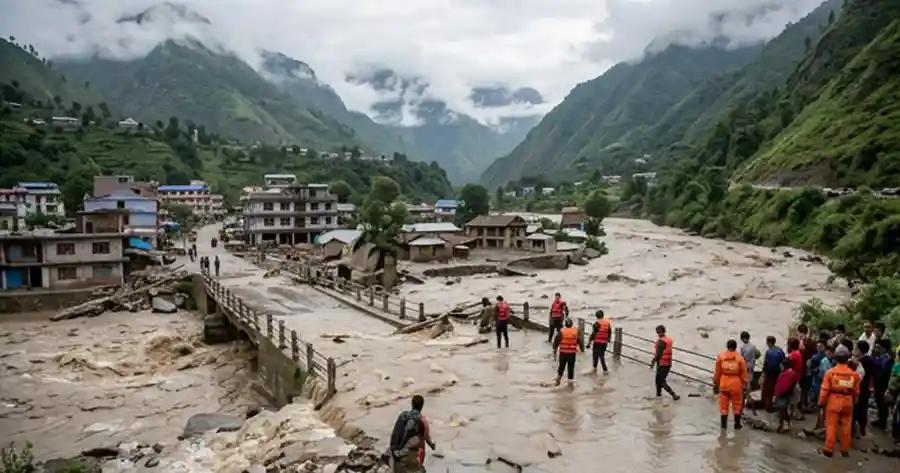
To understand why India, China, and the World Bank moved so quickly, it helps to look at the scale of what actually happened on Wednesday. According to international wire reporting, the flash flood killed at least eight people in Nepal and swept away villages, roads, bridges, and power projects in areas close to the Tibet border. Across the border inside Chinese territory, Tibet reported what state media described as major casualties, with people missing after a mudslide struck a land crossing point between China and Nepal in the neighboring county of Gyirong, according to The Japan Times.
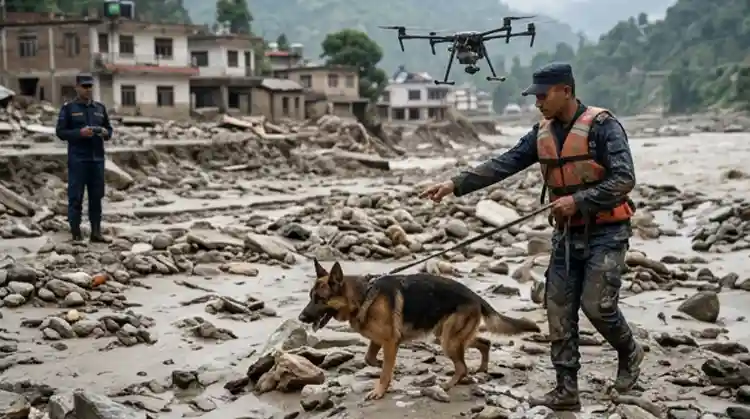
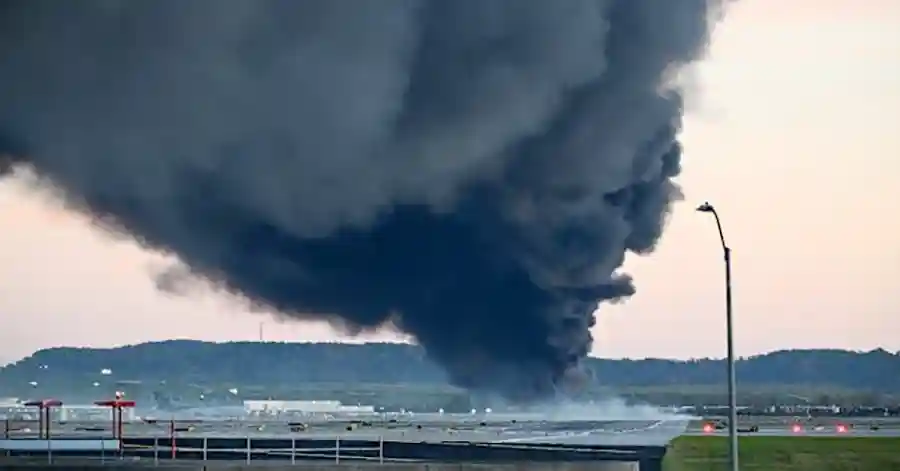
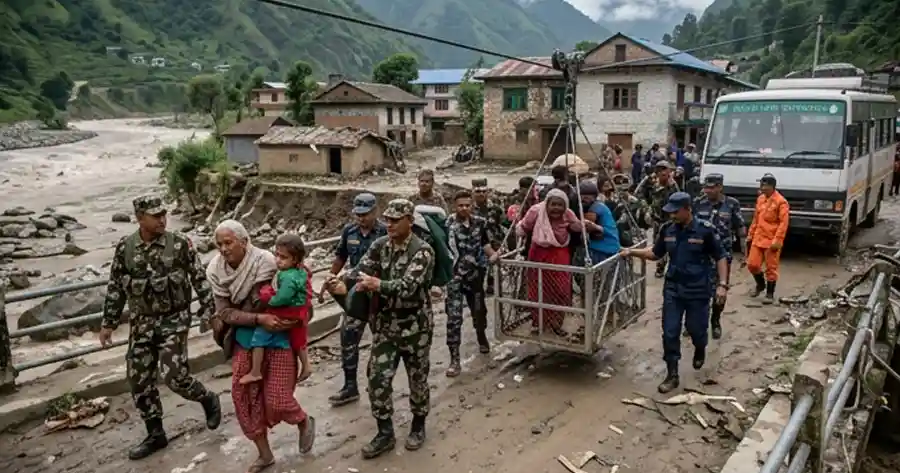
The worst-hit areas inside Nepal were the towns of Syabrubesi and Timure in mountainous Rasuwa district, a region home to roughly 50,000 people. Rescue operations were significantly hampered because floodwaters remained too high for helicopters to safely land in the affected zones, even as officials warned of the ongoing risk of further casualties.
International humanitarian organizations mobilized alongside government relief efforts. The Red Cross confirmed it was deploying an emergency response team and relief supplies to the affected areas of Rasuwa, with its regional Asia-Pacific office publicly urging local communities to remain alert and follow official safety guidance. The International Federation of Red Cross Societies also indicated it stood ready to support Nepal’s national response if needed.
Downstream from Rasuwa, the surge of floodwater along the Trishuli River caused significant additional damage in Nuwakot district, where flash floods damaged houses and vehicles along the riverbanks, according to visual reporting circulated by international news outlets covering the disaster.
A Painful Repeat: The 2025 Rasuwagadhi Flood
For officials coordinating Wednesday’s international aid response, this disaster carries an unmistakable sense of history repeating itself. Just over a year earlier, on July 8, 2025, a similarly devastating flash flood struck the very same Rasuwa corridor. That earlier disaster, triggered by monsoon rains combined with what was later confirmed to be a glacial lake outburst inside Tibet, swept away the Miteri (Friendship) Bridge connecting Nepal and China at Rasuwagadhi, according to a summary of 2025 Nepal flood events.
That 2025 flood killed at least nine people and left 19 missing, including both Nepali and Chinese nationals, destroyed hundreds of parked trucks and electric vehicles awaiting cross-border transit, and halted commerce along the key trade route for weeks. It also damaged the Rasuwagadhi hydropower project, disrupting supply of over 211 megawatts of electricity to Nepal’s national power grid, according to reporting at the time from India’s public broadcaster.
The near-exact repetition of a major, Tibet-origin flood striking the same narrow mountain corridor twice within roughly thirteen months has intensified international concern about the long-term vulnerability of this specific stretch of the Nepal-China border, and may help explain why the World Bank, India, and China all responded with such unusual speed on Wednesday rather than waiting for a lengthier assessment process.
How International Disaster Aid To Nepal Typically Unfolds
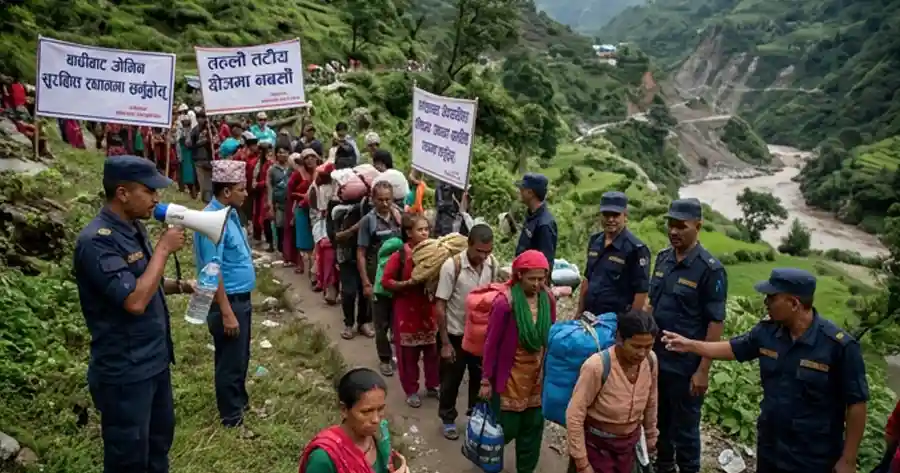
Nepal has a long, well-documented history of receiving rapid international assistance following major flood and landslide disasters, and Wednesday’s response fits a broader, recognizable pattern. During a major flood and landslide disaster in earlier years that claimed nearly 220 lives across multiple districts, India moved quickly to announce a relief package and placed helicopters and aircraft on standby at the border for immediate deployment, according to contemporaneous wire reporting on that earlier disaster.
Indian public-sector companies with a presence in Nepal, including major hydropower developers and insurance firms, have also historically contributed directly to Nepal’s Prime Minister’s Disaster Relief Fund following flooding events, supplementing official government-to-government assistance.
This history suggests that Wednesday’s pledges from India, China, and the World Bank are unlikely to remain merely symbolic. Based on past patterns, Nepali officials and international observers should expect these initial commitments to be followed within days by the actual arrival of relief flights, the formal signing of financing agreements, and the beginning of on-the-ground distribution of supplies to displaced families in Rasuwa, Nuwakot, and Dhading.
What Happens Next: Tracking Nepal’s Flood Relief Pipeline
With Cabinet approval now in place declaring the affected municipalities as disaster crisis zones, several concrete steps are likely to follow in the coming days as Nepal’s flood aid pipeline moves from pledges to physical delivery.
First, Indian relief material was expected to begin arriving in Kathmandu on the very day of the disaster, based on Foreign Minister Khanal’s statements, meaning affected families in Rasuwa could begin receiving tarpaulins, food, medical supplies, and other essentials within a matter of hours or days rather than weeks.
Second, the mechanics of how the World Bank’s proposed Rs 25 billion in emergency support will be structured, whether through reallocated existing project funds, a dedicated emergency response loan, or grant financing, will need to be worked out through the inter-governmental coordination process that Finance Minister Wagle has already initiated.
Third, China’s cash assistance will require the Nepal government to formally establish the fund transfer mechanism requested by Ambassador Zhang Maoming, a process that typically involves Nepal’s central bank and finance ministry working directly with the Chinese embassy to determine the appropriate receiving account and disbursement framework.
Fourth, domestically, the directives issued by Wednesday’s Cabinet meeting, covering free medical treatment, power and telecom restoration, and infrastructure rebuilding, will need to be implemented in parallel with the arrival of international aid, requiring close coordination between the Ministry of Home Affairs, the Nepal Electricity Authority, and local district administrations in Rasuwa, Nuwakot, and Dhading.
Why Rasuwa Keeps Flooding: Understanding The Geography Behind The Disaster
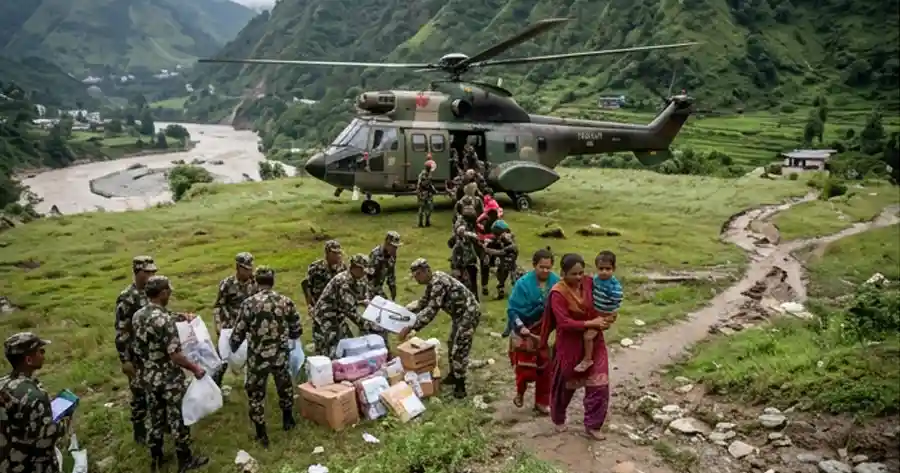
To fully appreciate why this corridor along the Nepal-China border keeps producing such severe flooding events, it helps to understand the unique geography of the region. Rasuwa municipality rises from the Himalayan foothills all the way up to the Chinese border, where peaks exceeding 7,000 meters dominate the skyline, according to on-the-ground reporting from CNN. Scattered villages built from mud brick or stone dot the ridgelines, interspersed with terraced fields of maize and barley.
while the winding mountain roads connecting these communities are marked by Buddhist shrines and strings of prayer flags at the most treacherous passes. It typically takes five to six hours by jeep to reach Kathmandu from the Chinese border in this district, underscoring just how remote and difficult to access the affected communities are during an emergency.
This combination of extreme altitude, steep glacier-fed river systems, and cross-border water flow from Tibet creates conditions that are particularly prone to sudden, high-volume flash floods, whether triggered by intense monsoon rainfall, glacial lake outburst events, or a combination of both.
Because rivers like the Bhotekoshi and Trishuli carry meltwater and rainfall runoff from glaciated terrain on the Chinese side of the border before entering Nepal, any extreme weather or glacial instability event upstream in Tibet can translate into a fast-moving, difficult-to-forecast flood emergency inside Nepali territory within a very short window, often leaving little time for downstream communities and infrastructure operators to prepare.
This geographic reality also explains why disaster response in Rasuwa is so logistically challenging. The same remoteness and difficult terrain that make the region scenic and strategically important as a trade corridor with China also make it extremely hard to reach quickly when floodwaters rise, which is precisely why helicopters remained grounded on Wednesday even as officials warned of the continued risk to human life.
A Broader Pattern: Nepal’s History Of Devastating Floods
While Wednesday’s disaster and its 2025 predecessor have understandably dominated headlines because of their direct link to Tibet’s glacial and river systems, they are part of a much longer history of catastrophic flooding across Nepal. In earlier years, torrential monsoon rainfall triggered serious flooding and landslides across far western and mid-western districts including Bardiya, Banke, Dang, Dadeldhura, Kailali, Kanchanpur, Doti,.
Salyan, displacing more than 80,000 people, according to humanitarian reporting from The New Humanitarian. That disaster came just weeks after a separate major flooding event in southeastern Nepal had already displaced thousands of additional families, illustrating how the country can face compounding flood emergencies within the same monsoon season.
This broader pattern of recurring, geographically diverse flooding, spanning both the glacier-fed northern border districts and the low-lying Terai plains in the south, has made disaster preparedness and rapid international coordination an increasingly central part of Nepal’s annual monsoon planning. It also helps explain why institutions like the World Bank maintain standing emergency financing arrangements specifically for Nepal, rather than needing to design an entirely new aid package each time a new flood strikes.
Frequently Asked Questions
How much aid has the World Bank offered Nepal after the flood? The World Bank’s Country Director for Nepal, David Sislen, told Finance Minister Dr Swarnim Wagle that the institution could mobilize approximately Rs 25 billion in emergency support from various sources to assist with flood recovery.
What kind of help is India providing to Nepal? India requested a list of urgently needed relief materials from the Nepal government and was preparing to fly emergency supplies into Kathmandu on the same day the flood struck, with Foreign Minister Shishir Khanal coordinating the effort alongside the Prime Minister and other senior ministers.
What assistance has China offered? China’s Ambassador to Nepal, Zhang Maoming, asked the Finance Minister to help begin the process of transferring immediate cash assistance to Nepal to support flood relief efforts.
Which areas of Nepal has the government declared disaster crisis zones? Nepal’s Cabinet declared flood-affected municipalities in Rasuwa, Nuwakot, and Dhading districts as disaster crisis-affected areas, a step that helps unlock both domestic emergency funding and formal international assistance.
Has a similar flood happened in this area before? Yes. A comparably destructive flash flood struck the same Rasuwa corridor on July 8, 2025, killing at least nine people, sweeping away the Nepal-China Friendship Bridge, and damaging the Rasuwagadhi hydropower project.
How many people have died in Wednesday’s flood? International wire reports indicate at least eight people were killed in Nepal, with additional casualties and missing persons reported across the border in Tibet’s Gyirong county, though officials cautioned that the situation remained fluid as rescue operations continued.
Final Thoughts On Nepal’s International Flood Response
Wednesday’s disaster in Rasuwa triggered one of the fastest, most coordinated waves of international goodwill Nepal has seen in recent memory, with India, China, and the World Bank all reaching out to Kathmandu within hours of the flood becoming public knowledge.
The Nepal government’s decision to formally declare the affected municipalities as disaster crisis zones has now cleared the legal and administrative path for these pledges to translate into real relief supplies, emergency funding, and rebuilding support on the ground. As helicopters, relief flights, and cash transfers begin moving toward Rasuwa, Nuwakot, and Dhading in the coming days, the true test will be how quickly this international goodwill reaches the families who lost homes, livelihoods, and loved ones in what is already being compared to the devastating flood that struck this same Himalayan corridor just over a year ago.
This article is based on statements from Nepali government officials and publicly available news reporting on the ongoing Rasuwa flood disaster and is intended for general informational purposes only. Details of the disaster response, casualty figures, and aid disbursement are evolving rapidly; readers should consult official government and humanitarian sources for the latest verified updates.

Economic Affair
- Budhigandaki Flood: 47 Rescued as Bridges Washed Away
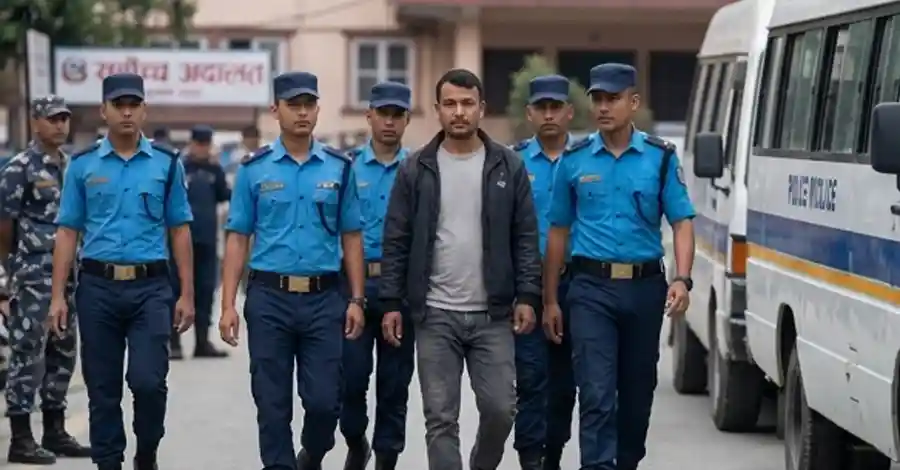
- Nepal Supreme Court Handcuff Order: Police Barred From Routine Use
- 250+ Officials Deploy to Assess Rasuwa-Bhotekoshi Flood Damage
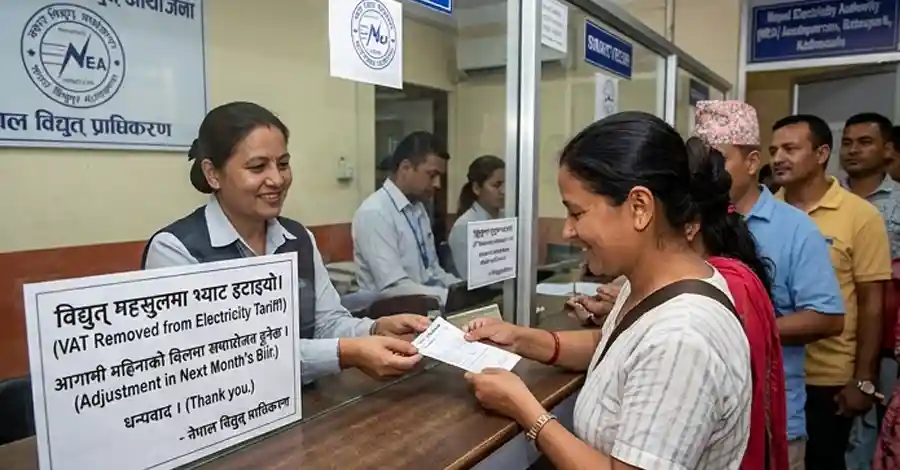
- Electricity VAT: Energy and Finance Ministers Strike Landmark Deal After Just 2 Months
- Nepal Inflation Shockingly Triples to 5.96% — Food and Transport Hit Hardest




Comments