










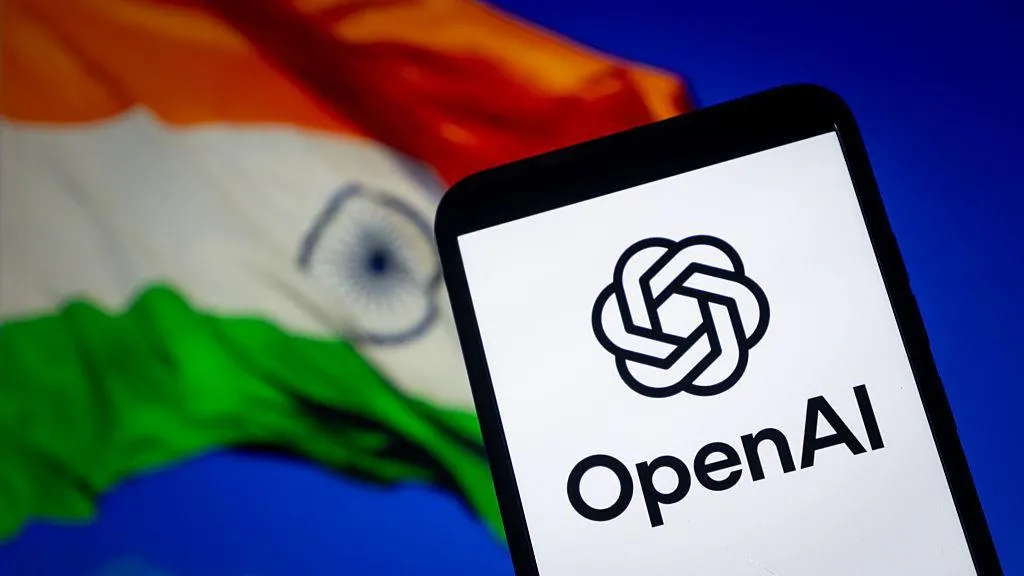
In an extraordinary move signaling India’s strategic importance to global technology, three major AI companies— OpenAI, Google, and Perplexity—have launched massive free premium subscription campaigns targeting India’s 900+ million internet users. Starting November 2025, millions of Indians are gaining access to advanced AI tools worth thousands of rupees at absolutely no cost, marking the most aggressive AI market expansion strategy witnessed globally.
ChatGPT Go is now available free for Indian users under a limited-time promotional offer from OpenAI, following similar announcements from Google’s Gemini AI Pro partnership with Reliance Jio and Perplexity’s collaboration with Bharti Airtel. These aren’t charitable gestures—they’re calculated investments positioning India as the next frontier for AI adoption and data gathering.

The Massive Free AI Giveaway: What Indians Are Getting
OpenAI’s ChatGPT Go: Free for One Year
OpenAI is offering its ChatGPT Go plan available free of charge for one year to users in India who sign up during a limited promotional period starting November 4. The ChatGPT Go plan, typically priced at ₹399 per month (nearly $5), represents OpenAI’s most affordable premium subscription.
ChatGPT Go Benefits Include:
- 10x more usage than the free version for generating responses
- Advanced image generation and editing capabilities
- File upload functionality for document analysis
- Improved memory for personalized interactions
- Access to GPT-5, OpenAI’s most advanced model
- Custom GPTs and project management features
The promotion coincides with OpenAI’s first DevDay Exchange developer conference in Bengaluru, demonstrating the company’s commitment to expanding in India. India has emerged as one of the fastest-growing markets for ChatGPT, with millions of users engaging with the chatbot daily.
Google’s Gemini AI Pro: Free for 18 Months via Jio
In an even more generous offer, Google announced a partnership with Reliance Intelligence to provide Google’s AI Pro plan, which includes Gemini 2.5 Pro, expanded access to NotebookLM for study and research, and 2 TB of cloud storage to over 500 million Reliance Jio users completely free for 18 months.
Google Gemini AI Pro Package Includes:
- Gemini 2.5 Pro model access via the Gemini app
- Higher limits for AI image and video generation with Nano Banana and Veo 3.1
- Expanded NotebookLM access (5x higher limits)
- 2 TB of cloud storage across Google Photos, Gmail, Drive, and WhatsApp backups
- Total value: ₹35,100 (approximately $400)
The Jio offer will initially reach users aged 18 to 25 before expanding to all Jio subscribers nationwide, targeting India’s young, tech-savvy demographic first.
Perplexity AI Pro: Free for One Year with Airtel
Perplexity AI has tied up with India’s second largest telecom provider Bharti Airtel to provide free services for a year, offering Perplexity Pro subscriptions to 360 million Airtel customers across India.
The partnership makes advanced AI-powered search accessible to millions of prepaid, postpaid, Wi-Fi, and DTH subscribers at no additional cost.
For comprehensive AI technology updates, visit TechCrunch AI Coverage.
Why India? The Strategic Calculations Behind Free AI Access
Scale: 900 Million Internet Users and Growing
India isn’t just another market—it’s a massive opportunity unlike anywhere else on Earth. The country boasts over 900 million internet users, making it the world’s second-largest internet market. With smartphone penetration rapidly increasing and 5G networks expanding nationwide, India represents unprecedented scale for AI adoption.
“What India offers is scale and a young audience,” explains Tarun Pathak, an analyst at Counterpoint Research. The country’s online population skews remarkably young—most internet users are under 24 years old, belonging to a generation that lives, works, and socializes online using smartphones.
World’s Cheapest Data: Perfect Testing Ground
India offers some of the world’s cheapest mobile data, with average costs as low as $0.09 per GB. This affordability has created a massive data-hungry population that consumes more mobile data than most developed nations. Bundling AI tools with these data packs creates perfect conditions for widespread adoption.
“Bundling these AI tools with data packs creates a massive opportunity for tech companies given India’s data consumption outpaces much of the world,” notes industry analysis. The more Indians use these platforms, the more valuable first-hand data companies can access.
Unmatched Diversity: Training Data Goldmine
“India is an incredibly diverse country. The AI use cases emerging from here will serve as valuable case studies for the rest of the world,” says Pathak from Counterpoint Research. With 22 official languages, countless dialects, diverse cultures, and varied use cases, India provides unmatched training data diversity.
“The more unique, first-hand data they gather, the better their models, particularly generative AI systems, become,” explains Pathak. This diverse dataset can help AI models perform better globally, making India invaluable for model training and refinement.
Open Market vs. China’s Restrictions
While China might rival India in terms of user numbers, its tightly regulated tech environment severely limits foreign access. India, by contrast, offers an open and competitive digital market where global tech giants can operate relatively freely—at least for now.
According to CNBC’s analysis, this regulatory flexibility makes India uniquely attractive for AI companies seeking rapid expansion without the compliance burdens faced in Europe or restrictions encountered in China.
The “Get Them Hooked First” Strategy
Replicating India’s Internet Success Story
“The plan is to get Indians hooked on to generative AI before asking them to pay for it,” Tarun Pathak told the BBC candidly. This strategy mirrors India’s internet revolution, when telecom providers offered deeply discounted or free data to onboard hundreds of millions of first-time internet users.
Reliance Jio famously disrupted India’s telecom market in 2016 by offering free voice calls and ultra-cheap data, capturing over 400 million subscribers within years. Now, AI companies are attempting to replicate this “scale first, monetize later” playbook.
The 5% Conversion Formula
Even with modest conversion rates, the numbers are staggering. “For instance, even if just 5% of free users become subscribers, that’s still a significant number,” says Pathak. With Google targeting 500+ million Jio users, a 5% conversion would yield 25 million paying subscribers—more than the entire population of many countries.
The app saw over 29 million downloads in the 90 days leading up to August, but generated just $3.6 million in in-app purchases during that period, demonstrating the monetization challenge OpenAI faces in India despite massive user adoption.
Lock-In Through Ecosystem Integration
Google’s strategy appears particularly calculated. By offering 2 TB of cloud storage alongside Gemini AI Pro, the company ensures users begin backing up photos, videos, and documents. After 18 months of accumulated data in Google’s ecosystem, switching costs become prohibitively high—users are effectively locked in.
Similarly, OpenAI’s focus on integrating ChatGPT into daily workflows—from writing and research to coding and creative projects—aims to make the tool indispensable before the free period expires.
Learn about AI adoption strategies at MIT Technology Review.
Data Privacy Concerns: The Hidden Cost of “Free”
Trading Data for Convenience
“Most users have always been willing to give up data for convenience or something free and that will continue,” says Delhi-based technology analyst Prasanto K Roy. This willingness to exchange personal information for free services has characterized the digital economy for decades.
However, AI tools represent a quantum leap in data collection scope and intimacy. These systems can access:
- Conversation histories revealing personal thoughts and concerns
- Document uploads containing sensitive information
- Creative outputs showing thinking patterns and preferences
- Search queries exposing interests, fears, and intentions
- Usage patterns providing behavioral insights
India’s Regulatory Gap
At present, India does not have dedicated legislation governing artificial intelligence. The broader Digital Personal Data Protection Act (DPDP) 2023 addresses digital media and privacy but remains unenacted. Crucially, it does not specifically address AI systems or algorithmic accountability.
“Regulation will need to increase as authorities figure out how to manage the broader issue of people giving away their data so freely,” warns Roy. The current regulatory vacuum allows companies unprecedented freedom to collect and utilize user data with minimal oversight.
Contrasting European and Asian Regulations
India’s flexible regulatory environment starkly contrasts with other major markets:
European Union: The AI Act sets tough standards for transparency and data governance, requiring explicit user consent and providing strong data protection mechanisms.
South Korea: Incoming regulations require labels on AI-generated content and make operators answerable for how their systems are used.
In these regions, such free bundled offers would trigger complex compliance requirements around user consent and data protection, making large-scale rollouts significantly more challenging.
The Investment Context: Why Now?
OpenAI’s Expansion Following Delhi Office Opening
The company opened its New Delhi office in August and is currently building a local team to expand its presence. OpenAI CEO Sam Altman has stated that India is the company’s second-largest market after the United States, underscoring the country’s strategic importance.
The ChatGPT Go promotion represents OpenAI’s most aggressive market penetration effort outside the U.S., signaling confidence in India’s long-term revenue potential despite current monetization challenges.
Google’s $15 Billion AI Infrastructure Commitment
Google recently committed $15 billion to build AI infrastructure capacity in Visakhapatnam, marking its largest investment yet in India. This massive capital deployment demonstrates Google’s long-term commitment to the Indian market beyond just software distribution.
The Gemini AI Pro giveaway through Jio creates immediate demand for this infrastructure while establishing Google’s AI products as default choices for millions of users.
Competitive Pressure and Market Share Battles
The timing of these announcements reveals intense competitive pressure. OpenAI announced its free offer on November 4, Google’s Jio partnership came just days before, and Perplexity’s Airtel deal preceded both by months. Each company is racing to capture market share before competitors establish dominant positions.
“There’s no market better than India for increasing (inflating?) your user base,” noted Nikhil Pahwa, founder of MediaNama, referring to the scale opportunity. For companies seeking higher valuations and funding, impressive Indian user numbers provide powerful leverage.
For insights on AI market dynamics, explore Bloomberg Technology.
Telecom Partnerships: The Distribution Channel Advantage
Why Jio and Airtel Matter
Indian telecom market is dominated by Jio and Airtel and partnerships with these telecom operators offer the opportunity for companies to expand the reach of apps and digital tools, making them available to a mass audience.
Reliance Jio commands over 500 million subscribers, while Bharti Airtel serves 360 million customers. Together, these two operators reach virtually every internet-connected Indian, providing unmatched distribution power.
The Activation Advantage
By integrating free AI subscriptions directly into telecom plans and apps like MyJio and My Airtel, companies eliminate friction in the signup process. Users can activate premium AI features with just a few taps, dramatically improving conversion rates compared to standalone app downloads.
This seamless integration also ensures users encounter AI tools regularly through telecom touchpoints, increasing engagement and habit formation.
Data Synergies and Cross-Promotion
Telecom partnerships enable sophisticated cross-promotion opportunities. Jio can promote Google’s Gemini in SMS campaigns, app notifications, and customer service interactions. Similarly, Airtel benefits from offering value-added services that differentiate its plans from competitors.
These partnerships create win-win scenarios: telecom providers enhance their value propositions without significant cost, while AI companies gain distribution channels that would take years to build independently.
The Regulatory Response: What Comes Next?
Light-Touch Regulation vs. Innovation
“At this point, we need light-touch regulation, but that will have to evolve as the extent of potential harm becomes clearer,” advises analyst Prasanto K Roy. This balanced approach aims to protect consumers without stifling innovation in India’s rapidly growing AI sector.
However, determining appropriate regulatory boundaries remains challenging. Overly restrictive rules could drive AI development elsewhere, while excessive permissiveness might expose millions to privacy violations or algorithmic harms.
Digital Personal Data Protection Act Implementation
Experts anticipate that once the DPDP Act 2023 comes into effect, “it will probably be one of the most advanced from a digital [privacy] perspective,” according to Mahesh Makhija, technology consulting leader at Ernst and Young.
The act introduces broad protections around personal data, but its implementation rules remain pending. Critical questions about AI-specific regulations, algorithmic transparency, and consent mechanisms have yet to be addressed.
International Precedents and Indian Adaptations
As European and Asian regulators establish AI governance frameworks, India will likely adapt elements appropriate to its context. The challenge lies in balancing:
- Consumer protection with innovation encouragement
- Data sovereignty with international cooperation
- Market competition with dominant player accountability
- Individual privacy with collective benefit
India’s regulatory approach will significantly influence AI development trajectories given the country’s enormous user base and strategic importance.
Visit The Indian Express Technology for local regulatory developments.
Economic Implications: Low-Cost, High-Volume Model
Moving Beyond Traditional Monetization
Unlike software-as-a-service models that prioritize high-value enterprise customers, AI companies are betting on low-cost, value-driven service models in India. The economics depend on:
- Minimal marginal costs per additional user
- Infrastructure leverage through cloud scaling
- Advertising and premium tier upsells
- Data value exceeding direct revenue
- Network effects increasing platform value
This approach fundamentally differs from traditional software licensing, where each user represents clear marginal cost. Cloud-based AI services can serve millions of additional users with relatively modest infrastructure investments.
The Advertising Revenue Opportunity
Even free users generate value through advertising opportunities. As users engage with AI tools for research, shopping decisions, travel planning, and entertainment recommendations, their queries reveal commercially valuable intent.
AI companies can monetize this engagement through:
- Sponsored suggestions within responses
- Affiliate partnerships for product recommendations
- Premium placement for business listings
- Data licensing to third-party marketers (subject to regulations)
Enterprise Cross-Subsidization
Consumer adoption often precedes enterprise sales. As millions of Indians use ChatGPT, Gemini, or Perplexity for personal projects, workplace adoption accelerates. Employees familiar with these tools advocate for organizational licenses, creating high-value B2B opportunities that subsidize consumer freemium models.
Reliance Intelligence will become a strategic go-to-market partner for Google Cloud to expand Gemini Enterprise across Indian organizations, demonstrating how consumer partnerships facilitate enterprise market penetration.
Global Implications: India as AI Testbed
Use Case Development for Emerging Markets
Solutions developed for India’s unique challenges often scale effectively to other emerging markets facing similar constraints:
- Low-bandwidth optimization techniques
- Multilingual model improvements
- Cost-conscious feature prioritization
- Mobile-first interface design
- Offline functionality requirements
AI capabilities refined through Indian use cases become more robust globally, particularly for serving the next billion internet users in Africa, Southeast Asia, and Latin America.
Model Training and Algorithm Improvement
The diversity of Indian data—spanning languages, dialects, cultures, economic contexts, and use cases—provides unparalleled training opportunities. Models exposed to this variety perform better across diverse global populations.
This improvement is particularly valuable for:
- Accent and dialect recognition in speech AI
- Cultural context understanding in language models
- Economic diversity in recommendation systems
- Visual recognition across varied environments
- Multilingual translation and code-switching
Competitive Dynamics and Market Structure
India’s AI market is shaping global competitive dynamics. Success or failure in India influences:
- Venture capital funding decisions
- Strategic partnership priorities
- Product development roadmaps
- Talent acquisition strategies
- Corporate valuation multiples
Companies establishing dominant positions in India gain significant strategic advantages in subsequent emerging market expansions.
Read analysis of global AI markets at The Verge.
What This Means for Indian Users
Unprecedented Access to Cutting-Edge Technology
For millions of Indians, these free offerings democratize access to technology previously available only to those willing to pay premium prices. Students can leverage AI for research and learning, professionals can enhance productivity, creators can explore new possibilities, and entrepreneurs can build AI-enhanced applications.
This accessibility acceleration could significantly impact:
- Educational outcomes through AI-assisted learning
- Small business competitiveness through AI-powered tools
- Creative industries through generative AI capabilities
- Professional skill development through AI practice
- Innovation ecosystem through widespread experimentation
The Choice-Complexity Paradox
While multiple free AI options benefit consumers through competition, they also create decision paralysis. Users must evaluate:
- Which AI tool best suits their needs
- How much personal data they’re comfortable sharing
- Whether to commit to one ecosystem or diversify
- Long-term costs after promotional periods expire
- Platform lock-in implications of ecosystem integration
Education about these tradeoffs remains limited, with most users accepting default options without fully understanding implications.
Building AI Literacy Through Exposure
Widespread free access provides opportunities for millions to develop AI literacy—understanding capabilities, limitations, appropriate use cases, and potential risks. This grassroots familiarity could position India’s workforce advantageously as AI integration accelerates across industries globally.
However, it also requires parallel efforts in:
- Digital literacy education
- Critical thinking about AI outputs
- Understanding bias and limitations
- Privacy and security awareness
- Ethical AI usage practices
The Road Ahead: Predictions and Possibilities
Short-Term: Rapid Adoption and Experimentation
Over the next 12-18 months, expect:
- Massive user growth across all three platforms
- Creative applications emerging from Indian developers
- Increased AI integration in Indian startups
- Growing awareness of AI capabilities and limitations
- Initial regulatory scrutiny and discussions
Medium-Term: Monetization Pressure and Consolidation
As promotional periods expire, companies face monetization challenges:
- Converting free users to paid subscribers
- Balancing ad revenue with user experience
- Differentiating premium tiers to justify costs
- Competing on features rather than just free access
- Addressing churn as promotional benefits end
Market consolidation may occur as users gravitate toward one or two preferred platforms rather than maintaining multiple AI subscriptions.
Long-Term: India as AI Innovation Hub
If successful, these investments could establish India as a global AI innovation center, characterized by:
- Thriving AI startup ecosystem
- Significant AI research contributions
- Homegrown AI companies achieving global scale
- AI-first approaches to solving Indian challenges
- Regulatory frameworks balancing innovation and protection
The alternative scenario involves extractive relationships where foreign companies harvest Indian data and user attention while providing minimal lasting value—a digital colonialism concern that regulators and policymakers must address.
Key Takeaways
- Unprecedented Scale: OpenAI, Google, and Perplexity are offering free premium AI access to 900+ million Indians
- Strategic Investment: These aren’t gifts—they’re calculated bets on India’s digital future and data value
- Timing Synchronicity: Coordinated launches reveal intense competitive pressure for Indian market share
- Telecom Partnerships: Jio and Airtel collaborations provide powerful distribution channels
- “Hook First, Monetize Later”: Strategy mirrors India’s internet adoption playbook
- Data Privacy Gaps: Current regulatory framework inadequately addresses AI-specific concerns
- Global Implications: India’s role as AI testbed influences worldwide product development
- Conversion Challenge: Even 5% paid conversion from free users yields millions of subscribers
- Ecosystem Lock-In: Particularly Google’s strategy creates high switching costs
- Democratization vs. Extraction: Outcomes depend on regulation, competition, and user awareness
Conclusion: A Pivotal Moment for India’s Digital Future
The simultaneous launch of massive free AI campaigns by OpenAI, Google, and Perplexity represents a pivotal moment in India’s digital evolution. These companies recognize what many have long understood: India isn’t just another market—it’s the market that will shape global AI development for the coming decade.
For Indian users, this moment offers unprecedented opportunity to access cutting-edge technology that can enhance education, productivity, creativity, and innovation. However, it also requires vigilance regarding data privacy, critical evaluation of AI outputs, and awareness of the commercial interests underlying these “free” offerings.
For policymakers, the challenge is crafting regulations that protect citizens while encouraging innovation, ensuring India benefits from AI advances rather than merely serving as a data mine for foreign corporations.
The world is watching India’s AI adoption journey. How this experiment unfolds—whether it leads to genuine empowerment and innovation or becomes another chapter in data extraction—will profoundly influence global AI governance, market structures, and the balance between corporate interests and public good.
The race for AI dominance in India has begun. The winners will be those who not only capture users but also deliver lasting value worthy of the trust placed in them.

Economic Affair
- Budhigandaki Flood: 47 Rescued as Bridges Washed Away
- Nepal Supreme Court Handcuff Order: Police Barred From Routine Use
- 250+ Officials Deploy to Assess Rasuwa-Bhotekoshi Flood Damage
- Electricity VAT: Energy and Finance Ministers Strike Landmark Deal After Just 2 Months
- Nepal Inflation Shockingly Triples to 5.96% — Food and Transport Hit Hardest






Comments