






Kathmandu — In a moment of rare, hard-won relief amid one of Nepal’s deadliest natural disasters in decades, rescue teams have successfully pulled two Nepal Electricity Authority (NEA) employees out alive from the flood-ravaged tunnel of the Trishuli 3A Hydropower Project — a full 10 days after they were trapped underground. The dramatic Trishuli 3A tunnel rescue has reignited hope for dozens of families still waiting anxiously for news of loved ones believed to be sealed inside the same tunnel network in Rasuwa district.
The two survivors — mechanical foreman Sanjay Sah and supervisor Kabir Maharjan — were found alive early this morning and safely brought out of the tunnel, according to project chief Awas Ojha. Their survival, after more than a week without confirmed contact, is being described by officials and locals alike as nothing short of miraculous.
Key Facts About the Trishuli 3A Tunnel Rescue
- Location: Trishuli 3A Hydropower Project tunnel, Rasuwa district, Nepal
- Survivors rescued: 2 — Sanjay Sah (Mechanical Foreman) and Kabir Maharjan (Supervisor)
- Days trapped: 10 days
- Where they were found: Along the access route leading toward the project’s powerhouse
- Total estimated trapped inside the powerhouse tunnel: Around 42 engineers and staff, according to NEA estimates
- Cause of the disaster: Massive flash floods triggered by a Himalayan glacier collapse near the Nepal–Tibet border in late August 2026
How the Rescue Unfolded
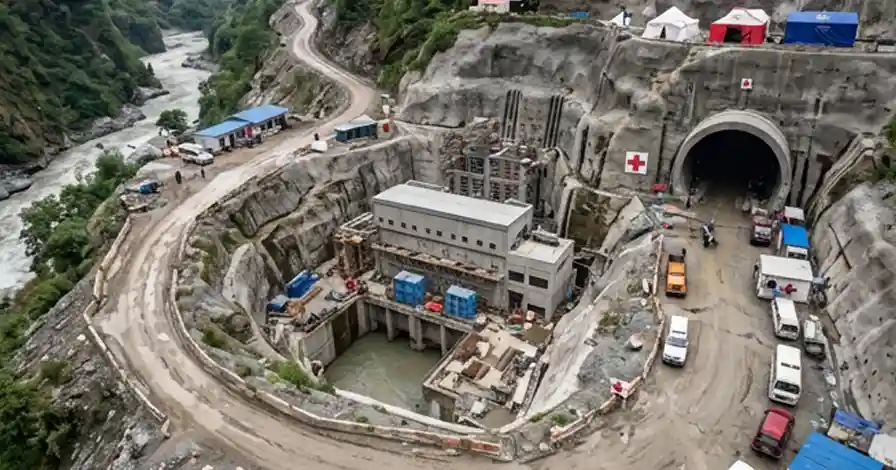
According to Trishuli 3A project chief Awas Ojha, the rescue team located Sah and Maharjan while working through the tunnel section that leads toward the project’s powerhouse — the underground chamber housing the plant’s turbines and generators. “These two were found alive along the route to the powerhouse and rescued. Reaching the powerhouse itself is still pending,” Ojha told reporters, underscoring that the broader rescue mission inside the Trishuli 3A tunnel complex is far from over.
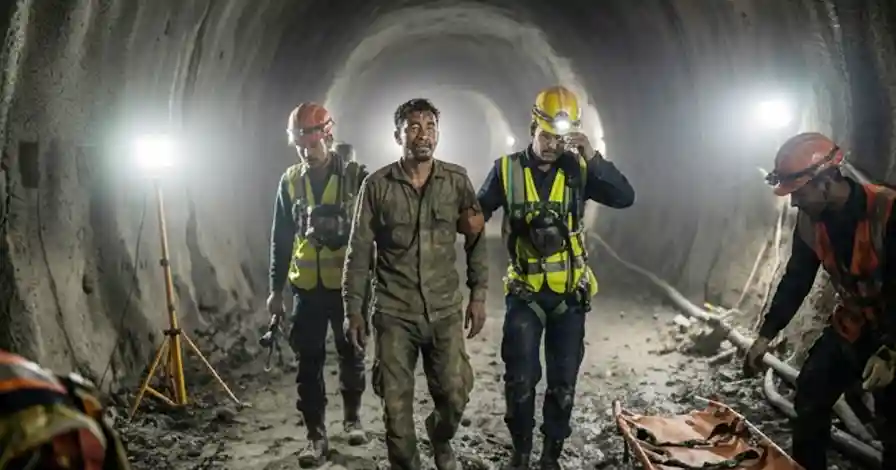
Because the interior of the tunnel remains completely dark — with power, lighting, and ventilation systems knocked out by the flooding — rescue officials say they cannot yet confirm exactly how far the two men were from the powerhouse when they were found. Rescuers have been relying on portable lighting, oxygen supply lines, and manual excavation to inch their way deeper into the collapsed and mud-choked passageway.
Sah, who was rescued first, reportedly told rescuers that everyone still trapped inside was alive at the time he lost contact with them — though he was unable to specify exactly how many people remained or their precise location, Ojha said. That detail has become a critical, if fragile, thread of hope for the families of the roughly 40 other NEA engineers and staff still unaccounted for inside the powerhouse chamber.
Who Are Sanjay Sah and Kabir Maharjan?
Sanjay Sah worked as a mechanical foreman with the Nepal Electricity Authority, while Kabir Maharjan served as a supervisor on the Trishuli 3A project. Both men were part of the on-site technical team overseeing an extensive overhaul of the plant at the time disaster struck. Photos released by NEA show Sah being carried out of the tunnel mouth by fellow rescue workers, visibly weakened but alive after 10 days without food, clean water, or daylight.
Their survival for such an extended period inside a flooded, pitch-dark tunnel has stunned even seasoned rescue personnel, and is already being cited as a rare bright spot in Nepal’s broader flood recovery effort.
Why the Trishuli 3A Tunnel Was Occupied When the Floods Struck
The 60-megawatt Trishuli 3A Hydropower Project was not generating electricity at the time of the disaster. Instead, the plant had been shut down for a scheduled major overhaul, and as part of that maintenance work, the tunnel that normally channels river water into the powerhouse had been deliberately sealed off. That closure meant a large technical crew — estimated by NEA at around 42 engineers and staff — was working deep inside the tunnel system when catastrophic flooding overwhelmed the area, cutting off their exit and trapping them underground.
The Bigger Picture: A Himalayan Glacier Collapse Triggered Nepal’s Deadliest Floods in Years
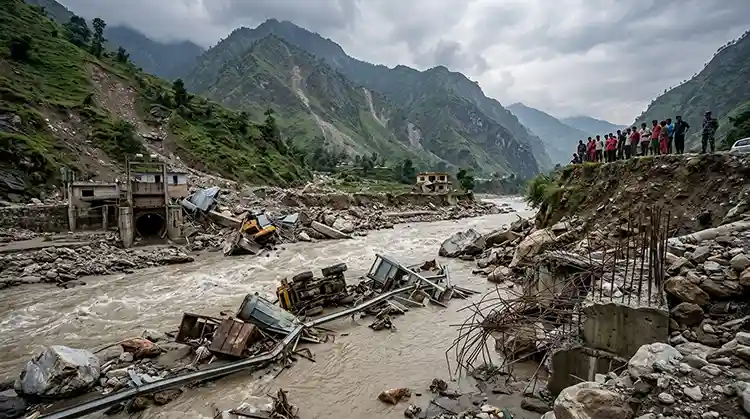
The Trishuli 3A tunnel emergency is one small — but symbolically powerful — part of a far larger catastrophe. In late August 2026, a section of a glacier roughly 5,200 metres high in the Himalayas, near Nepal’s border with Tibet, broke away and plunged around 1,200 metres down the mountainside, gathering rock, ice, and debris before slamming into the Lende River. The resulting surge swept south through Nepal’s Rasuwa, Nuwakot, and Dhading districts, at one point raising the level of the Trishuli River by nine metres in just 30 minutes, according to Al Jazeera.
The flash floods and mudslides that followed proved devastating on both sides of the border. At least 1,259 people have been confirmed killed in Nepal, with more than 5,000 still listed as missing, according to the country’s disaster management agency. Across the border, Chinese authorities reported 21 people killed and 541 missing on the Tibetan side.
Hundreds of Hydropower Workers Remain Missing Across Nepal
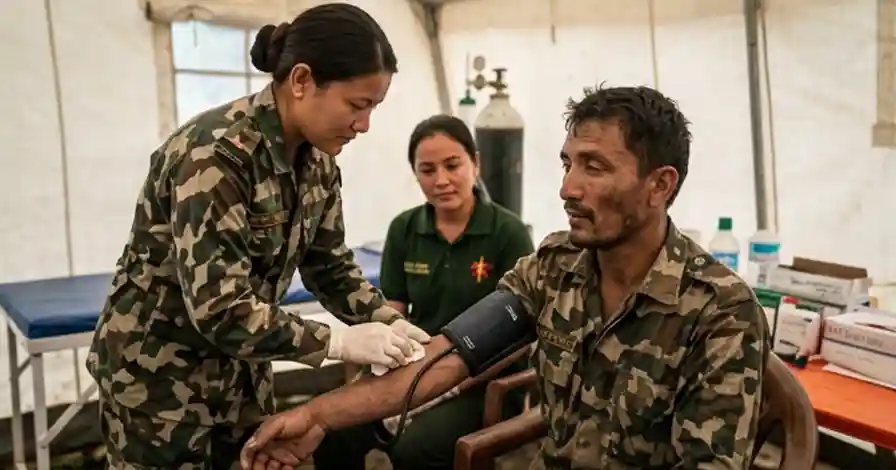
The scale of the impact on Nepal’s hydropower sector has been staggering. Roughly 900 workers remain missing from 12 different hydropower projects across the country, with about 500 believed to still be trapped inside various tunnels, according to local authorities. At Trishuli 3A specifically, at least 557 workers were reported missing, with approximately 115 believed to be trapped in the project’s main tunnel, according to the Independent Power Producers Association of Nepal.
Nepal’s Communication Minister, Bikram Timilsina, said officials remain cautiously hopeful that more survivors will be found as excavation work continues. “We are waiting for the rescue of more and more people,” he wrote in a public social media post following Friday’s rescue.
Inside the Rescue Operation: Drilling, Darkness, and Danger
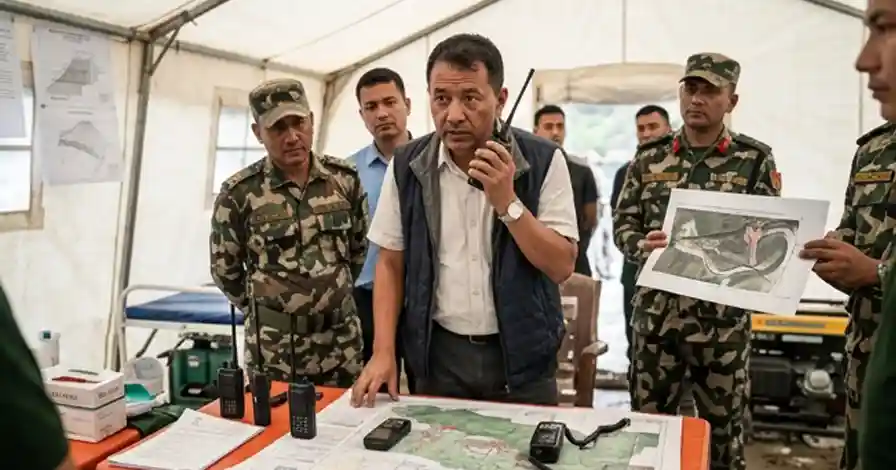
The mission to reach workers trapped at Trishuli 3A has been agonizingly slow and technically complex. Nepal’s Army first located the uppermost section, or “crown,” of the Upper Trishuli 3A tunnel after a three-day effort involving drilling machines, excavators, and hydraulic cutters. Once rescuers finally broke through, they discovered extremely high water levels inside the roughly seven-metre-diameter tunnel, according to Nepali Army spokesperson Rajaram Basnet.
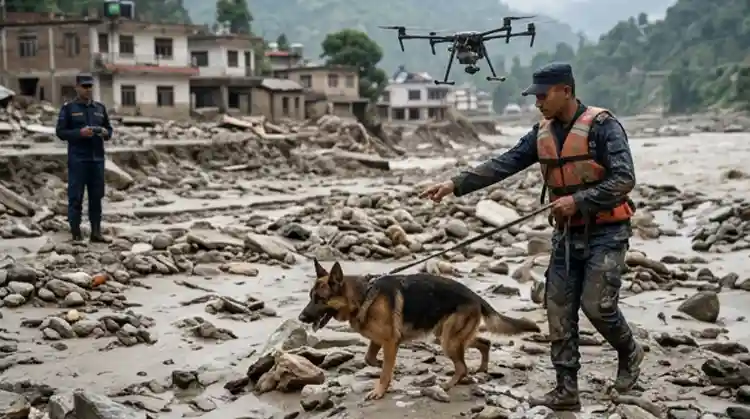
Joint teams comprising the Nepali Army, Nepal Electricity Authority engineers, and tunnel specialists have been working to identify secondary access points — including cable and utility ducts — that could be used to reach trapped workers faster than clearing the main tunnel of mud and debris. Rescuers have pumped in air, cleared tunnel ports, and prepared to send in personnel equipped with oxygen supplies as the operation has progressed.
Conditions inside have made the work extraordinarily difficult. Overnight rain and rising river waters at one point flooded the excavation area, forcing rescuers to pause before conditions eased enough to resume drilling. Nepal’s government has also requested specialist assistance from India and China to help fill critical gaps in its rescue capacity, Al Jazeera reported, reflecting the scale and technical difficulty of the operation.
Stories of Survival: Not Everyone Was Trapped
While dozens remain missing, some workers managed remarkable escapes in the disaster’s first chaotic hours. One worker, Madan Singh Budha, had just finished a night shift at a nearby Upper Trishuli tunnel when the flooding struck. He described spotting the rising water and immediately scrambling up a rocky hillside, using patches of grass growing between the rocks to pull himself to safety. He later said that colleagues who were unable to climb fast enough were swept away by the floodwaters.
Such accounts underline both the suddenness of the disaster and the extraordinary risk still faced by rescue teams and workers across Nepal’s hydropower corridor.
Why This Rescue Matters for Nepal’s Hydropower Sector
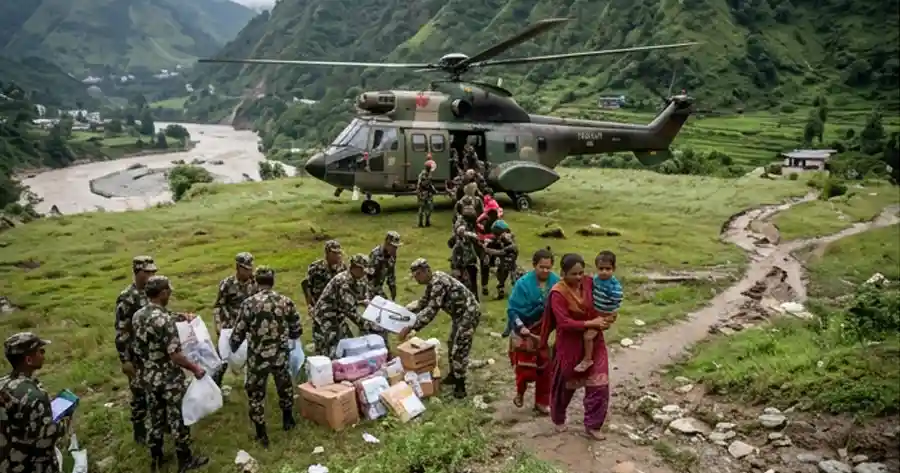
Nepal has invested heavily in hydropower as a cornerstone of its energy strategy, with dozens of projects — including Trishuli 3A — built along the country’s steep, glacier-fed river valleys. That same terrain, prized for its hydropower potential, is also acutely vulnerable to glacial lake outburst floods (GLOFs) and sudden glacier collapses, a risk that climate scientists have long warned is intensifying as Himalayan glaciers retreat and destabilize.
The scale of casualties and the sheer number of hydropower workers affected by this single event is likely to trigger renewed scrutiny of safety protocols, early-warning systems, and emergency evacuation planning at hydropower construction and maintenance sites across Nepal.
What Happens Next in the Trishuli 3A Tunnel Rescue
Officials say the priority now shifts to reaching the tunnel’s powerhouse chamber, where the majority of the roughly 42 estimated trapped staff are believed to be located. Project chief Awas Ojha confirmed that although Sanjay Sah reported all trapped colleagues were alive at the time of his last contact with them, rescuers still do not have a confirmed headcount or exact location for the remaining workers.
Rescue crews are expected to continue drilling, pumping air, and clearing debris around the clock in hopes of repeating Friday’s success. With darkness, standing floodwater, and unstable debris still hampering visibility and access deep inside the tunnel, officials have cautioned that further rescues — while hoped for — cannot be guaranteed on any fixed timeline.
Frequently Asked Questions About the Trishuli 3A Tunnel Rescue
Q: How many people were rescued from the Trishuli 3A tunnel today? A: Two Nepal Electricity Authority staff members, mechanical foreman Sanjay Sah and supervisor Kabir Maharjan, were rescued alive.
Q: How long were the workers trapped inside the tunnel? A: They were trapped for 10 days before being found and safely brought out.
Q: How many people are still believed to be trapped at Trishuli 3A? A: Nepal Electricity Authority estimates around 42 engineers and staff remain trapped inside the project’s powerhouse tunnel, though wider industry estimates for the site run higher.
Q: What caused the flooding at Trishuli 3A? A: A glacier collapse in the Himalayas near Nepal’s border with Tibet triggered flash floods that swept down the Trishuli River basin in late August 2026, inundating multiple hydropower tunnels, including Trishuli 3A.
Q: Is the Trishuli 3A rescue operation still ongoing? A: Yes. Rescue teams are continuing efforts to reach the powerhouse section of the tunnel, where most of the remaining trapped workers are believed to be located.
This report draws on statements from Nepal Electricity Authority officials and additional reporting from international outlets covering the wider Nepal–Tibet flood disaster, including Al Jazeera, CNN, ABC News, and The Week.

Economic Affair
- Budhigandaki Flood: 47 Rescued as Bridges Washed Away
- Nepal Supreme Court Handcuff Order: Police Barred From Routine Use
- 250+ Officials Deploy to Assess Rasuwa-Bhotekoshi Flood Damage
- Electricity VAT: Energy and Finance Ministers Strike Landmark Deal After Just 2 Months
- Nepal Inflation Shockingly Triples to 5.96% — Food and Transport Hit Hardest



Comments