










Two very different stories are unfolding in the world at the same time, and together they say something important about where global power is heading.
First: Europe’s central banks have quietly become far more cautious about where they keep their gold reserves. Second, a decades-old Cold War secret is worth revisiting — a time when the United States ran covert research into controlling human behavior and consciousness, research that even involved the psychedelic compound found in “magic mushrooms,” psilocybin.
Neither story alone proves that American power is collapsing. But read together, they reveal a pattern that has repeated throughout history: powerful nations tend to protect their wealth, control, and strategic tools before a major crisis hits — not after.
Why Gold Is Suddenly Back in the Headlines
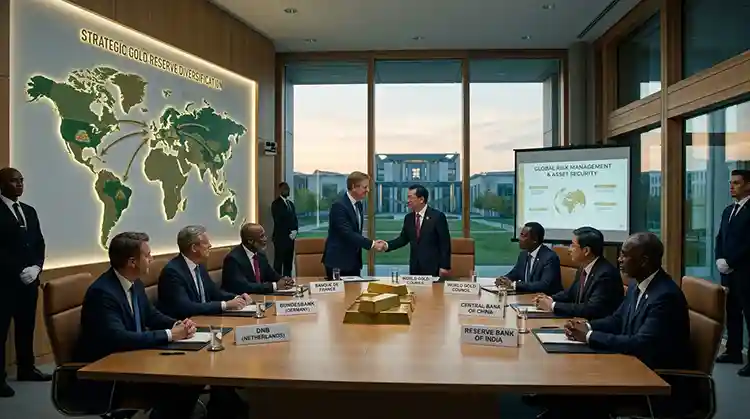
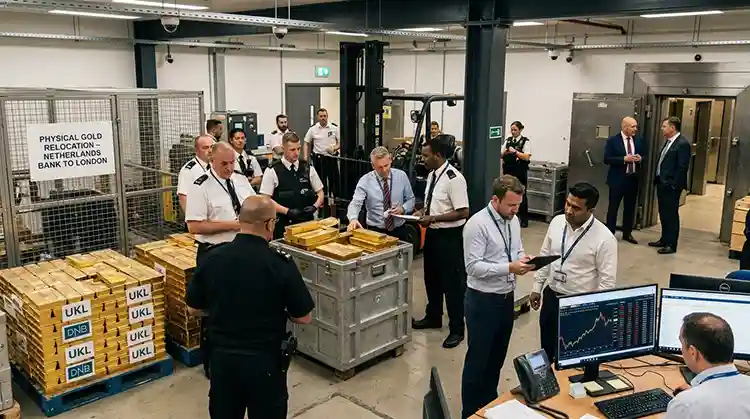
Gold has quietly become one of the biggest financial stories of 2026. In September, the Dutch central bank, De Nederlandsche Bank (DNB), confirmed it had shifted 86 metric tonnes of gold — worth an estimated $12 billion — out of New York and Ottawa and into London between March and August. Before the move, New York held 31.3% of Dutch gold reserves and Ottawa held 19.7%; afterward, both cities held just 18.5% each, while London’s share jumped from 18.1% to 32.1%, making it the single largest storage location for Dutch gold.
DNB President Olaf Sleijpen described the decision as “crisis preparedness,” explaining that gold held at the Bank of England meets modern international trading standards and can be deployed far more quickly in an emergency than the bank’s holdings in North America. The Netherlands still owns all 612.4 tonnes of its gold — worth about €72.2 billion — the move simply changed where that gold physically sits.
This wasn’t an isolated, one-off decision. It follows a similar transfer by the Bank of France, which relocated 129 tonnes of gold held at the New York Federal Reserve between July 2025 and January 2026, though France’s central bank governor insisted that move was not politically motivated.
Germany Did This Years Ago — And Is Reportedly Considering It Again
The Netherlands and France are not writing a new playbook; they’re following one Germany wrote over a decade ago. Between 2013 and 2017, the Bundesbank relocated 674 tonnes of gold — 300 tonnes from the New York Federal Reserve and 374 tonnes from the Banque de France — back to Frankfurt, completing the operation three years ahead of schedule. At the time, officials said the goal was to build public “trust and confidence” in Germany’s reserves.
Notably, more recent reporting from Euronews indicates that German politicians and economists have again raised questions about the safety of the roughly 1,236 tonnes of German gold still held abroad — in New York and London — citing unpredictable US trade and foreign policy as a reason some want it brought home once more.
Put simply: this is not a single country reacting to a single event. It’s a pattern repeating itself across multiple major European economies, each independently reaching a similar conclusion about geographic risk.
The Bigger Trend: Central Banks Are Buying Gold at Historic Levels
Where gold is stored is only half the story — how much of it central banks are buying is the other half, and the numbers are extraordinary.
According to the World Gold Council, central banks purchased more than 1,000 tonnes of gold every year from 2022 through 2024 — a level of buying not seen since modern records began in 1950. That’s roughly double the annual average of about 473 tonnes recorded between 2010 and 2021. Even as buying moderated somewhat in 2025, more than 20 countries still added to their gold reserves in just the first half of the year alone, led by Poland, Azerbaijan, and Kazakhstan.
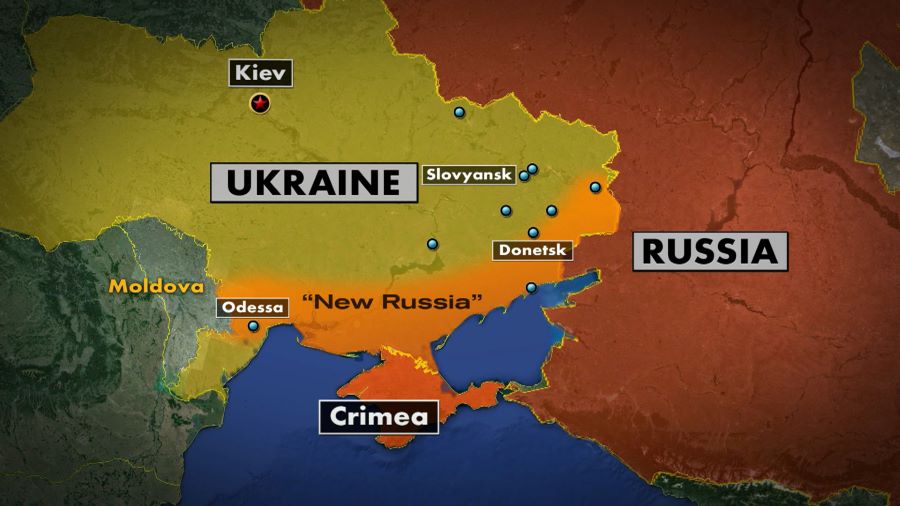
This isn’t just about diversifying investment portfolios. Analysts widely link the surge to a specific turning point: when the United States and its allies froze a large share of Russia’s foreign currency reserves in 2022 following the invasion of Ukraine. That single move sent a clear message to central banks worldwide — reserves held in foreign currencies or foreign-controlled financial systems can be frozen or restricted by political decision, almost overnight. Gold, by contrast, carries no counterparty risk. It cannot be frozen, sanctioned, or devalued by another government’s policy decision, which is precisely why it has become the preferred “insurance policy” for nations wary of overexposure to any single financial or political system.
What This Buying Spree Really Signals
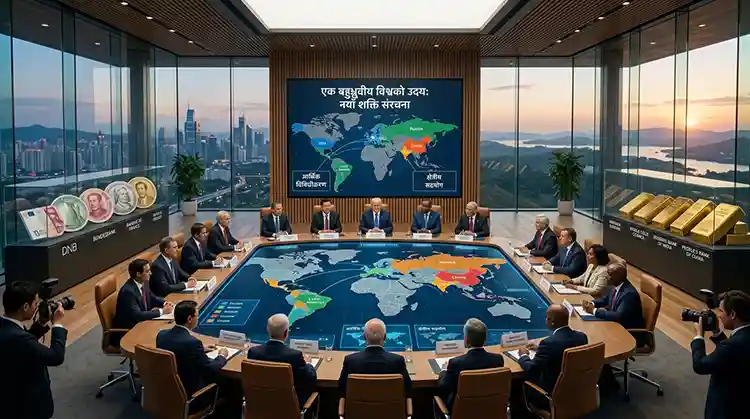
Taken together, record gold purchases and the relocation of existing reserves to more “usable” hubs like London point to the same underlying anxiety: central banks want financial flexibility they can control entirely on their own terms, without depending on any single government’s cooperation during a crisis. That is a quiet but significant vote of caution about an increasingly unpredictable and multipolar geopolitical environment — not proof that any single currency or country is on the verge of collapse.
A Cold War Secret Worth Remembering: Project MKUltra
To understand how far powerful nations have historically gone to secure their advantage, it’s worth revisiting one of the most disturbing chapters of Cold War history: Project MKUltra.
Psilocybin is a naturally occurring psychedelic compound found in certain species of mushrooms. It temporarily alters human perception, sense of time, and thought patterns, and is now being studied seriously for potential mental health treatment. But its history is far more troubling than its current medical promise suggests.
During the Cold War, the CIA grew increasingly anxious that the Soviet Union and China might be developing techniques to control human behavior and thought. Out of that fear, the agency launched Project MKUltra in 1953 — an “umbrella” program funding roughly 149 secretive subprojects across about 80 institutions, including 44 universities and colleges, pharmaceutical companies, hospitals, and even prisons, according to declassified records reviewed during the 1975 Church Committee investigation and the formal 1977 US Senate hearing led by Senator Ted Kennedy.
Some of the program’s subjects, including in at least one documented subproject, were never told they were part of an experiment at all. Through MKUltra’s Subproject 58, the CIA reportedly funded a 1956 mushroom-collecting expedition to Mexico by ethnomycologist R. Gordon Wasson, using it as a channel to study psilocybin’s psychological effects — one small piece of a much larger effort that more heavily emphasized LSD.
The human cost of this program was real. One of its most infamous cases involved Frank Olson, an Army scientist who died in a fall from a New York hotel window in 1953, roughly a week after unknowingly being given LSD at a CIA-organized meeting. The circumstances of his death remain disputed to this day, despite a formal apology and a financial settlement paid to his family by the US government in 1975.
No Evidence MKUltra Ever “Worked”
Here’s the important caveat that gets lost in more sensational retellings: there is no solid evidence that MKUltra ever produced a working method of mind control. Historians who have studied the roughly 16,000 surviving pages of documentation — most of the program’s records were destroyed by the CIA in 1973, with only a stray cache surviving by accident — generally conclude that the program was a sprawling, ethically catastrophic failure rather than a secret triumph. Modern, transparent psychedelic research today, such as clinical trials studying psilocybin and MDMA for PTSD and depression, is explicitly not built on MKUltra’s data and does not draw from it.
What MKUltra does prove, beyond dispute, is something less dramatic but arguably more important: a global superpower was willing to secretly experiment on its own unwitting citizens because it believed controlling human behavior and information was a matter of strategic survival. That underlying instinct — the belief that influence over minds is as valuable as territory or weapons — is the real thread connecting Cold War history to today’s headlines.

How America Actually Built Its Power After World War II
To understand today’s shifting landscape, it helps to remember how the United States became the dominant global power in the first place — and it wasn’t through covert psychological experiments.
After World War II, the US built an enormous, interconnected structure of military strength, dollar dominance in global trade, a deep and liquid financial system, world-leading technology and communications industries, and some of the most influential universities and research institutions on the planet. The US dollar became the backbone of international trade and reserves, while American technology, media, and academic output shaped global culture and knowledge production for decades.
Power, in other words, was never just about military hardware. It was always also about controlling knowledge, capital, technology, information flow, and the ability to understand and influence human behavior at scale. Seen in that light, MKUltra was simply a dark, failed chapter within a much larger and largely successful strategic project.
Is Europe Losing Trust in the United States?
It would be an overstatement to say Europe has abandoned trust in the US outright simply because a few central banks moved some gold to London. What’s happening is better described as risk diversification — a deliberate decision by institutions not to keep all of their most strategically important assets in one country or one geographic region.
During the Cold War, European nations largely trusted American security guarantees and leadership enough to store significant gold reserves on US and Canadian soil. Today’s environment looks different. Trade tensions, sanctions regimes, and a more openly transactional US foreign policy environment under recent administrations have made European institutions more conscious that foreign-held assets can, in theory, become entangled in political disputes beyond their control.
This doesn’t mean confidence in America has evaporated. The US dollar remains one of the world’s dominant reserve currencies, American financial markets remain the deepest and most liquid in the world, and US military reach remains unmatched globally. But history offers a sobering reminder here too: the British Empire was once described as the empire “on which the sun never sets.” Today, Britain’s global influence is a fraction of what it once was. Dominance, however entrenched it appears, has never proven to be permanent for any nation.
A Genuinely Multipolar World Is Emerging — And the Data Backs It Up
Rising powers including China, India, Russia, and the European Union are each expanding their influence within the global system in different ways — economically, militarily, and diplomatically. It would be premature, based only on gold storage decisions, to declare that American dominance has ended. But it is fair to say the evidence points toward a gradual, ongoing shift in the global balance of power, rather than a single dramatic turning point.
The scale of central bank gold buying reinforces this reading. The World Gold Council’s own analysis frames this as part of a broader “structural shift” in how sovereign institutions manage risk — not a short-term reaction to one news cycle, but a multi-year, multi-country recalibration of how much trust to place in any single financial system.
The New Battlefield: Data, Algorithms, and Information Warfare
This is where the connection between Cold War psychology experiments and today’s headlines becomes most interesting — and most speculative. During the Cold War, altering human perception required chemical substances and covert psychological research. Today, argue some analysts, a viral video or a well-crafted slogan can shape public opinion far more efficiently than any drug ever could, particularly when amplified by networks of bot accounts and AI-generated content designed to make a message look like organic, widespread public sentiment.
It’s worth being careful and precise here. Youth-led protest movements organizing through social media are, in most cases, a legitimate and organic expression of democratic dissent — dismissing them outright as foreign manipulation would be both inaccurate and unfair to genuine grassroots movements. At the same time, security researchers and disinformation experts have documented real, well-established cases of state and non-state actors using coordinated inauthentic networks and AI-generated content to amplify existing social tensions for strategic advantage. Both things can be true simultaneously: authentic public frustration can exist, and it can also be a target that outside actors attempt to exploit or amplify.
This raises a genuinely open question that deserves debate rather than a confident answer: could future geopolitical competition look less like traditional territorial conquest — soldiers, borders, and resource seizure, as historically seen in conflicts from Afghanistan to Iraq to Libya — and more like competition over data, algorithms, debt leverage, sanctions power, and control of information ecosystems? Some analysts argue exactly that. Others push back, arguing this framing overstates the coherence and effectiveness of information operations, and that traditional military and economic power still matter far more than viral content ever could. Both perspectives currently coexist in serious foreign policy discussion, and neither has been conclusively proven.
So, Is American Power Really Declining?
Concluding that American power is “over” based on a few tonnes of relocated gold would be a significant overstatement — and premature. The US retains the world’s most dominant financial markets, an unmatched global military footprint, and deep leadership in advanced technology, including artificial intelligence itself. Dismissing all of that on the basis of a single storage decision by one mid-sized European economy would be poor analysis.
What the evidence does support is a more modest but still meaningful conclusion: the world is not returning to the unquestioned, single-superpower arrangement of the 1990s and early 2000s. Instead, multiple centers of power — financial, technological, and military — are increasingly competing and hedging against one another simultaneously. Gold’s return to prominence as a “politically neutral” reserve asset, alongside growing global debate over how AI and algorithms shape public opinion, are two very different symptoms of the same underlying condition: a world where trust in any single dominant power is being actively, deliberately diversified.
Frequently Asked Questions
1. Why are central banks moving their gold reserves right now? Many central banks, including the Netherlands’ DNB, cite “crisis preparedness” — wanting gold stored where it can be quickly traded or used in an emergency, while also reducing the risk of holding too much of one asset in a single country or region amid rising geopolitical tension.
2. How much gold did the Dutch central bank move, and why does it matter? DNB moved 86 tonnes of gold, worth roughly $12 billion, from New York and Ottawa to London between March and August 2026, making London its single largest storage location for the first time.
3. What was Project MKUltra, and is it connected to psilocybin? MKUltra was a CIA program run from 1953 into the early 1970s that funded secretive human experiments, including some involving LSD and psilocybin, to explore whether human behavior and consciousness could be controlled. It was formally investigated by the US Senate in 1977, and no evidence has ever confirmed it produced a working mind-control method.
4. Are central banks buying more gold than usual? Yes. According to the World Gold Council, central banks bought more than 1,000 tonnes of gold annually from 2022 through 2024 — roughly double the 2010–2021 average — largely driven by concerns over reserve freezes and sanctions risk following the 2022 Russia sanctions.
5. Does this mean the US dollar is losing its global dominance? Not conclusively. The dollar remains a leading global reserve currency and the US retains major financial, military, and technological advantages. However, the trend does suggest growing international efforts to diversify away from over-reliance on any single currency or financial system.
6. Is AI really being used to manipulate public opinion like a modern MKUltra? There is documented evidence of state and non-state actors using AI-generated content and coordinated networks to amplify certain narratives online. However, this is different from claiming AI can directly “control minds,” and legitimate, organic social and political movements should not be automatically dismissed as manipulation.
Final Word
None of this proves a single dramatic conclusion. It doesn’t prove America’s power has collapsed, and it doesn’t prove some hidden global conspiracy is unfolding behind closed doors. What it does show is a pattern worth watching closely: central banks are quietly repositioning trillions of dollars in reserves, buying gold at a historic pace, and openly discussing what a more multipolar, less predictable world might look like — while separately, a growing global conversation is emerging over whether the tools of influence have simply evolved from Cold War-era chemistry to today’s algorithms and information networks. Whether these are two unrelated stories or two symptoms of the same deeper shift is, for now, a question still being written in real time.

Economic Affair
- Budhigandaki Flood: 47 Rescued as Bridges Washed Away
- Nepal Supreme Court Handcuff Order: Police Barred From Routine Use
- 250+ Officials Deploy to Assess Rasuwa-Bhotekoshi Flood Damage
- Electricity VAT: Energy and Finance Ministers Strike Landmark Deal After Just 2 Months
- Nepal Inflation Shockingly Triples to 5.96% — Food and Transport Hit Hardest





Comments